


Girls in the boat: Sex differences in rowing performance and participation
- PMID: 29352279
- PMCID: PMC5774800
- DOI: 10.1371/journal.pone.0191504
Girls in the boat: Sex differences in rowing performance and participation
Abstract
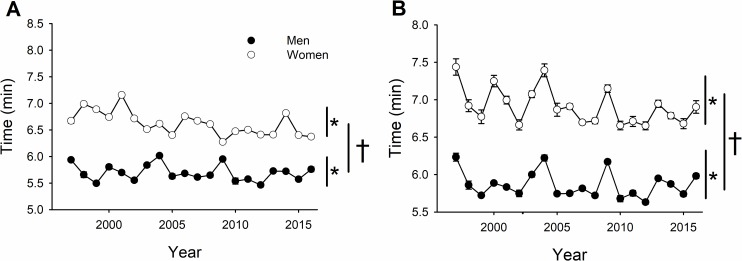
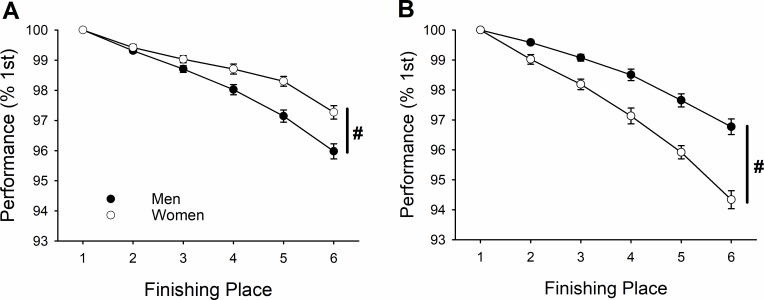
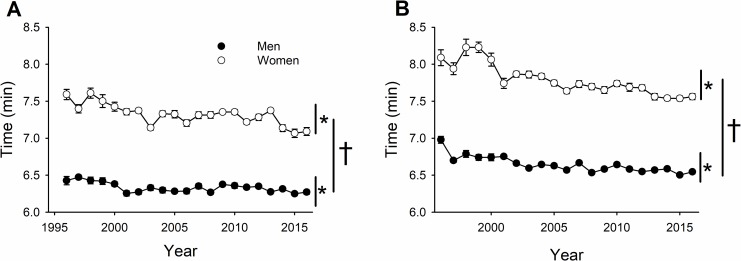
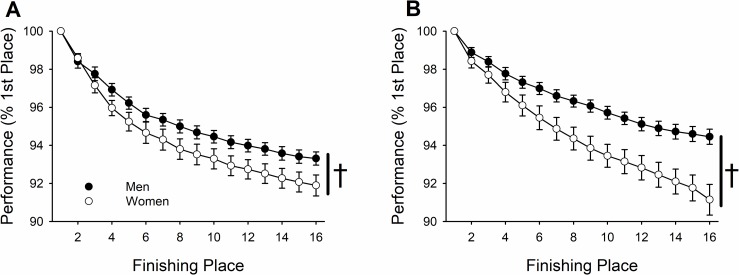
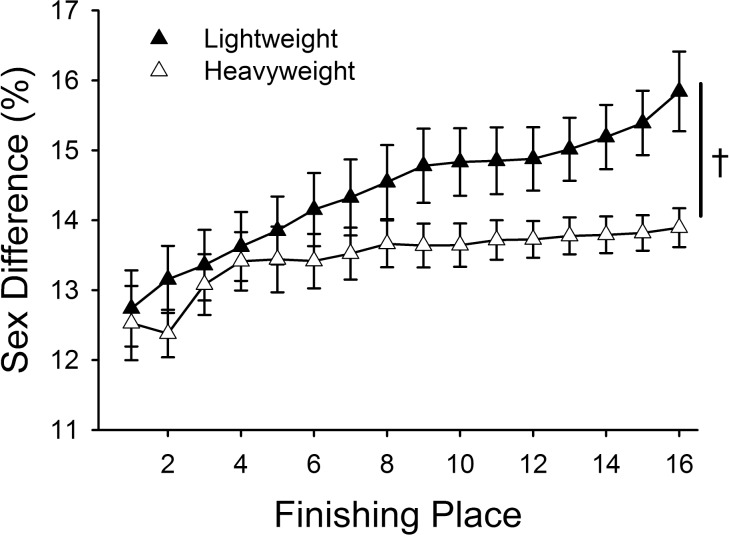
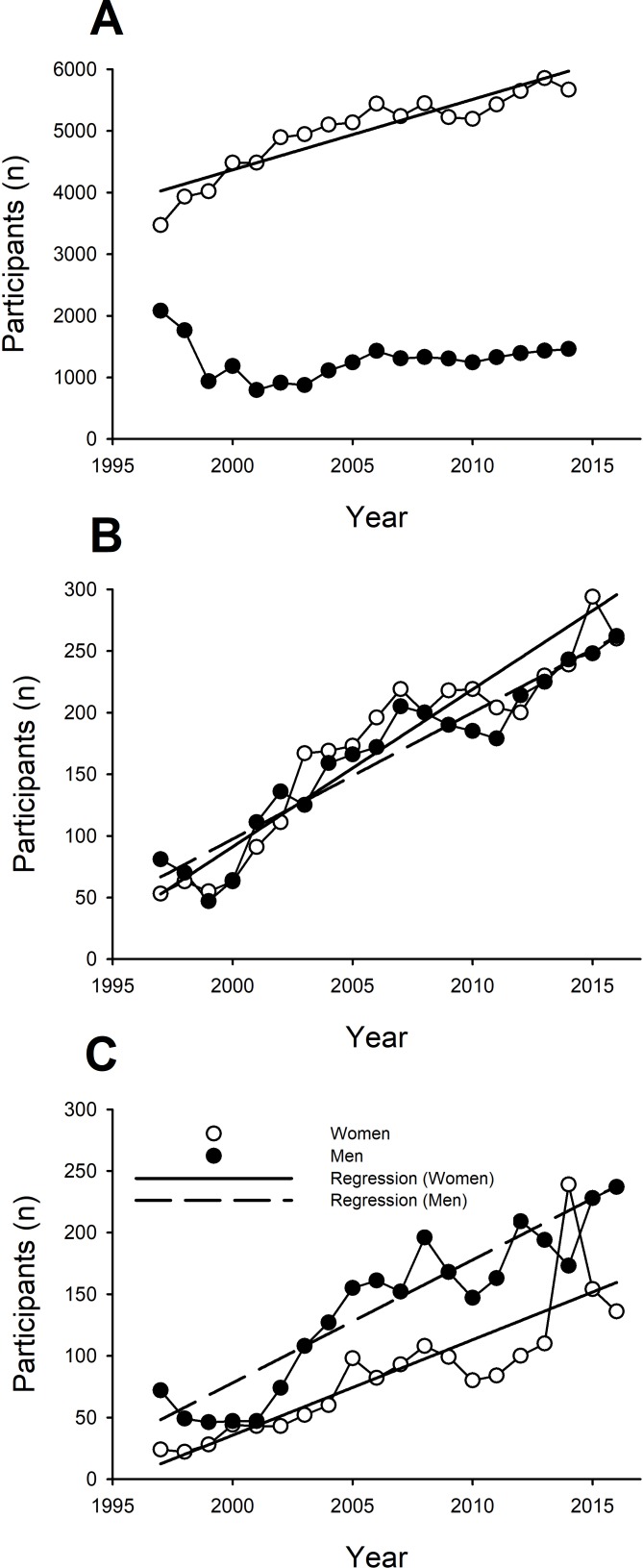
Men outperform women in many athletic endeavors due to physiological and anatomical differences (e.g. larger and faster muscle); however, the observed sex differences in elite athletic performance are typically larger than expected, and may reflect sex-related differences in opportunity or incentives. As collegiate rowing in the United States has been largely incentivized for women over the last 20 years, but not men, the purpose of this study was to examine sex differences in elite rowing performance over that timeframe. Finishing times from grand finale races for collegiate championship on-water performances (n = 480) and junior indoor performances (n = 1,280) were compared between men and women across 20 years (1997-2016), weight classes (heavy vs. lightweight) and finishing place. Participation of the numbers of men and women rowers were also quantified across years. Men were faster than women across all finishing places, weight classes and years of competition and performance declined across finishing place for both men and women (P<0.001). Interestingly, the reduction in performance time across finishing place was greater (P<0.001) for collegiate men compared to women in the heavyweight division. This result is opposite to other sports (e.g. running and swimming), and to lightweight rowing in this study, which provides women fewer incentives than in heavyweight rowing. Correspondingly, participation in collegiate rowing has increased by ~113 women per year (P<0.001), with no change (P = 0.899) for collegiate men. These results indicate that increased participation and incentives within collegiate rowing for women vs. men contribute to sex differences in athletic performance.
Conflict of interest statement
Figures
References
-
- Janssen I, Heymsfield SB, Wang ZM, Ross R (2000) Skeletal muscle mass and distribution in 468 men and women aged 18–88 yr. J Appl Physiol (1985) 89: 81–88. - PubMed
-
- Mayhew JL, Salm PC (1990) Gender differences in anaerobic power tests. Eur J Appl Physiol Occup Physiol 60: 133–138. - PubMed
-
- Stefani RT (2006) The relative power output and relative lean body mass of World and Olympic male and female champions with implications for gender equity. J Sports Sci 24: 1329–1339. doi: 10.1080/02640410500520559 - DOI - PubMed
-
- Joyner MJ (1993) Physiological limiting factors and distance running: influence of gender and age on record performances. Exerc Sport Sci Rev 21: 103–133. - PubMed
-
- Sparling PB (1980) A meta-analysis of studies comparing maximal oxygen uptake in men and women. Res Q Exerc Sport 51: 542–552. doi: 10.1080/02701367.1980.10608077 - DOI - PubMed
MeSH terms
LinkOut - more resources
Full Text Sources
Other Literature Sources
Medical
Research Materials
