


Income inequality and depression: a systematic review and meta-analysis of the association and a scoping review of mechanisms
- PMID: 29352539
- PMCID: PMC5775138
- DOI: 10.1002/wps.20492
Income inequality and depression: a systematic review and meta-analysis of the association and a scoping review of mechanisms
Erratum in
-
Correction.World Psychiatry. 2018 Jun;17(2):235. doi: 10.1002/wps.20538. World Psychiatry. 2018. PMID: 29856545 Free PMC article. No abstract available.
Abstract
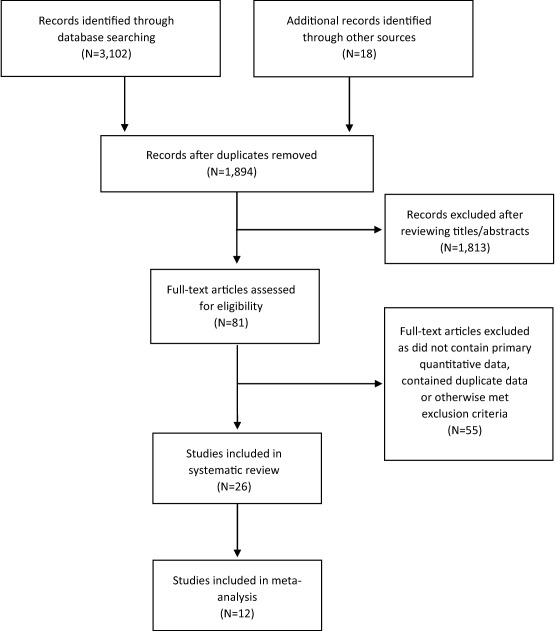
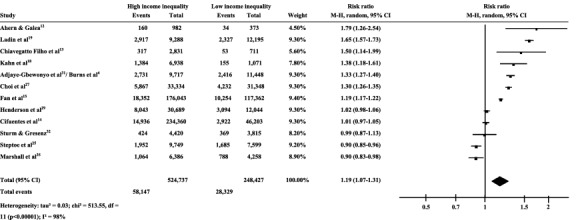
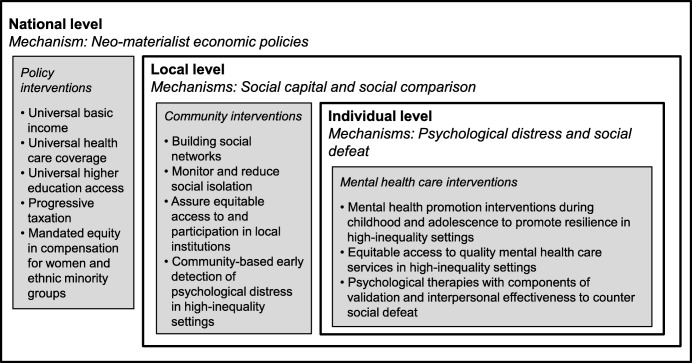
Most countries have witnessed a dramatic increase of income inequality in the past three decades. This paper addresses the question of whether income inequality is associated with the population prevalence of depression and, if so, the potential mechanisms and pathways which may explain this association. Our systematic review included 26 studies, mostly from high-income countries. Nearly two-thirds of all studies and five out of six longitudinal studies reported a statistically significant positive relationship between income inequality and risk of depression; only one study reported a statistically significant negative relationship. Twelve studies were included in a meta-analysis with dichotomized inequality groupings. The pooled risk ratio was 1.19 (95% CI: 1.07-1.31), demonstrating greater risk of depression in populations with higher income inequality relative to populations with lower inequality. Multiple studies reported subgroup effects, including greater impacts of income inequality among women and low-income populations. We propose an ecological framework, with mechanisms operating at the national level (the neo-material hypothesis), neighbourhood level (the social capital and the social comparison hypotheses) and individual level (psychological stress and social defeat hypotheses) to explain this association. We conclude that policy makers should actively promote actions to reduce income inequality, such as progressive taxation policies and a basic universal income. Mental health professionals should champion such policies, as well as promote the delivery of interventions which target the pathways and proximal determinants, such as building life skills in adolescents and provision of psychological therapies and packages of care with demonstrated effectiveness for settings of poverty and high income inequality.
Keywords: Income inequality; depression; low-income populations; neo-material hypothesis; psychological stress; social capital; social comparison; social defeat.
© 2018 World Psychiatric Association.
Figures
References
-
- Davies J, Lluberas R, Shorrocks A. Credit Suisse Global Wealth Databook 2016. Zurich: Credit Suisse Research Institute, 2016.
-
- Inequality.org. Income inequality in the United States. https://inequality.org/facts/income-inequality/.
-
- Pickett KE, Wilkinson RG. Income inequality and health: a causal review. Soc Sci Med 2015;128:316‐26. - PubMed
-
- Ribeiro WS, Bauer A, Andrade MC et al. Income inequality and mental illness‐related morbidity and resilience: a systematic review and meta‐analysis. Lancet Psychiatry 2017;4:554‐62. - PubMed
Publication types
Grants and funding
LinkOut - more resources
Full Text Sources
Other Literature Sources
Medical
Miscellaneous
