


Potential drug targets in the Mycobacterium tuberculosis cytochrome P450 system
- PMID: 29352597
- PMCID: PMC5801126
- DOI: 10.1016/j.jinorgbio.2018.01.010
Potential drug targets in the Mycobacterium tuberculosis cytochrome P450 system
Abstract
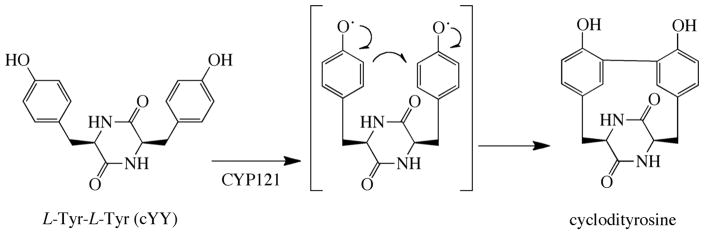
The Mycobacterium tuberculosis genome encodes twenty cytochrome P450 enzymes, most or all of which appear to have specific physiological functions rather than being devoted to the removal of xenobiotics. However, in many cases their specific functions remain obscure. Considerable spectroscopic, biophysical, crystallographic, and catalytic information is available on nine of these cytochrome P450 enzymes, although gaps exist in our knowledge of even these enzymes. The available evidence indicates that at least three of the better-characterized enzymes are promising targets for antituberculosis drug discovery. This review summarizes the information on the nine relatively well-characterized cytochrome P450 enzymes, with a particular emphasis on CYP121, CYP125, and CYP142 from Mycobacterium tuberculosis and Mycobacterium smegmatis.
Keywords: Azole drugs; Cholesterol degradation; Cytochrome P450; Enzyme inhibitors; Mycobacterium tuberculosis.
Copyright © 2018 Elsevier Inc. All rights reserved.
Figures
References
-
- Hippocrates, Of the Epidemics (400 B.C.E.) Adams F, translator. Book II, Section III, 13, Internet Classics Archive. http://classics.mit.edu/Hippocrates/epidemics.2.ii.html.
-
- Bunyan J. The Life and Death of Mr. Badman. Grace Abounding & the Life and Death of Mr. Badman. 1928;Chapter XVIII(1680):282.
-
- WHO Global Tuberculosis Report. 2016 https://reliefweb.int/report/world/global-tuberculosis-report-2016.
-
- Sun Z, Zhang Y. Antituberculosis activity of certain antifungal and antihelminthic drugs. Tuber Lung Dis. 1999;79:319–320. - PubMed
-
- Jackson CJ, Lamb DC, Kelly DE, Kelly SL. Bactericidal and inhibitory effects of azole antifungal compounds on Mycobacterium smegmatis. FEMS Microbiol Lett. 2000;192:159–162. - PubMed
Publication types
MeSH terms
Substances
Grants and funding
LinkOut - more resources
Full Text Sources
Other Literature Sources
