Effects of Nutritional Status on 6-Month Outcome of Hip Fractures in Elderly Patients
- PMID: 29354577
- PMCID: PMC5773420
- DOI: 10.5535/arm.2017.41.6.1005
Effects of Nutritional Status on 6-Month Outcome of Hip Fractures in Elderly Patients
Abstract
Objective: To identify the prevalence of malnutrition in elderly hip fracture and to investigate the relationship between hip fracture patients and malnutrition on functional recovery and mortality.
Methods: All hip fracture patients age >65 years admitted to a rehabilitation unit were recruited from July 2015 to June 2016. Nutritional status was assessed by Mini-Nutritional Assessment Short-Form (MNA-SF) within 72 hours of admission. Patients were reassessed at 6 months for functional status and place of residence. Length of hospital stay, in-patient mortality rate, and 6-month mortality rate were also recorded.
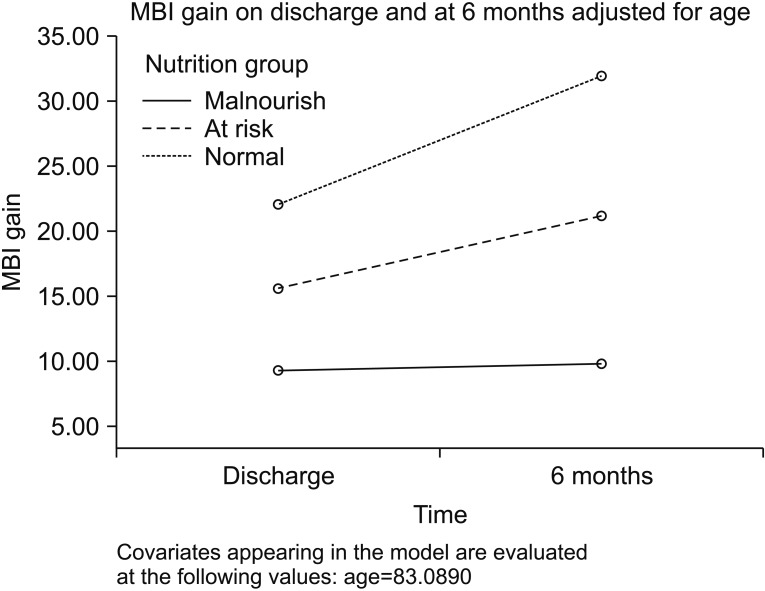
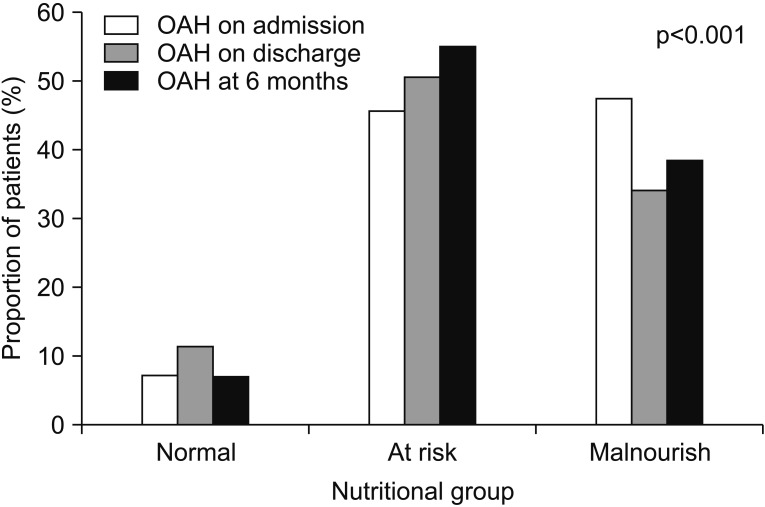
Results: There were 218 patients recruited. The mean age was 83.5±7.5 years. According the MNA-SF, 46 (21.1%) were well nourished, 115 (52.6%) were at risk of malnutrition, and 57 (26.1%) were malnourished. Malnourished individuals were significantly older, had lower Mini-Mental State Examination score and albumin level, were functionally more dependent and were more likely to reside in elderly care facility. A higher proportion of elderly care residents were at-risk or were malnourished on admission, discharge and at 6 months. Functional recovery was slower in the malnourished group. In-patient mortality was higher in malnourished individuals compared to those at risk of malnourishment and well-nourished individuals.
Conclusion: The prevalence of malnutrition is high and is associated with poor functional recovery and elderly care placement. Residents of elderly care facilities are especially at risk due a higher prevalence of malnourishment. Health authorities are encouraged to evaluate the dietetic component in elderly care facilities and initiate nutrition supplementation in their planning of healthcare resources.
Keywords: Hip fractures; Nutritional status; Outcome.
Conflict of interest statement
CONFLICT OF INTEREST: No potential conflict of interest relevant to this article was reported.
Figures
References
-
- Miller CW. Survival and ambulation following hip fracture. J Bone Joint Surg Am. 1978;60:930–934. - PubMed
-
- Magaziner J, Hawkes W, Hebel JR, Zimmerman SI, Fox KM, Dolan M, et al. Recovery from hip fracture in eight areas of function. J Gerontol A Biol Sci Med Sci. 2000;55:M498–M507. - PubMed
-
- Shyu YI, Chen MC, Liang J, Wu CC, Su JY. Predictors of functional recovery for hip fractured elders during 12 months following hospital discharge: a prospective study on a Taiwanese sample. Osteoporos Int. 2004;15:475–482. - PubMed
-
- Charlton KE, Nichols C, Bowden S, Lambert K, Barone L, Mason M, et al. Older rehabilitation patients are at high risk of malnutrition: evidence from a large Australian database. J Nutr Health Aging. 2010;14:622–628. - PubMed
-
- Olofsson B, Stenvall M, Lundstrom M, Svensson O, Gustafson Y. Malnutrition in hip fracture patients: an intervention study. J Clin Nurs. 2007;16:2027–2038. - PubMed
LinkOut - more resources
Full Text Sources
Other Literature Sources