Safety and Efficacy of Catheter Direct Thrombolysis in Management of Acute Iliofemoral Deep Vein Thrombosis: A Systematic Review
- PMID: 29354622
- PMCID: PMC5754069
- DOI: 10.5758/vsi.2017.33.4.121
Safety and Efficacy of Catheter Direct Thrombolysis in Management of Acute Iliofemoral Deep Vein Thrombosis: A Systematic Review
Abstract
Purpose: Catheter direct thrombolysis (CDT) has been shown to be an effective treatment for deep venous thrombosis. The objective of the review is to improve safety and efficacy of the CDT by using ward based protocol, better able to predict complications and treatment outcome through monitoring of haemostatic parameters and clinical observation during thrombolysis procedure.
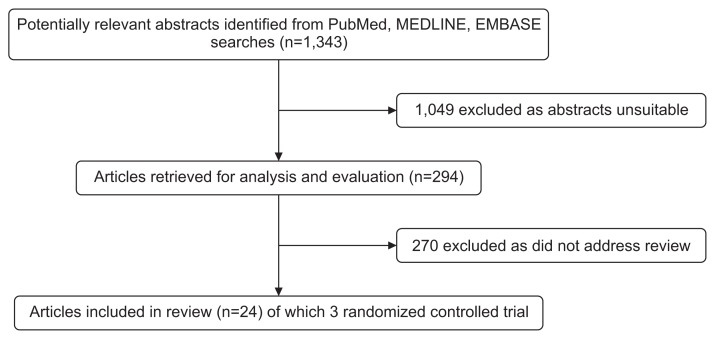
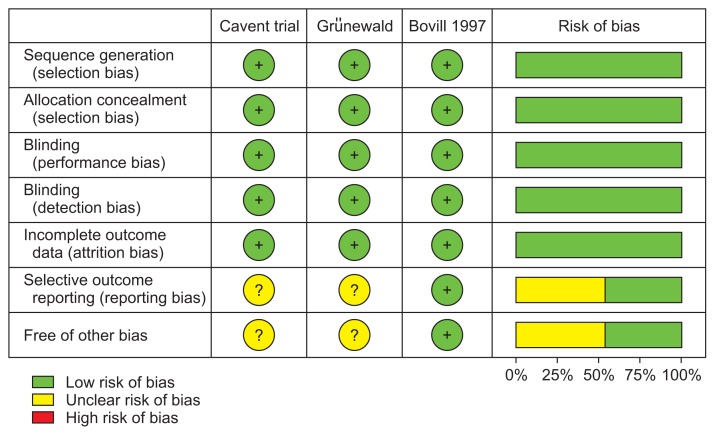
Materials and methods: MEDLINE, EMBASE, CENTRAL and Web of Science were searched for all articles on deep venous thrombosis, thrombolysis and correlations of clinical events (bleeding, successful thrombolysis) during thrombolysis with hemostatic parameters to March 2016. The risk of bias in included studies was assessed by Cochrane Collaboration's tool and Cochrane Risk of Bias Assessment Tool: for Non-Randomized Studies of Interventions.
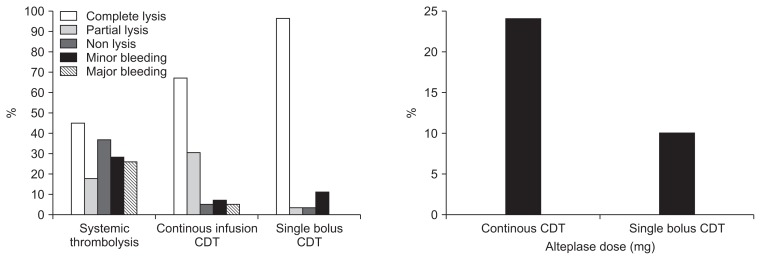
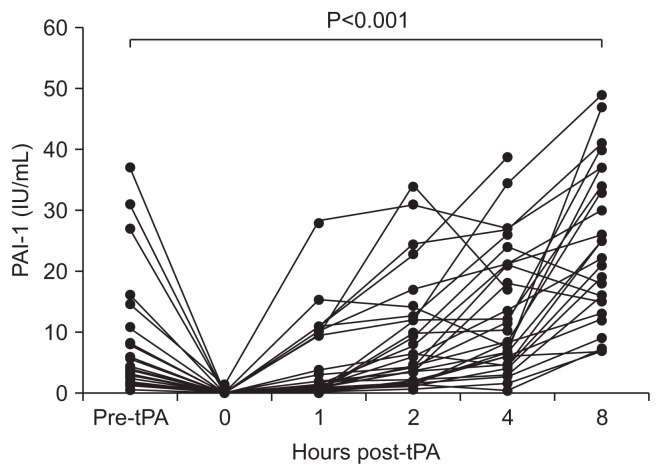
Results: Twenty-four studies were included in the review and we found that improving safety and efficacy of CDT by using ward based protocol depending on eight factors; strict patient selection criteria, types of fibrinolytic drugs, mode of fibrinolytic drug injection, biochemical markers monitoring (fibrinogen, D-dimer, activated partial thromboplastin time, plasminogen activator inhibitor-1), timing of intervention, usage of intermittent pneumatic calf, ward monitoring and thrombolysis imaging assessment (intravascular ultrasound). These factors may help to improve safety and efficacy by reducing total thrombolytic drug dosage and at the same time ensure successful lysis. There is a marked lack of randomized controlled trials discussing the safety and efficacy of catheter direct thrombolysis.
Conclusion: CDT can be performed safely and efficiently in clinical ward, providing that careful nursing, biochemical monitoring, proper selection and mode of infusion of fibrinolytic drugs, usage of Intermittent pneumatic calf and adequate thrombolysis imaging assessment are ensured.
Keywords: Bio-chemical markers; Catheter direct thrombolysis; Hemorrhage; Ilio-femoral deep vein thrombosis.
Conflict of interest statement
Conflict of interest: None.
Figures
References
-
- Department of Health and Chief Medical Officer. Report of the independent expert working group on the prevention of venous thromboembolism in hospitalised patients. 2007. Smart no. 278330.
Publication types
LinkOut - more resources
Full Text Sources
Other Literature Sources