Detection of Mycobacterium tuberculosis bacilli in bio-aerosols from untreated TB patients
- PMID: 29355225
- PMCID: PMC5757796
- DOI: 10.12688/gatesopenres.12758.2
Detection of Mycobacterium tuberculosis bacilli in bio-aerosols from untreated TB patients
Abstract
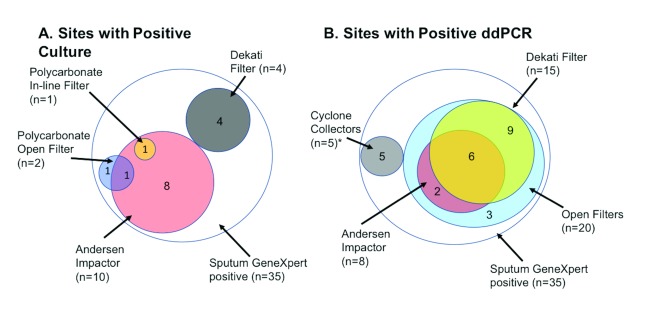
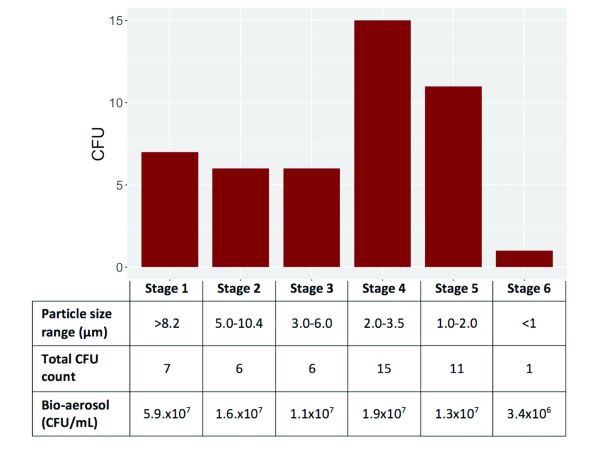
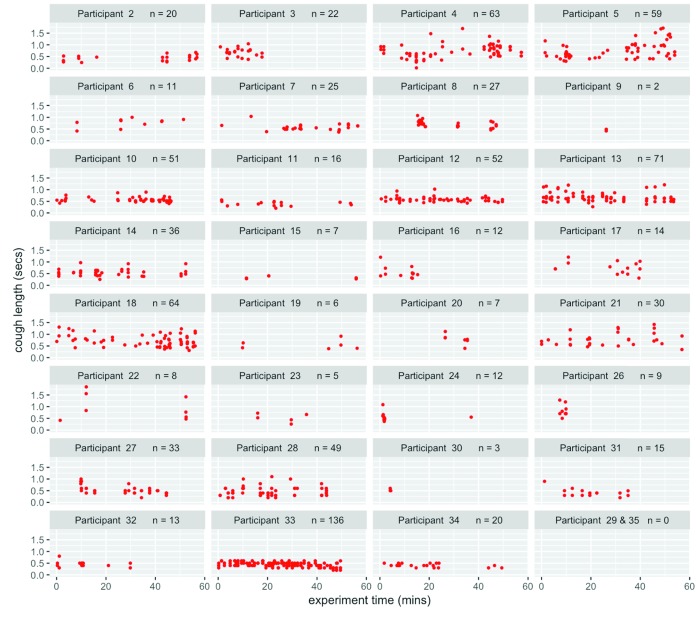
Background: Tuberculosis (TB) is predominantly an airborne disease. However, quantitative and qualitative analysis of bio-aerosols containing the aetiological agent, Mycobacterium tuberculosis (Mtb), has proven very challenging. Our objective is to sample bio-aerosols from newly diagnosed TB patients for detection and enumeration of Mtb bacilli. Methods: We monitored each of 35 newly diagnosed, GeneXpert sputum-positive, TB patients during 1 hour confinement in a custom-built Respiratory Aerosol Sampling Chamber (RASC). The RASC (a small clean-room of 1.4m ) incorporates aerodynamic particle size detection, viable and non-viable sampling devices, real-time CO 2 monitoring, and cough sound-recording. Microbiological culture and droplet digital polymerase chain reaction (ddPCR) were used to detect Mtb in each of the bio-aerosol collection devices. Results: Mtb was detected in 27/35 (77.1%) of aerosol samples; 15/35 (42.8%) samples were positive by mycobacterial culture and 25/27 (92.96%) were positive by ddPCR. Culturability of collected bacilli was not predicted by radiographic evidence of pulmonary cavitation, sputum smear positivity. A correlation was found between cough rate and culturable bioaerosol. Mtb was detected on all viable cascade impactor stages with a peak at aerosol sizes 2.0-3.5μm. This suggests a median of 0.09 CFU/litre of exhaled air (IQR: 0.07 to 0.3 CFU/l) for the aerosol culture positives and an estimated median concentration of 4.5x10 CFU/ml (IQR: 2.9x10 -5.6x10 ) of exhaled particulate bio-aerosol. Conclusions: Mtb was identified in bio-aerosols exhaled by the majority of untreated TB patients using the RASC. Molecular detection was more sensitive than mycobacterial culture on solid media, suggesting that further studies are required to determine whether this reflects a significant proportion of differentially detectable bacilli in these samples.
Keywords: RD9; bio-aerosol; ddPCR assay; respiratory aerosol sampling chamber; viable impaction.
Conflict of interest statement
Competing interests: SP is CEO/CTO of Senosis Health, which is commercializing the cough technology and has a US Patent pending. No other competing interests were disclosed.
Figures
References
-
- WHO: Global Tuberculosis Report.2016. Reference Source
LinkOut - more resources
Full Text Sources
Other Literature Sources