Deprescribing antipsychotics for behavioural and psychological symptoms of dementia and insomnia: Evidence-based clinical practice guideline
- PMID: 29358245
- PMCID: PMC5962971
Deprescribing antipsychotics for behavioural and psychological symptoms of dementia and insomnia: Evidence-based clinical practice guideline
Abstract
Objective: To develop an evidence-based guideline to help clinicians make decisions about when and how to safely taper and stop antipsychotics; to focus on the highest level of evidence available and seek input from primary care professionals in the guideline development, review, and endorsement processes.
Methods: The overall team comprised 9 clinicians (1 family physician, 1 family physician specializing in long-term care, 1 geriatric psychiatrist, 2 geriatricians, 4 pharmacists) and a methodologist; members disclosed conflicts of interest. For guideline development, a systematic process was used, including the GRADE (Grading of Recommendations Assessment, Development and Evaluation) approach. Evidence was generated from a Cochrane systematic review of antipsychotic deprescribing trials for the behavioural and psychological symptoms of dementia, and a systematic review was conducted to assess the evidence behind the benefits of using antipsychotics for insomnia. A review of reviews of the harms of continued antipsychotic use was performed, as well as narrative syntheses of patient preferences and resource implications. This evidence and GRADE quality-of-evidence ratings were used to generate recommendations. The team refined guideline content and recommendation wording through consensus and synthesized clinical considerations to address common front-line clinician questions. The draft guideline was distributed to clinicians and stakeholders for review and revisions were made at each stage.
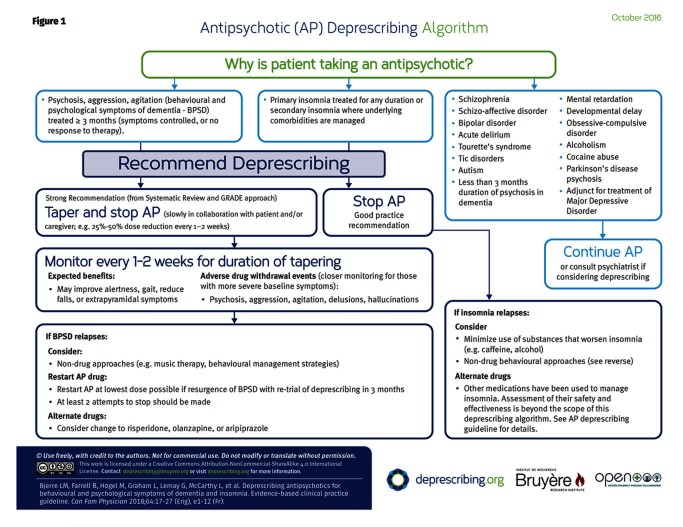
Recommendations: We recommend deprescribing antipsychotics for adults with behavioural and psychological symptoms of dementia treated for at least 3 months (symptoms stabilized or no response to an adequate trial) and for adults with primary insomnia treated for any duration or secondary insomnia in which underlying comorbidities are managed. A decision-support algorithm was developed to accompany the guideline.
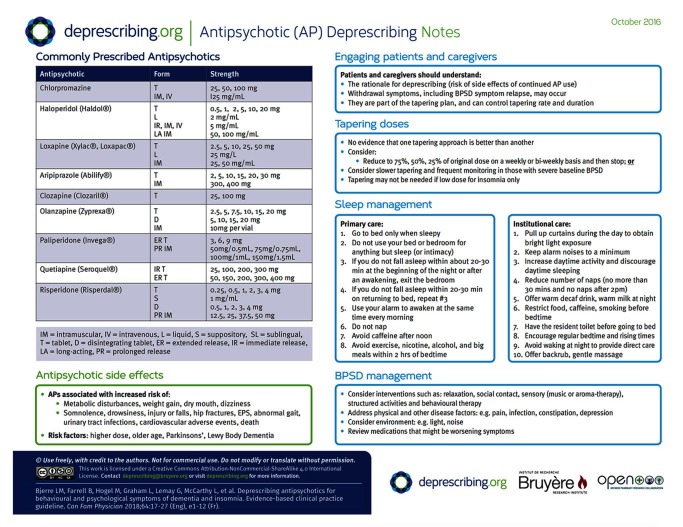
Conclusion: Antipsychotics are associated with harms and can be safely tapered. Patients and caregivers might be more amenable to deprescribing if they understand the rationale (potential for harm), are involved in developing the tapering plan, and are offered behavioural advice or management. This guideline provides recommendations for making decisions about when and how to reduce the dose of or stop antipsychotics. Recommendations are meant to assist with, not dictate, decision making in conjunction with patients and families.
Copyright© the College of Family Physicians of Canada.
References
-
- Schneider LS, Dagerman K, Insel PS. Efficacy and adverse effects of atypical antipsychotics for dementia: meta-analysis of randomized, placebo-controlled trials. Am J Geriatr Psychiatry. 2006;14(3):191–210. - PubMed
-
- Ma H, Huang Y, Cong Z, Wang Y, Jiang W, Gao S, et al. The efficacy and safety of atypical antipsychotics for the treatment of dementia: a meta-analysis of randomized placebo-controlled trials. J Alzheimers Dis. 2014;42(3):915–37. - PubMed
Publication types
MeSH terms
Substances
LinkOut - more resources
Full Text Sources
Medical