


Study on the spoilage potential of Pseudomonas fluorescens on salmon stored at different temperatures
- PMID: 29358813
- PMCID: PMC5756204
- DOI: 10.1007/s13197-017-2916-x
Study on the spoilage potential of Pseudomonas fluorescens on salmon stored at different temperatures
Abstract
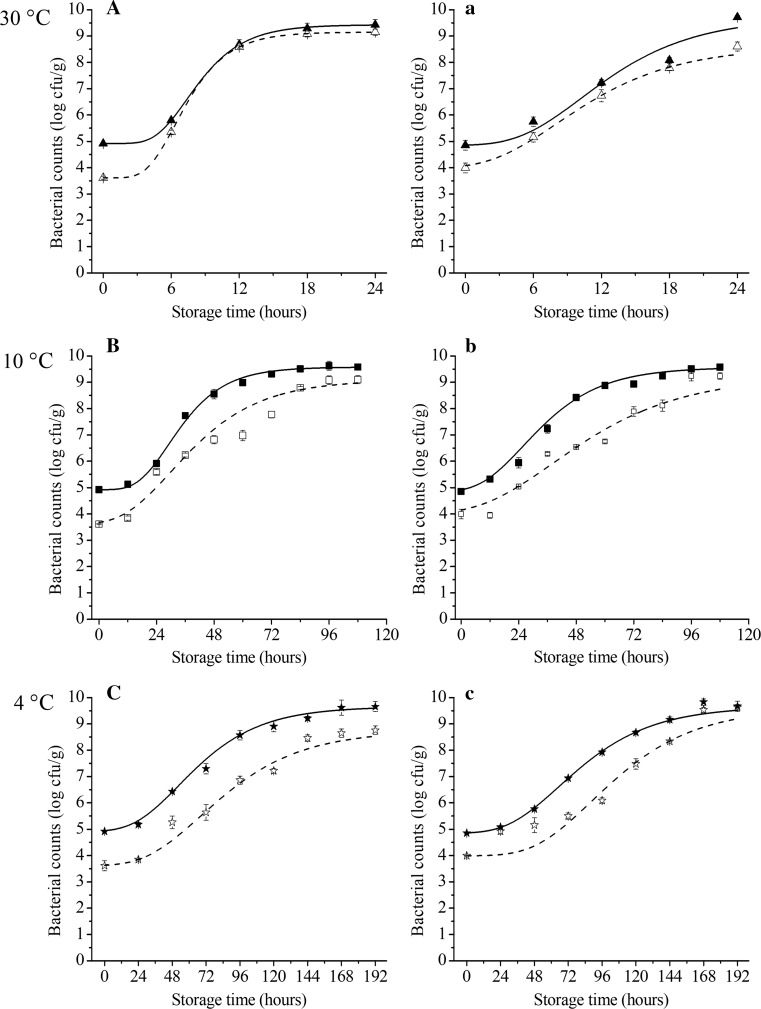
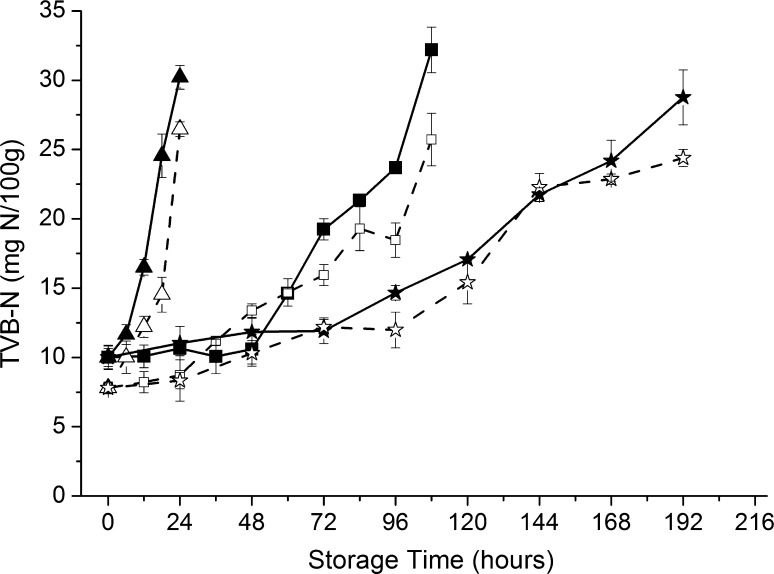
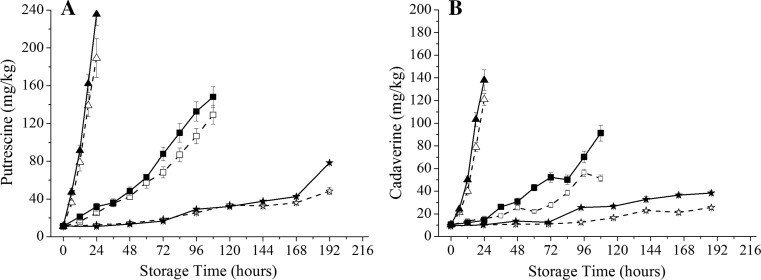
The bacterial kinetics and quality indexes [sensory quality, total volatile basic nitrogen (TVB-N), thiobarbituric acid value, biogenic amine, and amino acids] were analyzed on salmon inoculated with Pseudomonas fluorescens during storage under different temperatures (30, 10, and 4 °C). The bacterial kinetics revealed that P. fluorescens showed a steady growth at low temperatures (10 and 4 °C). The TVB-N yield factors of the sample stored at 4 °C indicated that each bacterial cell of P. fluorescens displayed greater spoilage activity at low temperatures. A remarkable correlation was found between the production of biogenic amines and bacterial counts. The results also highlighted that P. fluorescens cultured at 4 °C had higher demand for amino acids.
Keywords: Amino acid degradation; Bacterial kinetic; Pseudomonas fluorescens; Salmo salar; Spoilage potential.
Figures
References
-
- Amanatidou A, Schlüter O, Lemkau K, Gorris LGM, Smid EJ, Knorr D. Effect of combined application of high pressure treatment and modified atmospheres on the shelf life of fresh Atlantic salmon. Innov Food Sci Emerg Technol. 2000;1:87–98. doi: 10.1016/S1466-8564(00)00007-2. - DOI
-
- Cardinal M, Knockaert C, Torrissen O, Sigurgisladottir S, Mørkøre T, Thomassen M, Vallet JL. Relation of smoking parameters to the yield, colour and sensory quality of smoked Atlantic salmon (Salmo salar) Food Res Int. 2001;34:537–550. doi: 10.1016/S0963-9969(01)00069-2. - DOI
LinkOut - more resources
Full Text Sources
Other Literature Sources
Molecular Biology Databases