


Commensal Homeostasis of Gut Microbiota-Host for the Impact of Obesity
- PMID: 29358923
- PMCID: PMC5766676
- DOI: 10.3389/fphys.2017.01122
Commensal Homeostasis of Gut Microbiota-Host for the Impact of Obesity
Abstract
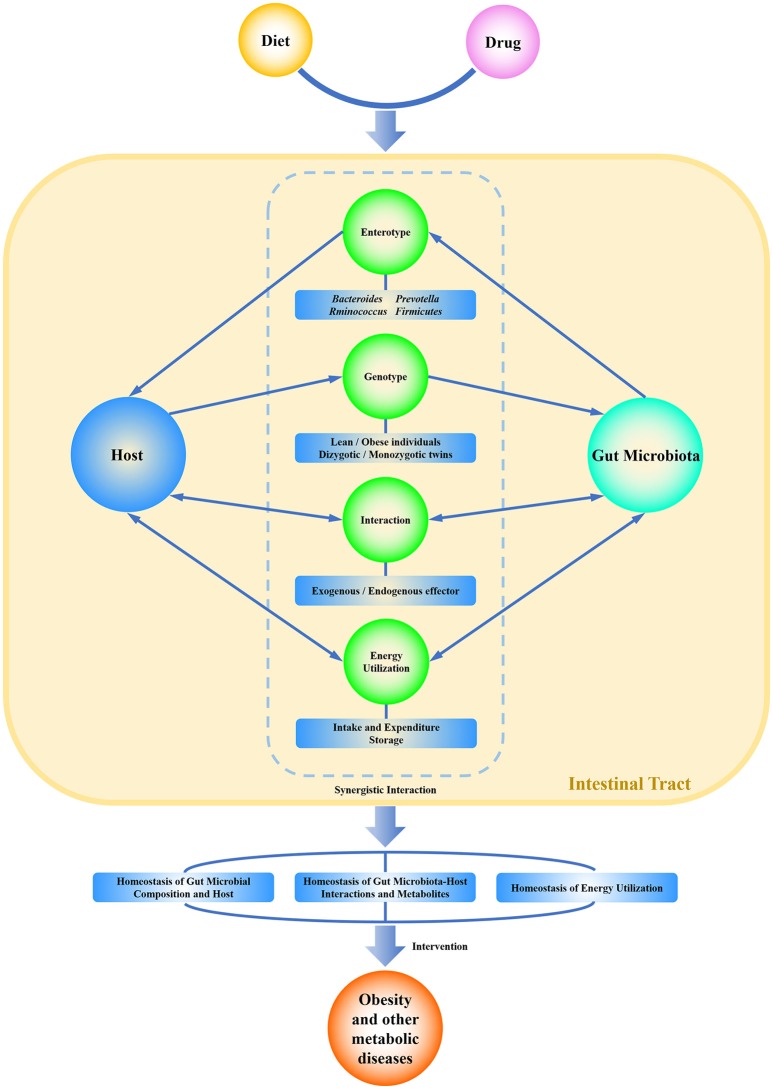
Gut microbiota and their metabolites have been linked to a series of chronic diseases such as obesity and other metabolic dysfunctions. Obesity is an increasingly serious international health issue that may lead to a risk of insulin resistance and other metabolic diseases. The relationship between gut microbiota and the host is both interdependent and relatively independent. In this review, the causality of gut microbiota and its role in the pathogenesis and intervention of obesity is comprehensively presented to include human genotype, enterotypes, interactions of gut microbiota with the host, microbial metabolites, and energy homeostasis all of which may be influenced by dietary nutrition. Diet can enhance, inhibit, or even change the composition and functions of the gut microbiota. The metabolites they produce depend upon the dietary substrates provided, some of which have indispensable functions for the host. Therefore, diet is a key factor that maintains or not a healthy commensal relationship. In addition, the specific genotype of the host may impact the phylogenetic compositions of gut microbiota through the production of host metabolites. The commensal homeostasis of gut microbiota is favored by a balance of microbial composition, metabolites, and energy. Ultimately the desired commensal relationship is one of mutual support. This article analyzes the clues that result in patterns of commensal homeostasis. A deeper understanding of these interactions is beneficial for developing effective prevention, diagnosis, and personalized therapeutic strategies to combat obesity and other metabolic diseases. The idea we discuss is meant to improve human health by shaping or modulating the beneficial gut microbiota.
Keywords: commensal homeostasis; diet; enterotypes; gut microbiota; interactions; obesity.
Figures
References
-
- Broekaert W. F., Courtin C. M., Verbeke K., Van de Wiele T., Verstraete W., Delcour J. A. (2011). Prebiotic and other health-related effects of cereal-derived arabinoxylans, arabinoxylan-oligosaccharides, and xylooligosaccharides. Crit. Rev. Food Sci. Nutr. 51, 178–194. 10.1080/10408390903044768 - DOI - PubMed
Publication types
LinkOut - more resources
Full Text Sources
Other Literature Sources
