


Decarboxylative alkylation for site-selective bioconjugation of native proteins via oxidation potentials
- PMID: 29359756
- PMCID: PMC6343675
- DOI: 10.1038/nchem.2888
Decarboxylative alkylation for site-selective bioconjugation of native proteins via oxidation potentials
Abstract
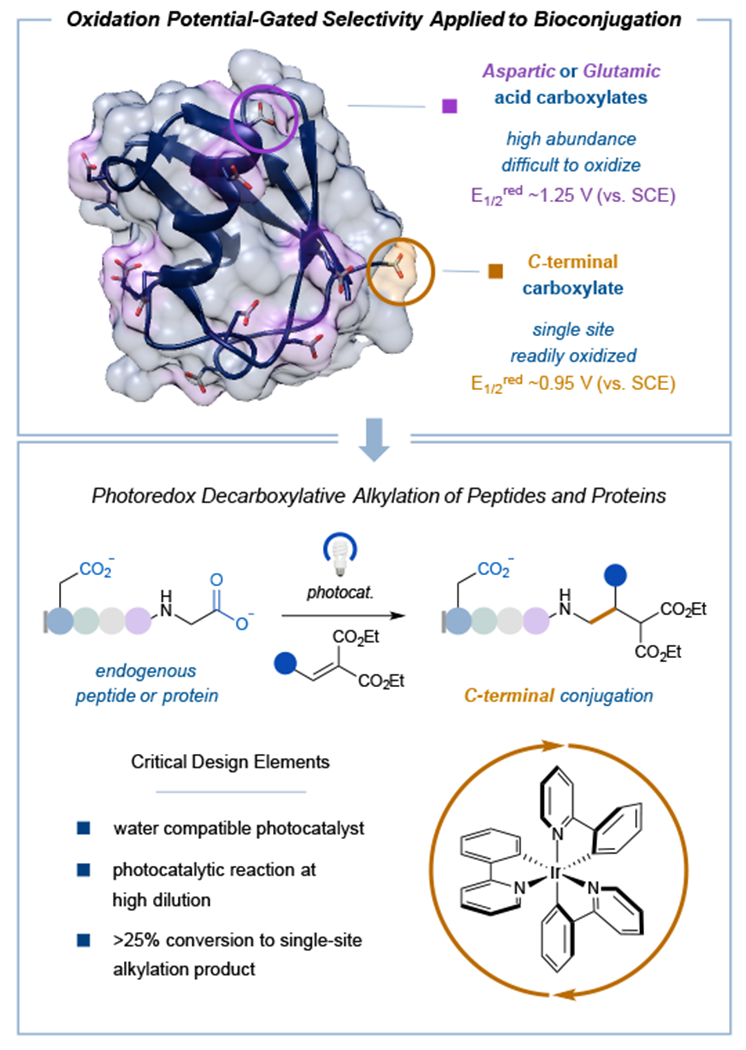
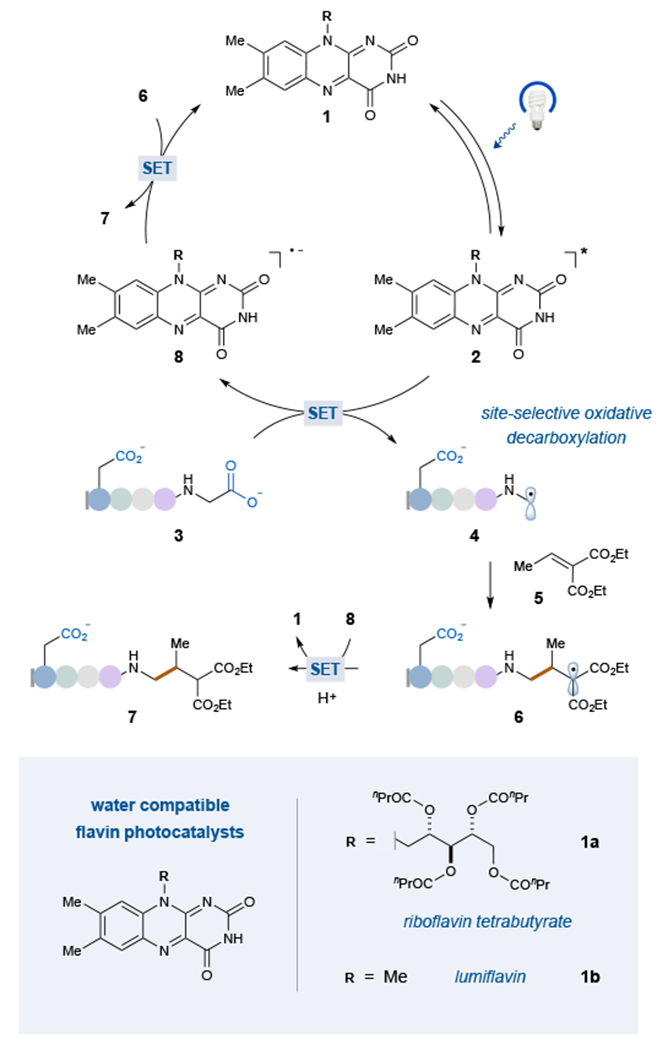
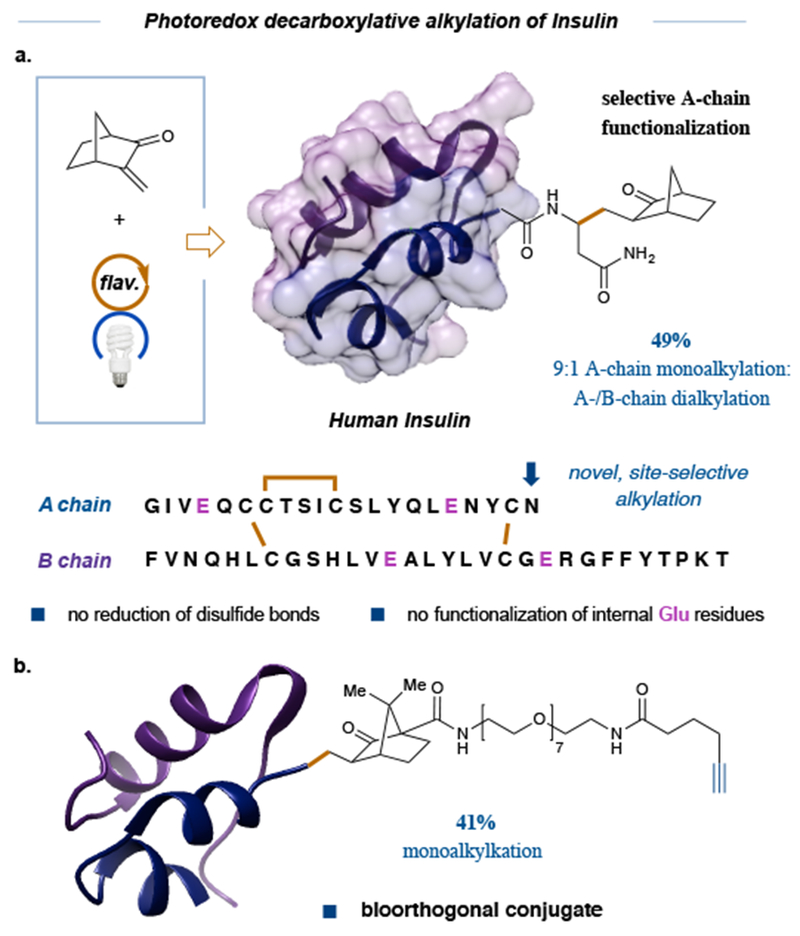
The advent of antibody-drug conjugates as pharmaceuticals has fuelled a need for reliable methods of site-selective protein modification that furnish homogeneous adducts. Although bioorthogonal methods that use engineered amino acids often provide an elegant solution to the question of selective functionalization, achieving homogeneity using native amino acids remains a challenge. Here, we explore visible-light-mediated single-electron transfer as a mechanism towards enabling site- and chemoselective bioconjugation. Specifically, we demonstrate the use of photoredox catalysis as a platform to selectivity wherein the discrepancy in oxidation potentials between internal versus C-terminal carboxylates can be exploited towards obtaining C-terminal functionalization exclusively. This oxidation potential-gated technology is amenable to endogenous peptides and has been successfully demonstrated on the protein insulin. As a fundamentally new approach to bioconjugation this methodology provides a blueprint toward the development of photoredox catalysis as a generic platform to target other redox-active side chains for native conjugation.
Conflict of interest statement
The authors declare no competing financial interests.
Figures
References
-
- Boutureira O; Bernardes GJL Advances in chemical protein modification. Chem. Rev. 115, 2174–2195 (2015). - PubMed
-
- Krall N; da Cruz FP; Boutureira O; Bernardes GJL Site-selective protein-modification chemistry for basic biology and drug development. Nat. Chem. 8, 103–113 (2016). - PubMed
-
- Saxon E; Bertozzi CR Cell surface engineering by a modified Staudinger reaction. Science 287, 2007–2010 (2000). - PubMed
-
- Baslé E; Joubert N; Pucheault M Protein chemical modification on endogenous amino acids. Chem. Biol. 17, 213–227 (2010). - PubMed
Publication types
MeSH terms
Substances
Grants and funding
LinkOut - more resources
Full Text Sources
Other Literature Sources
Medical
