


Differences in the Tensor Veli Palatini Between Adults With and Without Cleft Palate Using High-Resolution 3-Dimensional Magnetic Resonance Imaging
- PMID: 29360409
- PMCID: PMC6506844
- DOI: 10.1177/1055665617752802
Differences in the Tensor Veli Palatini Between Adults With and Without Cleft Palate Using High-Resolution 3-Dimensional Magnetic Resonance Imaging
Abstract
Objective: To investigate the dimensions of the tensor veli palatini (TVP) muscle in adults with and without cleft palate.
Design: Prospective study.
Participants: There were a total of 14 adult participants, 8 noncleft and 6 with cleft palate.
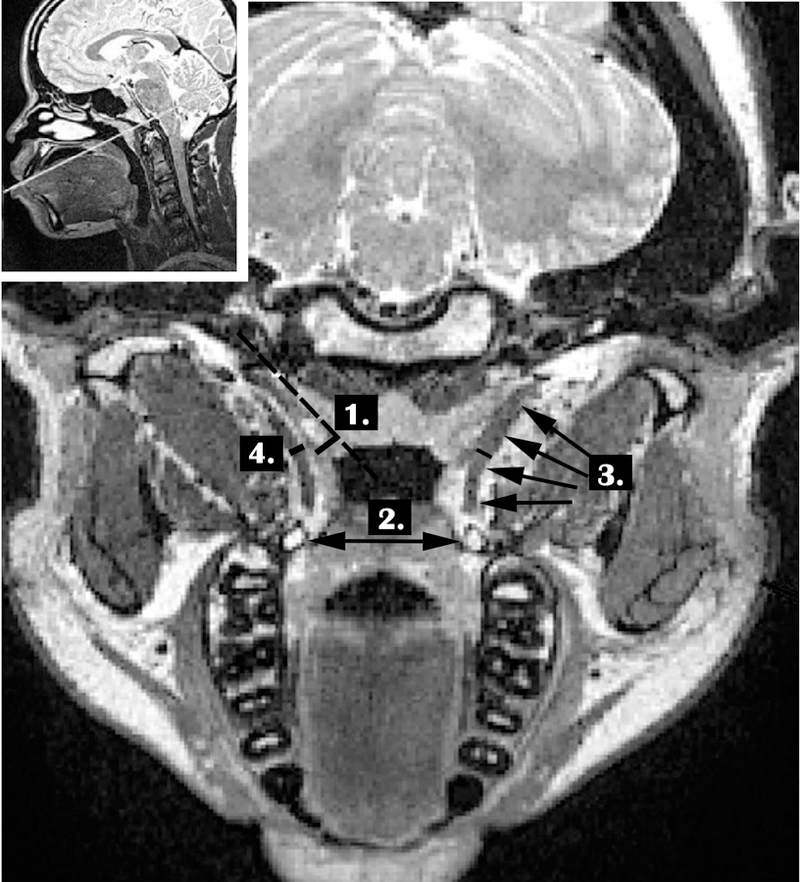
Methods: Analysis and comparison of the TVP muscle and surrounding structures was completed using 3D MRI data and Amira 5.5 Visualization Modeling software. TVP muscle volume, hamular process distance, mucosal thickness, TVP muscle length, and TVP muscle diameter were used for comparison between participant groups based upon previous research methods.
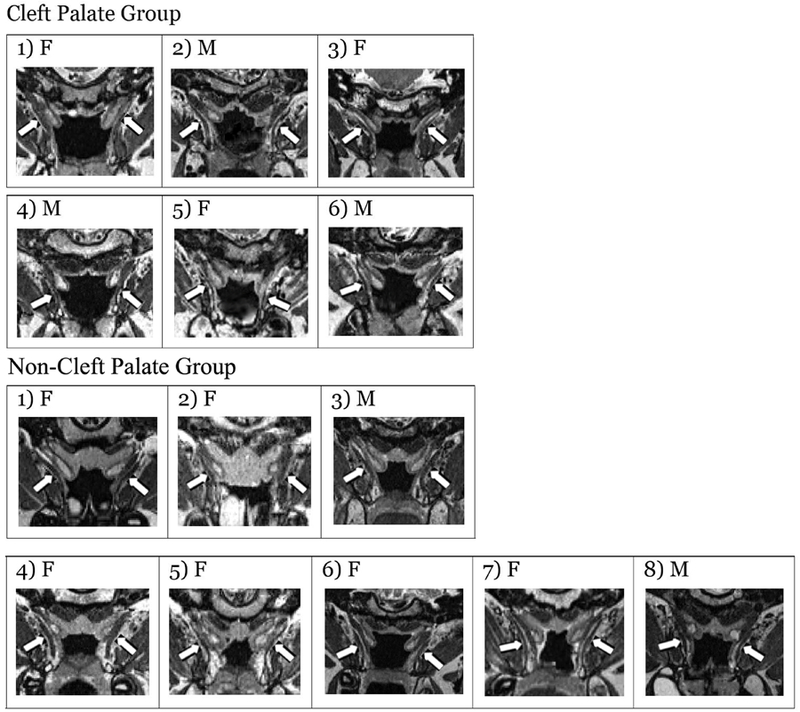
Results: Mann-Whitney U tests revealed a significantly smaller ( U < .001, P = .002) TVP muscle volume in the cleft palate group (median = 536.22 mm3) compared to individuals in the non-cleft palate group (median = 895.19 mm3). The TVP muscle was also significantly shorter ( U = 1.00, P = .003) in the cleft palate group (median = 18.04 mm) versus the non-cleft palate (median = 21.18 mm). No significant differences were noted for the other measured parameters.
Conclusion: Significant differences in the TVP muscle volume and length among the noncleft participants found in this study may insights into the reported increased incidence of otitis media with effusion (OME) seen in the cleft population. Results from this study contribute to our understanding of the underlying anatomic differences among individuals with cleft palate.
Keywords: anatomy; magnetic resonance imaging; muscle function.
Figures
References
-
- Alper CM, Swarts JD, Singla A, Banks J, Doyle WJ. Relationship between the electromyographic activity of the paratubal muscles and Eustachian tube opening assessed by sonotubometry and videoendoscopy. Arch Otolaryngol Head Neck Surg 2012;138:741–746. - PubMed
-
- Aniansson G, Svensson H, Becker M, Ingvarsson L. Otitis media and feeding with breast milk of children with cleft palate. Scand J Plast Reconstr Surg Hand Surg 2002;36:9–15. - PubMed
-
- Barsoumian R, Kuehn DP, Moon JB, Canady JW. An anatomic study of the tensor veli palatini and dilatator tubae muscles in relation to Eustachian tube and velar function. Cleft Palate Craniofac J 1998;35(2):101–10. - PubMed
-
- Bluestone CD, Bluestone MB. Eustachian tube: structure, function, role in otitis media Hamilton: BC: Decker; 2005.
-
- Cole RM, Cole JE, Intaraprasong S. Eustachian tube function in cleft lip and palate patients. Arch Otolaryngol 1974;99:337–341. - PubMed
Publication types
MeSH terms
Grants and funding
LinkOut - more resources
Full Text Sources
Other Literature Sources
Medical
