. 2018 Jan 23;13(1):e0191494.
doi: 10.1371/journal.pone.0191494. eCollection 2018.

Genetic diversity of human respiratory syncytial virus circulating among children in Ibadan, Nigeria

Affiliations

Genetic diversity of human respiratory syncytial virus circulating among children in Ibadan, Nigeria

Olukunle Ogunsemowo et al. PLoS One. .

Abstract

Human respiratory syncytial virus (HRSV) is the most common viral cause of acute lower respiratory tract infections (LRTIs) in infants and young children however, without an effective vaccine licensed for human use till date. Information on the circulating genotypes of HRSV from regions with high-burden of infection is vital in the global efforts towards the development of protective vaccine. We report here the genotypes of HRSV circulating among children in Ibadan, the first of such from Nigeria.Nasopharyngeal and oropharyngeal swabs collected from 231 children presenting with respiratory infections in some health facilities for care as well as those attending immunization centers for routine vaccination in Ibadan, Nigeria were used for the study. The 2nd hypervariable (HVR2) region of the glycoprotein (G) gene of HRSV was amplified and sequenced using HRSV group specific primers. HRSV was detected in 41 out of the 231 samples. Thirty-three of the isolates were successfully subtyped(22 subtype A and 11 subtype B). Fourteen of the subtype A and all the subtype B were successfully sequenced and genotyped. Phylogenetic analysis showed that genotype ON1 with 72 nucleotide (nt) duplication was the major subgroup A virus (11 of 14) detected together with genotype NA2. All the HRSV subtype B detected belong to the BA genotype with characteristic 60nt duplication. The ON1 genotypes vary considerably from the prototype strain due to amino acid substitutions including T292I which has not been reported elsewhere. The NA2 genotypes have mutations on four antigenic sites within the HVR2relative to the prototype A2. In conclusion, three genotypes of HRSV were found circulating in Ibadan, Nigeria. Additional study that will include isolates from other parts of the country will be done to determine the extent of genotype diversity of HRSV circulating in Nigeria.


Conflict of interest statement

Competing Interests: The authors have declared that no competing interests exist.

Figures

Fig 1
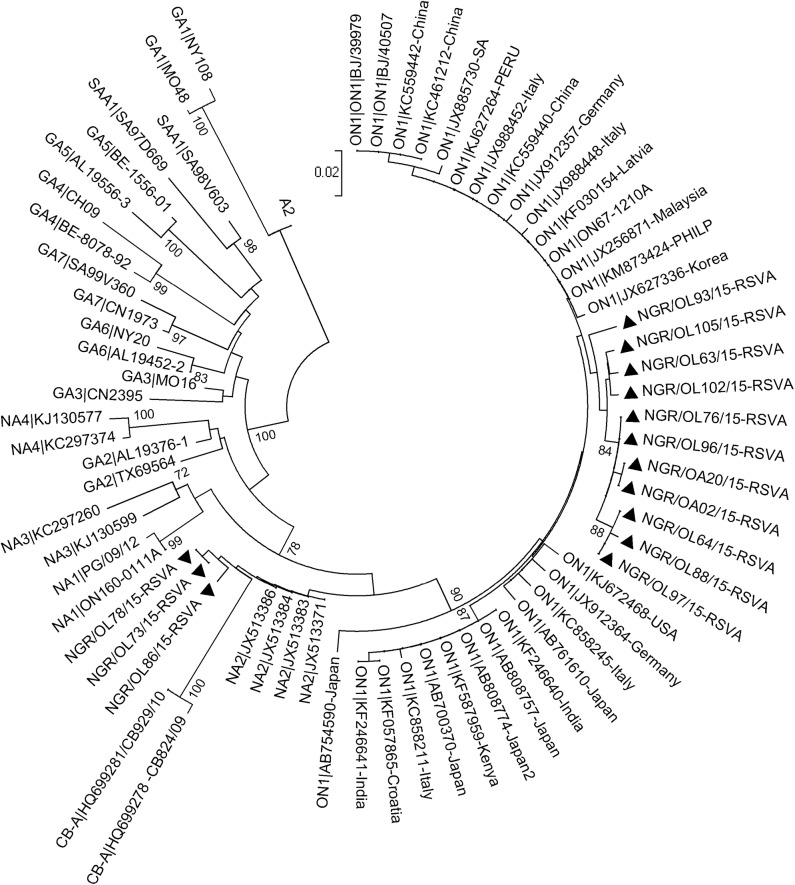
Fig 1. Phylogenetic tree of the second hypervariable region of the G gene of HRSV A.
The genotypes represented by the reference strains are indicated before the strain ID with the country of isolation of the ON1 reference strains indicated next to the strain names. The genotypes circulating in Ibadan, Nigeria are indicated by solid triangles. Multiple sequences alignment and phylogenetic tree were constructed using Muscle and neighbor-joining algorithm in MEGA 5.05 software. Statistical significance of the tree topology was tested by 1000 bootstrap replication. Only bootstrap values above 70% are displayed at the nodes. Scale bar indicates nucleotide substitutions per site.
Fig 2
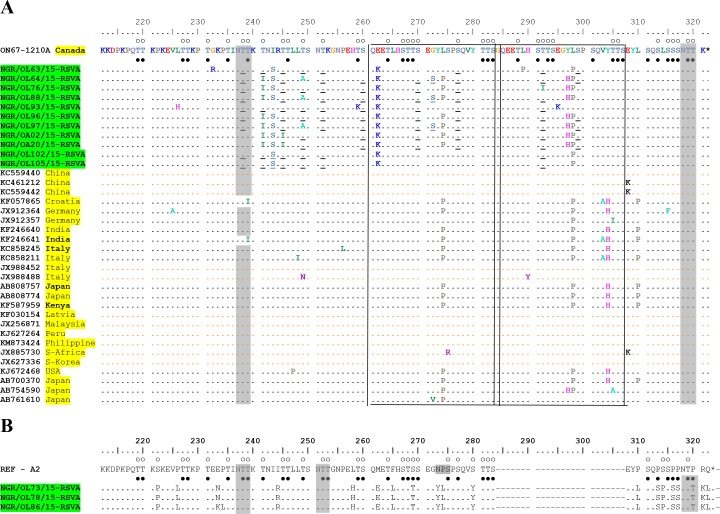
Fig 2. Alignment of deduced amino acid sequences of 2nd hypervariable region of HRSV-A strains.
A) Alignment of HRSV-A genotype ON1 sequences from different parts of the world. Alignments are shown and residues numbered relative to sequences of prototype ON1 strain ON67-1210A (GenBank accession no. JN257693). The strains from this study are highlighted. The country of isolation of other strains used in the alignment are also highlighted. Identical residues are indicated by dots and stop codons by asterisks. Potential N-glycosylation sites (N-X-T/S, where X is not a proline) are indicated by gray-shaded rectangles. Potential O-glycosylation sites of the prototype ON1 strain are indicated by unfilled circles, while black circles indicated the predicted O-glycosylation sites common in all Nigeria strains. Other predicted O- glycosylation sites, not found in all the strains in Nigeria are underlined. The two copies of the 23 amino acids duplicated sequences are framed by rectangles. B) Alignment of HRSV-A subtype NA2 from this study. Alignments are shown relative to the sequence of prototype strain A2 (GenBank accession number M11486). The identifier of strains from this study are highlighted. Residues are numbered relative to the amino acid sequences of prototype ON1 strain ON67-1210A (GenBank accession no. JN257693). Identical residues are indicated by dots, alignment gaps by dashes and stop codons by asterisks. Potential N-glycosylation sites (N-X-T/S, where X is not a proline) are indicated by shaded rectangles. Potential O-glycosylation sites of the prototype A2 strain were indicated by unfilled circles, while black circles indicated the predicted O-glycosylation sites in the Nigeria NA2 strains.
Fig 3
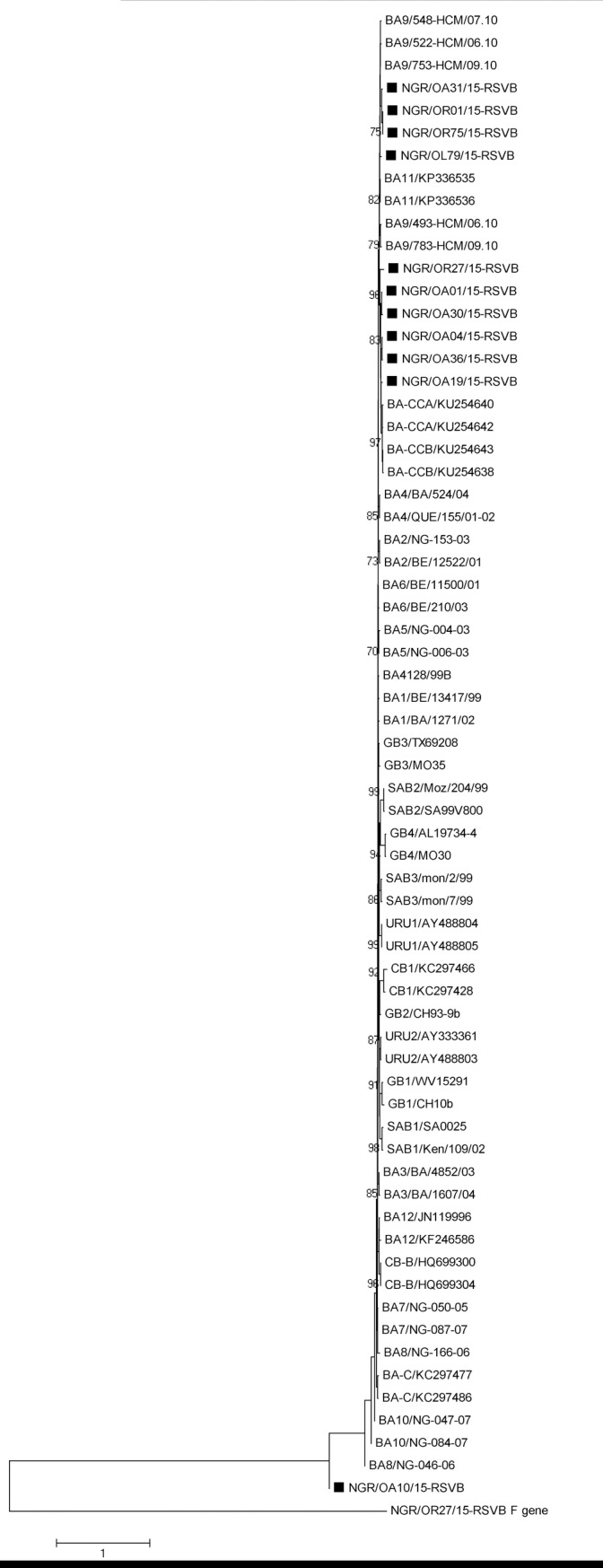
Fig 3. Phylogenetic tree of the second hypervariable region of the G gene of HRSV B.
The genotypes represented by the reference strains are indicated before the strain ID. The genotypes circulating in Ibadan, Nigeria are indicated by solid squares. Multiple sequences alignment and phylogenetic tree were constructed using Clustal W and neighbor-joining algorithm in MEGA 5.05 software. Statistical significance of the tree topology was tested by 1000 bootstrap replication. Only bootstrap values above 70% are displayed at the nodes. Scale bar indicates nucleotide substitutions per site.
Fig 4
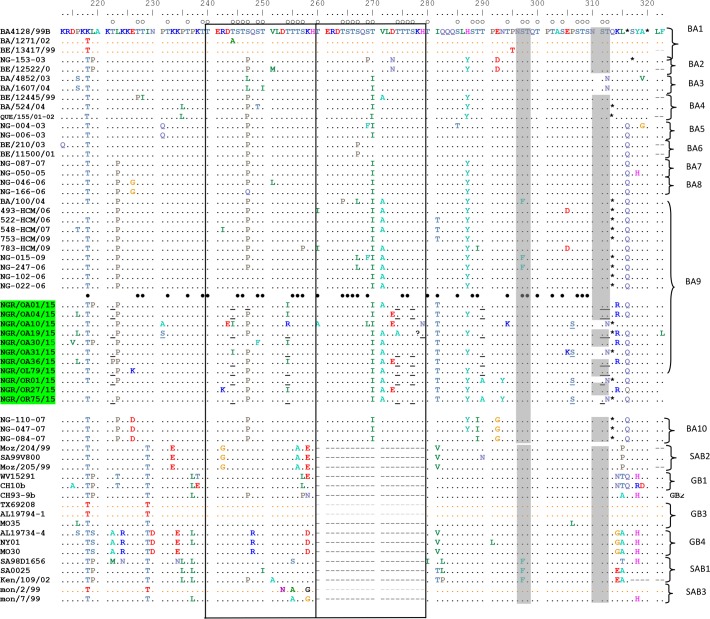
Fig 4. Amino acid alignments of the 2nd hypervariable region of the G protein from HRSV-B.
Residues are numbered relative to the sequences of prototype BA4128/99B (GenBank accession number AY333364). Identical residues are indicated by dots; gaps are indicated by dash and stop codons by asterisks. The two copies of the duplicated 20-amino acids are framed by rectangles. Potential N-glycosylation sites (NXT/S, where X is not a proline) are indicated by shaded rectangles. Potential O-glycosylation sites of the prototype BA strain are indicated by unfilled circles, while black circles indicated the predicted O-glycosylation sites common to all Nigeria strains. Other predicted O–glycosylation sites that are not found in all the strains from Nigeria are underlined. The genotypes are shown on the right by brackets.

References

    1. Shay DK, Holman RC, Newman RD, Liu LL, Stout JW, Anderson LJ. Bronchiolitis-associated hospitalizations among US children, 1980–1996. JAMA. 1999;282(15):1440–6. - PubMed
    1. Scott P, Ochola R, Sande C, Ngama M, Okiro E, Medley G, et al. Comparison of strain-specific antibody responses during primary and secondary infections with respiratory syncytial virus. J Med Virol. 2007;79(12):1943–50. 10.1002/jmv.20999 - DOI - PMC - PubMed
    1. Collins PL and Grahams BS. Viral and host factors in human respiratory syncytial virus pathogenesis. J Virol. 2008; 82(5):2040–55 10.1128/JVI.01625-07 - DOI - PMC - PubMed
    1. Blount R. E. Jr, Morris J. A. and Savage R. E. 1956. “Recovery of Cytopathogenic Agent from Chimpanzees with Coryza.” Proc. Soc. Exp. Bio. Med. 92:544–594. - PubMed
    1. Amarasinghe GK, Bao Y, Basler CF, Bavari S, Beer M, Bejerman N, et al. Taxonomy o the order Mononegavirales. Arch Virol. 2017. 1–12. 10.1007/s00705-017-3311-7 - DOI - PMC - PubMed

Publication types