


The tibial bayonet method of wound closure
- PMID: 29363013
- PMCID: PMC6042222
- DOI: 10.1007/s11751-018-0304-3
The tibial bayonet method of wound closure
Abstract
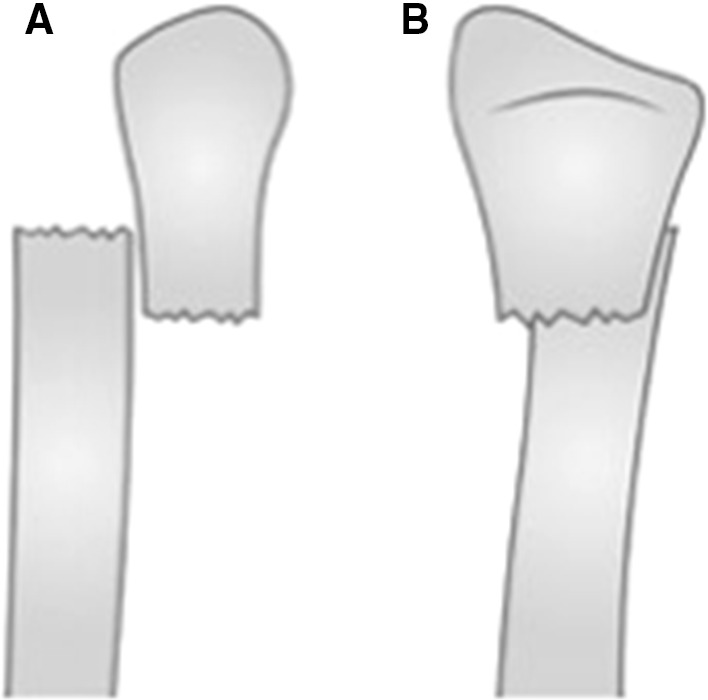
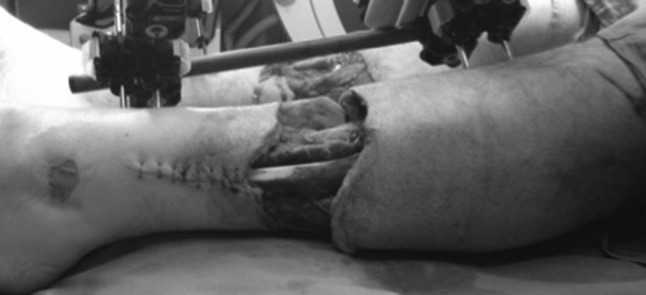
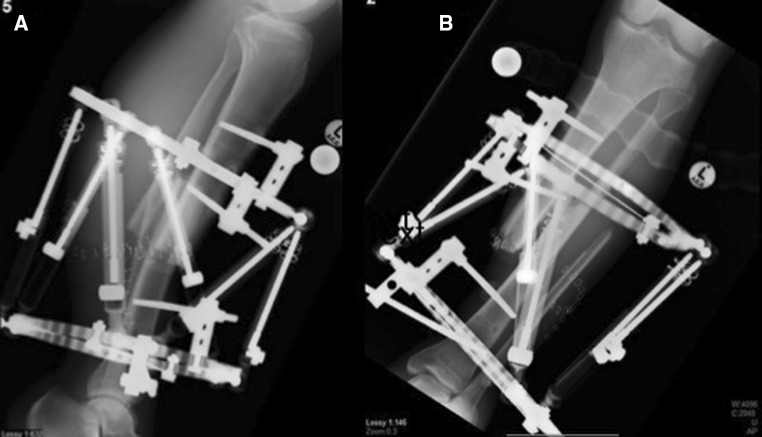
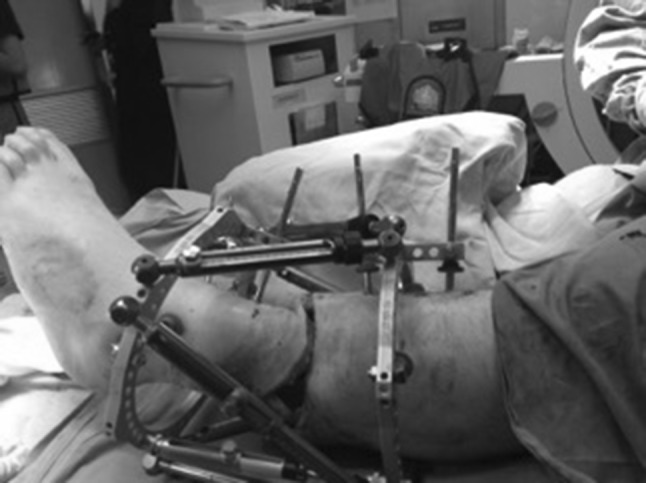
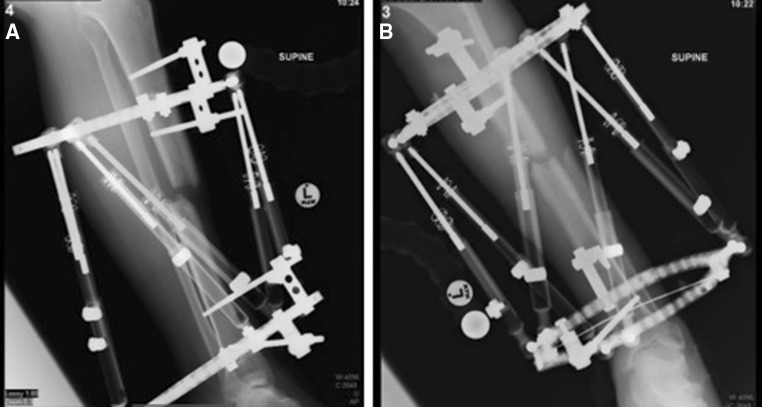
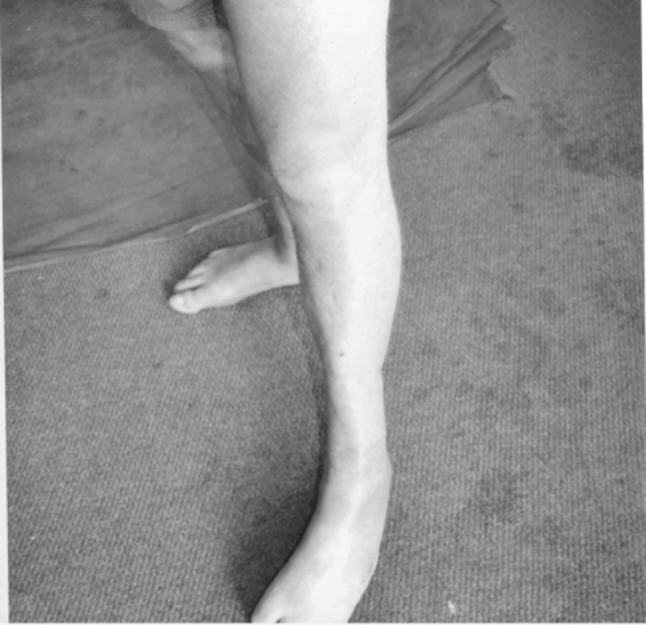
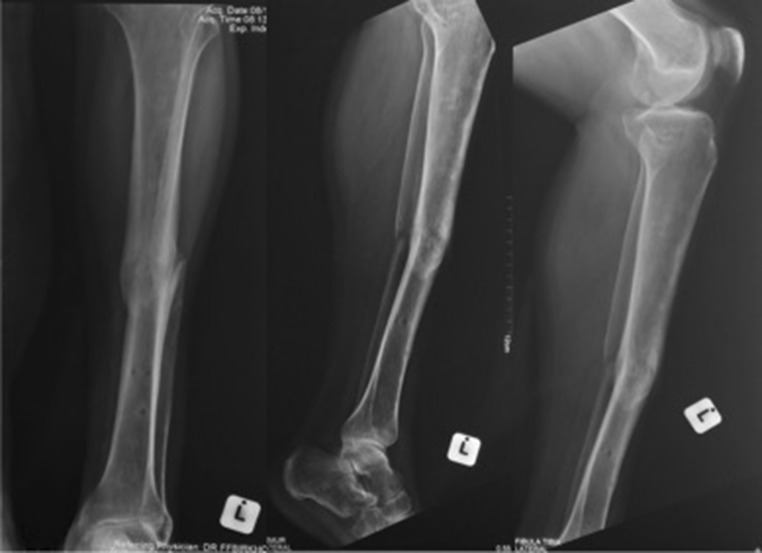
Management of open lower limb fractures with soft tissue defects can be a technically challenging orthopaedic problem. Limited availability of orthoplastic services means that alternatives to the fix and flap concept are required in order to prevent infected non-unions from developing. The proposed 'bayonet apposition' allows the surgeon to temporarily shorten the limb without angulating the limb or creating a bone defect and removing viable bone. The viable bone edges are overlapped in a bayonet-like manner in order to appose the wound and skin edges. The limb length is restored by gradually distracting the bone segments once the soft tissues have healed. This is facilitated with a hexapod fixator for stabilization of the fracture and distraction. Prerequisites for utilizing this method are circumferential soft tissue damage to the lower limb with viable distal tissue. The bayonet method allows primary closure of a wound and rapid restoration of the native length of the limb.
Keywords: Bayonet method; Compound tibial fractures; Duplication; Hexapod-assisted closure; Limb salvage.
Conflict of interest statement
Conflict of interest
The authors declare that they have no conflict of interest.
Ethical standards
The content of the article is the sole work of the authors. One or more of the authors are paid educational consultants for the medical device companies mentioned in the text. The procedures followed were in accordance with the ethical standards of the Helsinki Declaration (1964, amended most recently in 2008) of the World Medical Association. The patient’s written consent was obtained for inclusion of his data in this paper.
Figures
References
-
- Giannoudis P, Papakostidis C, Roberts C. A review of the management of open fractures of the tibia and femur. Bone Joint J. 2006;88(3):281–289. - PubMed
LinkOut - more resources
Full Text Sources
Other Literature Sources
