Nitric Oxide Production by Myeloid-Derived Suppressor Cells Plays a Role in Impairing Fc Receptor-Mediated Natural Killer Cell Function
- PMID: 29363526
- PMCID: PMC7184799
- DOI: 10.1158/1078-0432.CCR-17-0691
Nitric Oxide Production by Myeloid-Derived Suppressor Cells Plays a Role in Impairing Fc Receptor-Mediated Natural Killer Cell Function
Abstract
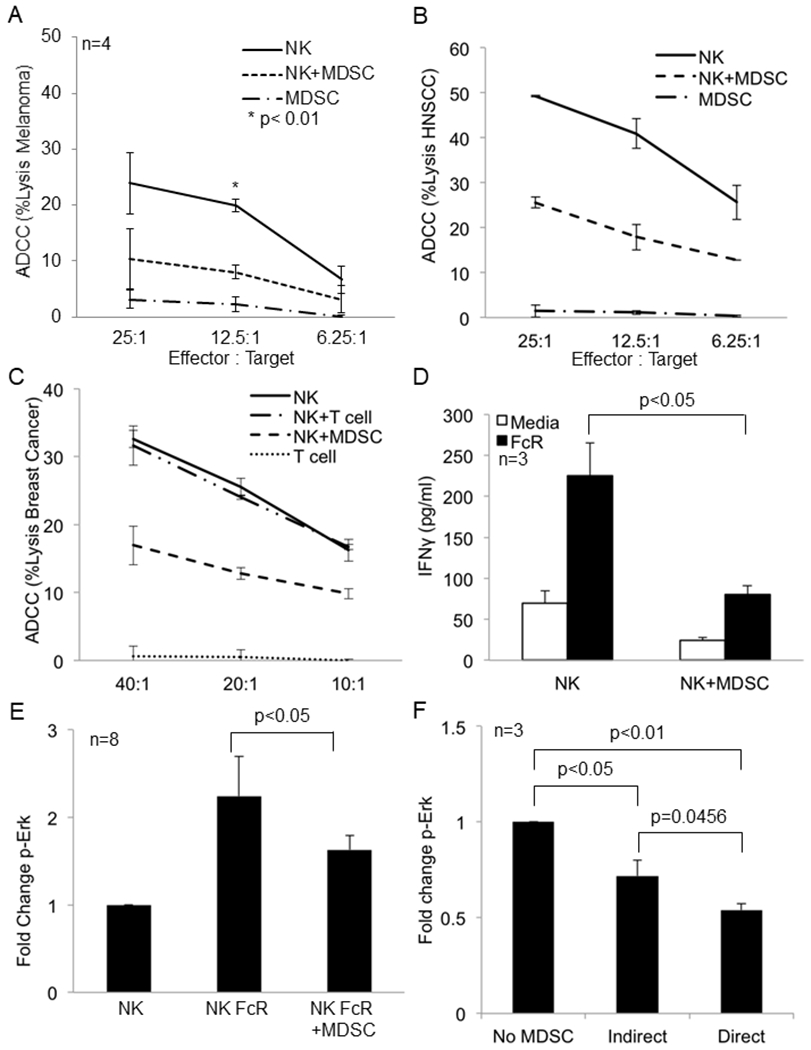
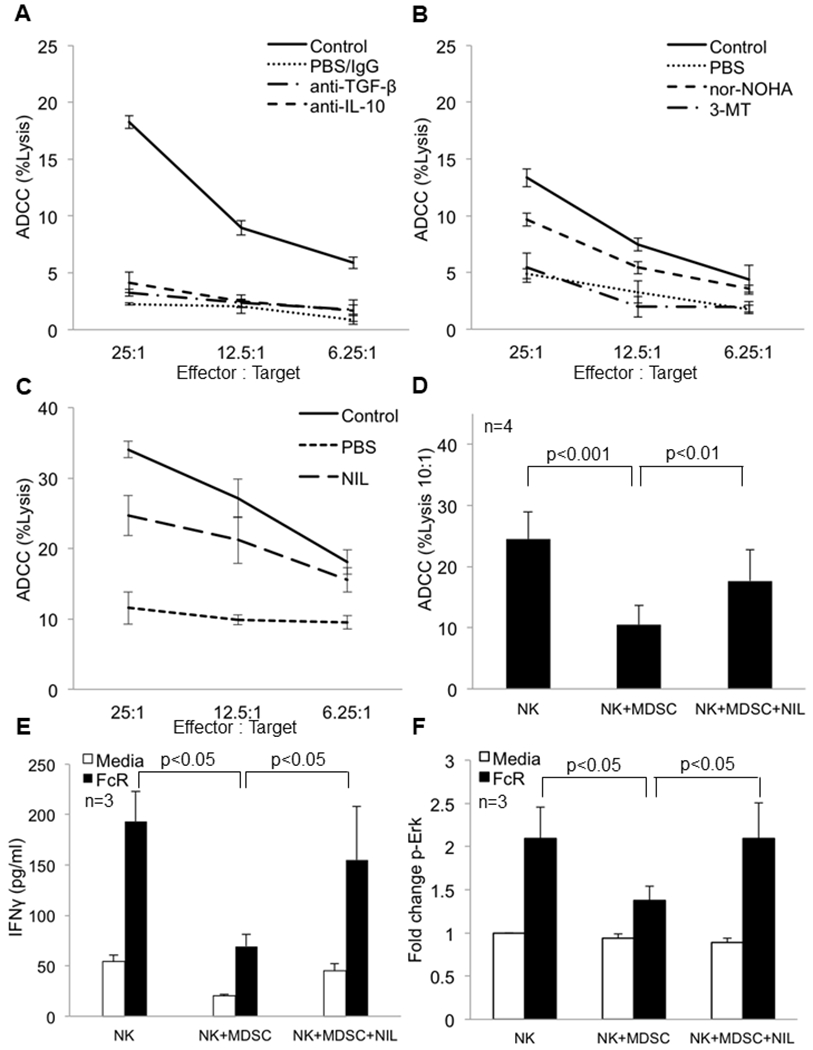
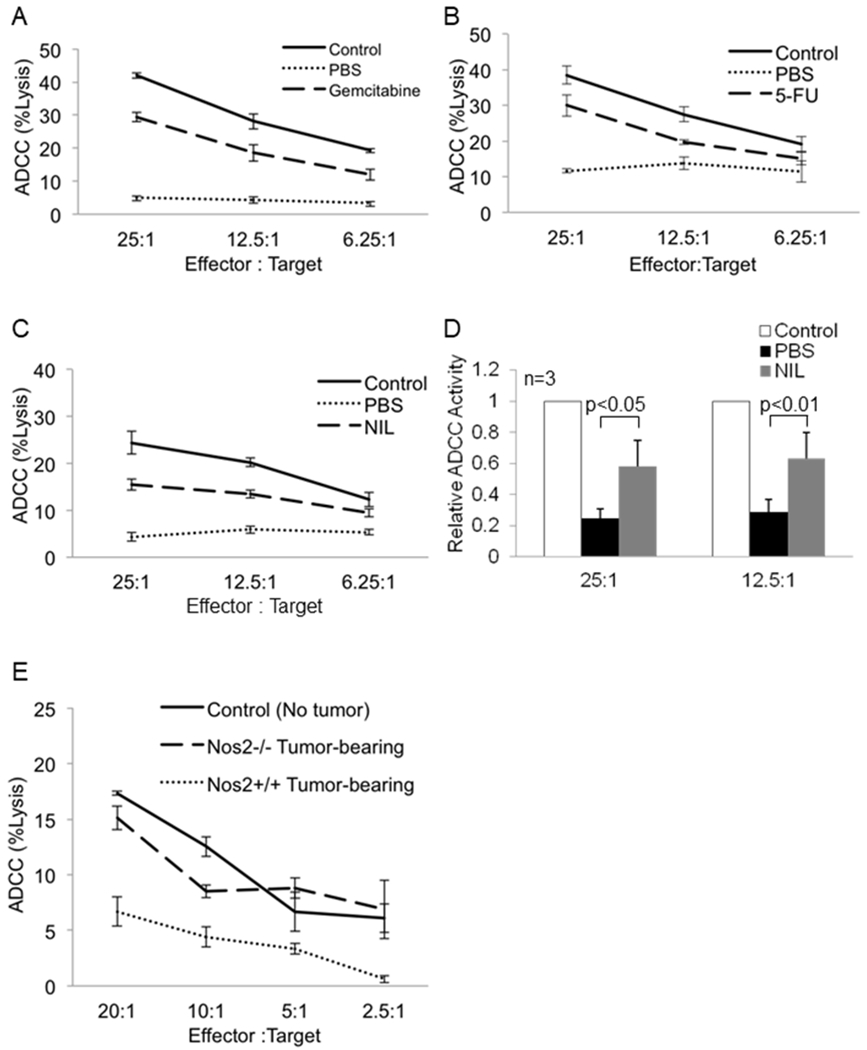
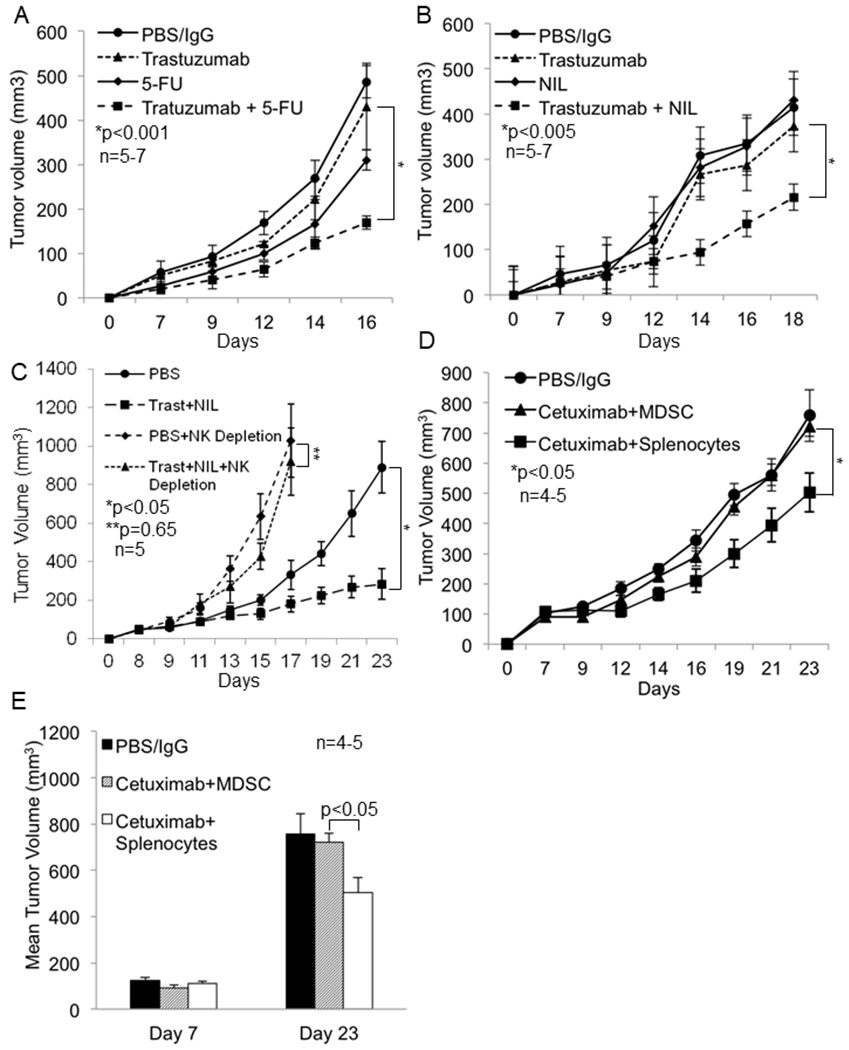
Purpose: mAbs are used to treat solid and hematologic malignancies and work in part through Fc receptors (FcRs) on natural killer cells (NK). However, FcR-mediated functions of NK cells from patients with cancer are significantly impaired. Identifying the mechanisms of this dysfunction and impaired response to mAb therapy could lead to combination therapies and enhance mAb therapy.Experimental Design: Cocultures of autologous NK cells and MDSC from patients with cancer were used to study the effect of myeloid-derived suppressor cells (MDSCs) on NK-cell FcR-mediated functions including antibody-dependent cellular cytotoxicity, cytokine production, and signal transduction in vitro Mouse breast cancer models were utilized to study the effect of MDSCs on antibody therapy in vivo and test the efficacy of combination therapies including a mAb and an MDSC-targeting agent.Results: MDSCs from patients with cancer were found to significantly inhibit NK-cell FcR-mediated functions including antibody-dependent cellular cytotoxicity, cytokine production, and signal transduction in a contact-independent manner. In addition, adoptive transfer of MDSCs abolished the efficacy of mAb therapy in a mouse model of pancreatic cancer. Inhibition of iNOS restored NK-cell functions and signal transduction. Finally, nonspecific elimination of MDSCs or inhibition of iNOS in vivo significantly improved the efficacy of mAb therapy in a mouse model of breast cancer.Conclusions: MDSCs antagonize NK-cell FcR-mediated function and signal transduction leading to impaired response to mAb therapy in part through nitric oxide production. Thus, elimination of MDSCs or inhibition of nitric oxide production offers a strategy to improve mAb therapy. Clin Cancer Res; 24(8); 1891-904. ©2018 AACR.
©2018 American Association for Cancer Research.
Conflict of interest statement
The authors have declared that no conflict of interest exists.
Conflict of interest
Authors declare no conflict of interest.
Figures
References
-
- Roda JM, Parihar R, Magro C, Nuovo GJ, Tridandapani S, Carson WE, 3rd. Natural killer cells produce T cell-recruiting chemokines in response to antibody-coated tumor cells. Cancer research 2006;66:517–26 - PubMed
-
- Scott AM, Wolchok JD, Old LJ. Antibody therapy of cancer. Nature reviews Cancer 2012;12:278–87 - PubMed
-
- Ishigami S, Natsugoe S, Tokuda K, Nakajo A, Che X, Iwashige H, et al. Prognostic value of intratumoral natural killer cells in gastric carcinoma. Cancer 2000;88:577–83 - PubMed
Publication types
MeSH terms
Substances
Grants and funding
LinkOut - more resources
Full Text Sources
Other Literature Sources