


Lignins: Biosynthesis and Biological Functions in Plants
- PMID: 29364145
- PMCID: PMC5855557
- DOI: 10.3390/ijms19020335
Lignins: Biosynthesis and Biological Functions in Plants
Abstract
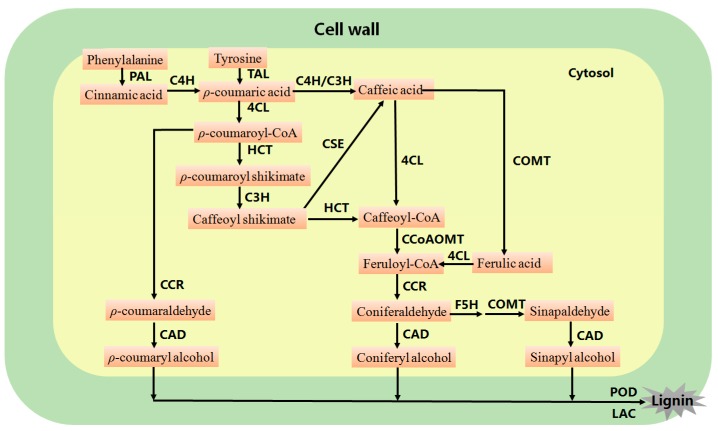
Lignin is one of the main components of plant cell wall and it is a natural phenolic polymer with high molecular weight, complex composition and structure. Lignin biosynthesis extensively contributes to plant growth, tissue/organ development, lodging resistance and the responses to a variety of biotic and abiotic stresses. In the present review, we systematically introduce the biosynthesis of lignin and its regulation by genetic modification and summarize the main biological functions of lignin in plants and their applications. We hope this review will give an in-depth understanding of the important roles of lignin biosynthesis in various plants' biological processes and provide a theoretical basis for the genetic improvement of lignin content and composition in energy plants and crops.
Keywords: diseases resistance; genetic modification; lignin; lodging resistance; stress tolerance.
Conflict of interest statement
The authors declare no conflict of interest.
Figures
References
-
- Ralph J., Lundquist K., Brunow G., Lu F., Kim H., Schatz P.F., Marita J.M., Hatfield R.D., Ralph S.A., Christensen J.H. Lignins: Natural polymers from oxidative coupling of 4-hydroxyphenyl-propanoids. Phytochem. Rev. 2004;3:29–60. doi: 10.1023/B:PHYT.0000047809.65444.a4. - DOI
Publication types
MeSH terms
Substances
LinkOut - more resources
Full Text Sources
Other Literature Sources
