Culturing In Vivo-like Murine Astrocytes Using the Fast, Simple, and Inexpensive AWESAM Protocol
- PMID: 29364267
- PMCID: PMC5908482
- DOI: 10.3791/56092
Culturing In Vivo-like Murine Astrocytes Using the Fast, Simple, and Inexpensive AWESAM Protocol
Abstract
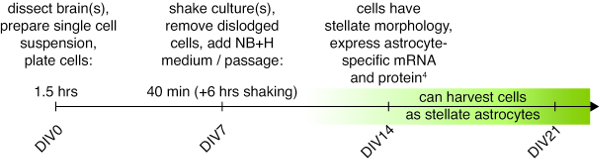
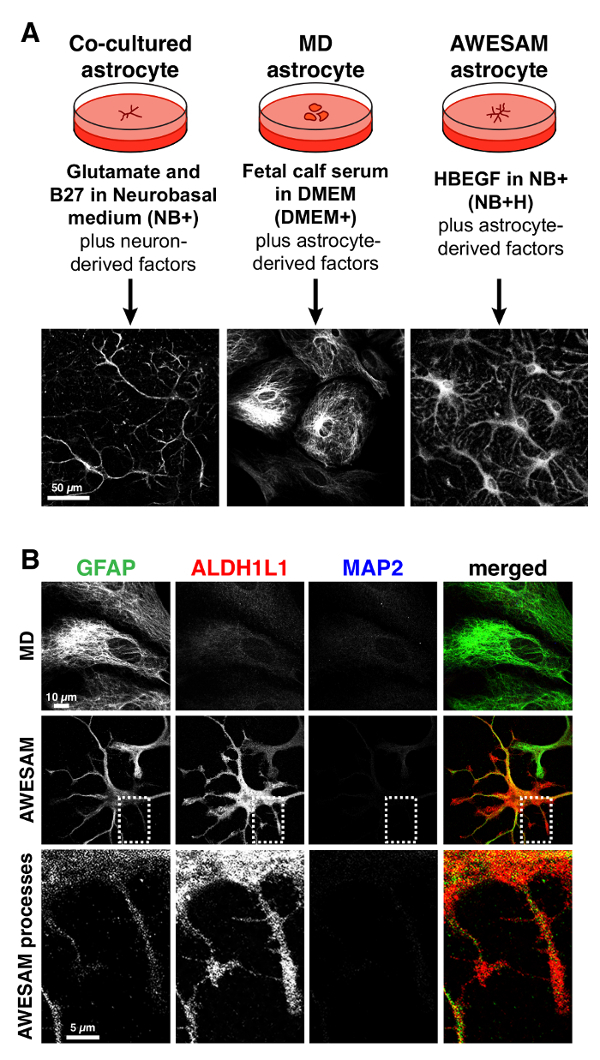
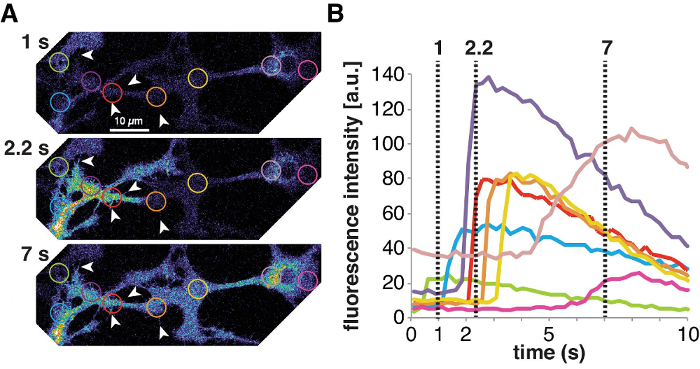
The AWESAM (a low-cost easy stellate astrocyte method) protocol entails a fast, simple, and inexpensive way to generate large quantities of in vivo-like mouse and rat astrocyte monocultures: Brain cells can be isolated from different brain regions, and after a week of cell culture, non-astrocytic cells are shaken off by placing the culture dishes on a shaker for 6 h in the incubator. The remaining astrocytes are then passaged into new plates with an astrocyte-specific medium (termed NB+H). NB+H contains low concentrations of heparin-binding EGF-like growth factor (HBEGF), which is used in place of serum in medium. After growing in NB+H, AWESAM astrocytes have a stellate morphology and feature fine processes. Moreover, these astrocytes have more in vivo-like gene expression than astrocytes generated by previously published methods. Ca2+ imaging, vesicle dynamics, and other events close to the membrane can thus be studied in the fine astrocytic processes in vitro, e.g., using live cell confocal or TIRF microscopy. Notably, AWESAM astrocytes also exhibit spontaneous Ca2+ signaling similar to astrocytes in vivo.

References
-
- Puschmann TB, et al. Bioactive 3D cell culture system minimizes cellular stress and maintains the in vivo-like morphological complexity of astroglial cells. Glia. 2013;61(3):432–440. - PubMed
-
- Puschmann TB, et al. HB-EGF affects astrocyte morphology, proliferation, differentiation, and the expression of intermediate filament proteins. J Neurochem. 2014;128(6):878–889. - PubMed
Publication types
MeSH terms
LinkOut - more resources
Full Text Sources
Other Literature Sources
Miscellaneous