


CD8+ T Cells Lack Local Signals To Produce IFN-γ in the Skin during Leishmania Infection
- PMID: 29367210
- PMCID: PMC6178231
- DOI: 10.4049/jimmunol.1701597
CD8+ T Cells Lack Local Signals To Produce IFN-γ in the Skin during Leishmania Infection
Abstract
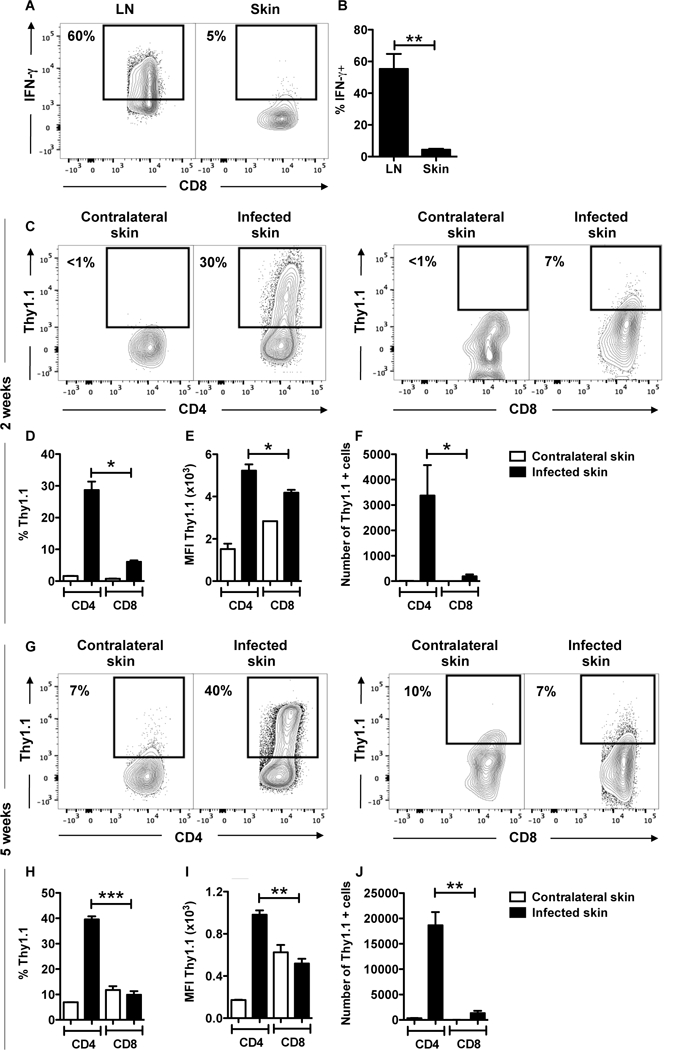
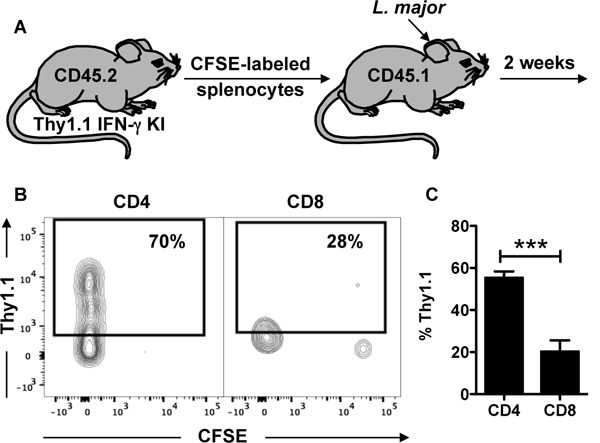
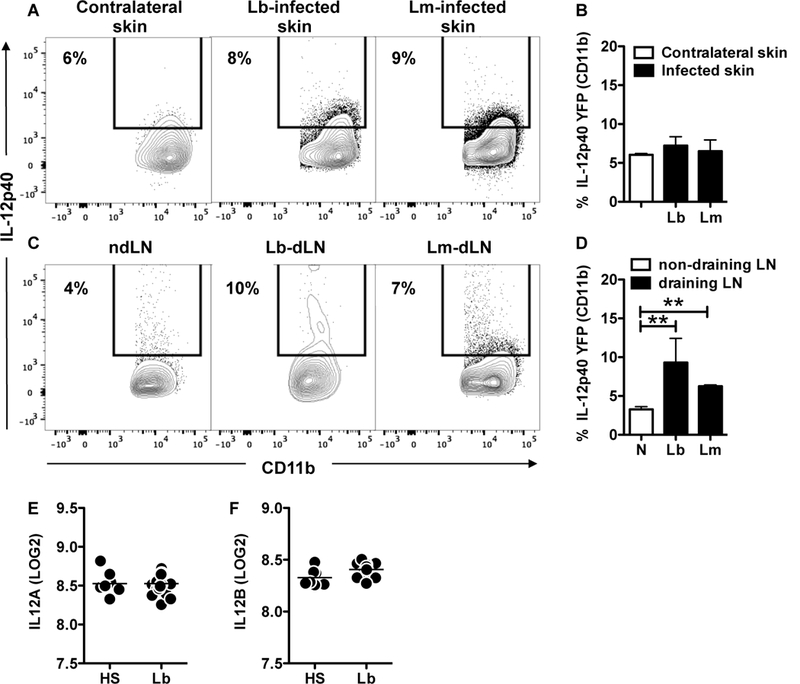
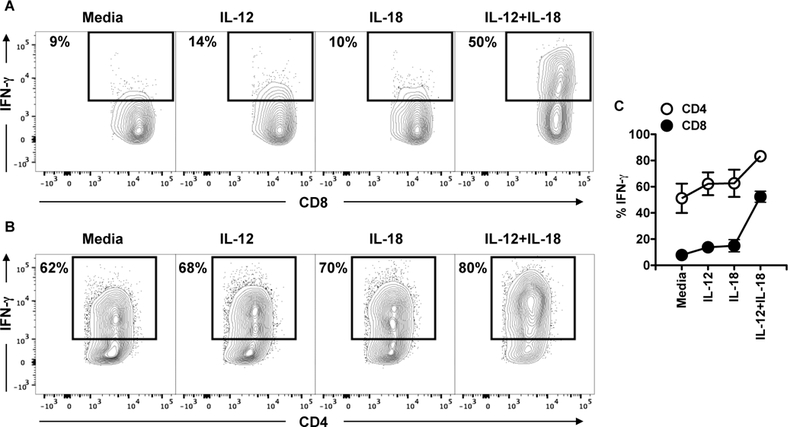
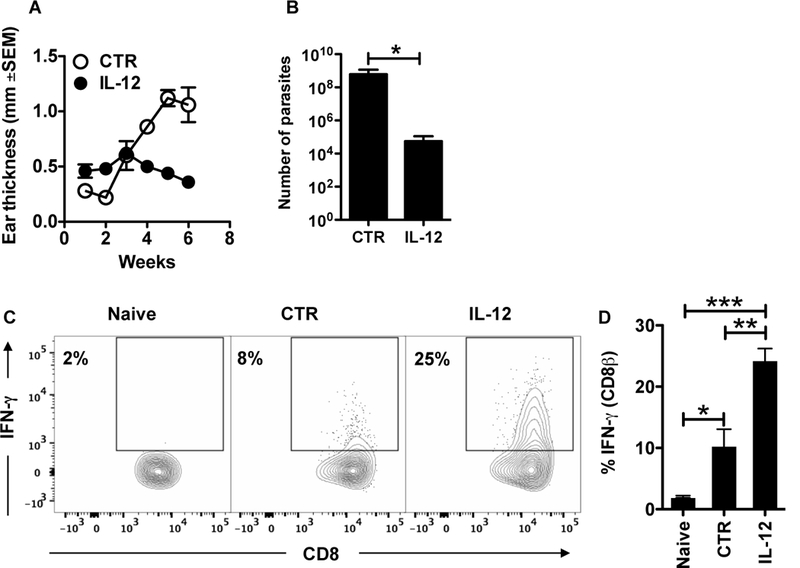
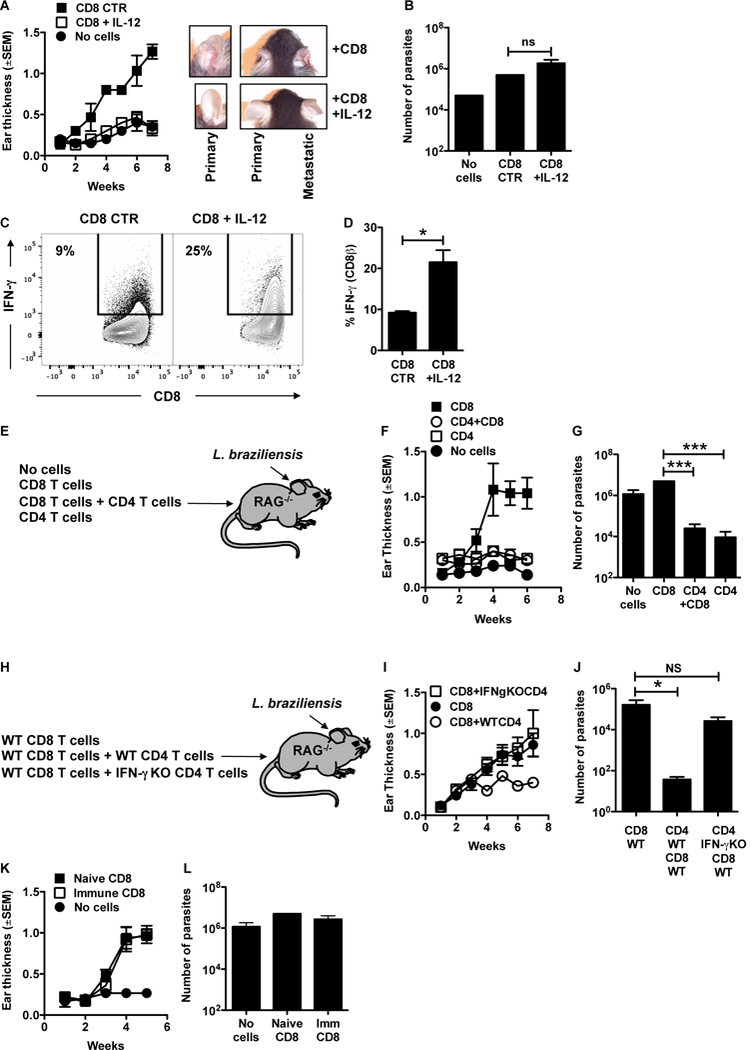
Resolution of leishmaniasis depends upon parasite control and limiting inflammation. CD4+ Th1 cells are required to control parasites, whereas CD8+ T cells play a dual role: they promote Th1 cell differentiation but can also increase inflammation at the site of infection as a consequence of cytolysis. Although CD8+ T cells taken from leishmanial lesions are cytolytic, in this study, we showed that only a few CD8+ T cells produced IFN-γ. Correspondingly, only low levels of IL-12 and/or IL-12 mRNA were present in lesions from infected mice, as well as patients. Addition of IL-12 increased IFN-γ production by CD8+ T cells isolated from leishmanial lesions, suggesting that a lack of IL-12 at the site of infection limits IFN-γ production by CD8+ T cells. To determine whether CD8+ T cells could promote resistance in vivo if IL-12 was present, we administered IL-12 to Leishmania-infected RAG mice reconstituted with CD8+ T cells. IL-12 treatment increased the ability of CD8+ T cells to make IFN-γ, but CD8+ T cells still failed to control the parasites. Furthermore, despite the ability of CD8+ T cells to promote immunity to secondary infections, we also found that CD8+ T cells from immune mice were unable to control Leishmania in RAG mice. Taken together, these results indicate that lesional CD8+ T cells fail to make IFN-γ because of a deficit in IL-12 but that, even with IL-12, CD8+ T cells are unable to control Leishmania in the absence of CD4+ T cells.
Copyright © 2018 by The American Association of Immunologists, Inc.
Figures
References
-
- Scott P, and Novais FO. 2016. Cutaneous leishmaniasis: immune responses in protection and pathogenesis. Nature reviews. Immunology 16: 581–592. - PubMed
-
- Scott P, Natovitz P, Coffman RL, Pearce E, and Sher A. 1988. Immunoregulation of cutaneous leishmaniasis. T cell lines that transfer protective immunity or exacerbation belong to different T helper subsets and respond to distinct parasite antigens. The Journal of experimental medicine 168: 1675–1684. - PMC - PubMed
-
- Liew FY, Millott S, Parkinson C, Palmer RM, and Moncada S. 1990. Macrophage killing of Leishmania parasite in vivo is mediated by nitric oxide from L-arginine. Journal of immunology 144: 4794–4797. - PubMed
Publication types
MeSH terms
Substances
Grants and funding
LinkOut - more resources
Full Text Sources
Other Literature Sources
Molecular Biology Databases
Research Materials
