


Nitrogen Fixation in Thermophilic Chemosynthetic Microbial Communities Depending on Hydrogen, Sulfate, and Carbon Dioxide
- PMID: 29367473
- PMCID: PMC5877335
- DOI: 10.1264/jsme2.ME17134
Nitrogen Fixation in Thermophilic Chemosynthetic Microbial Communities Depending on Hydrogen, Sulfate, and Carbon Dioxide
Abstract
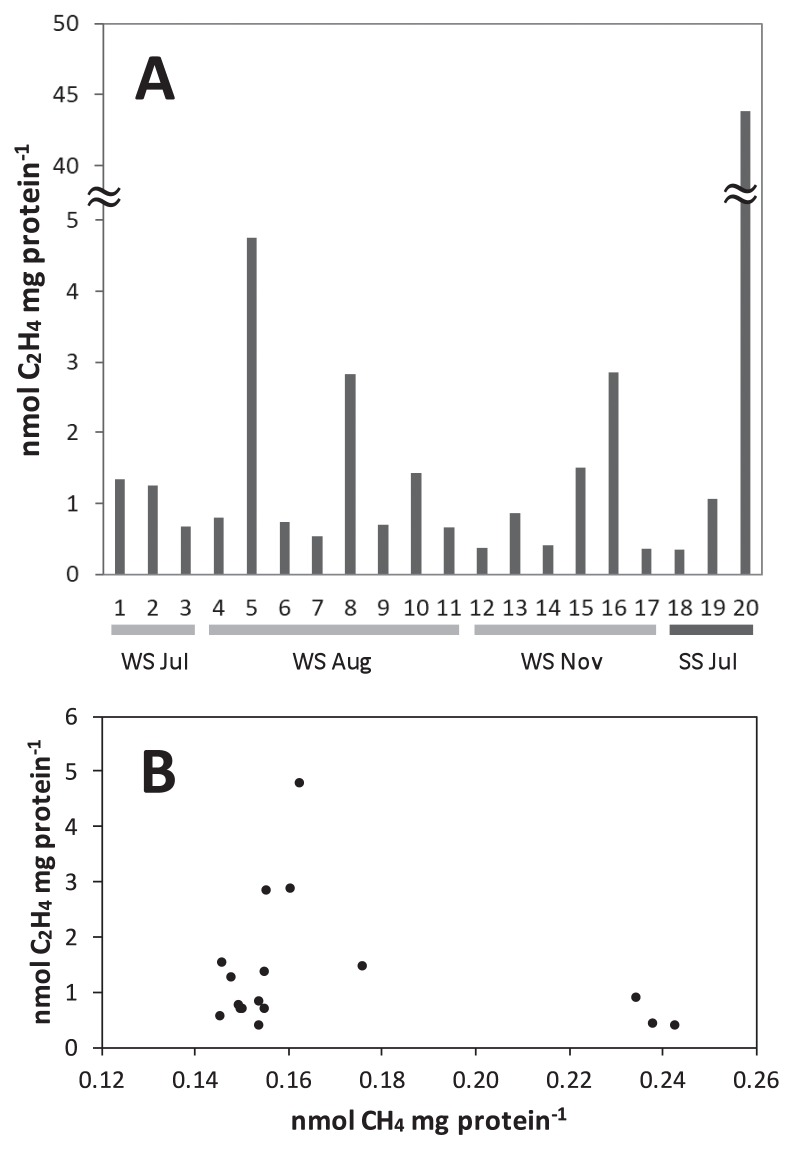
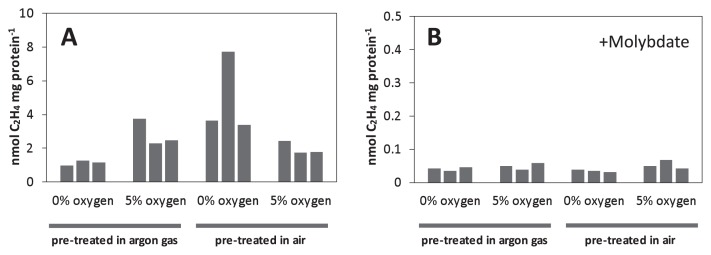
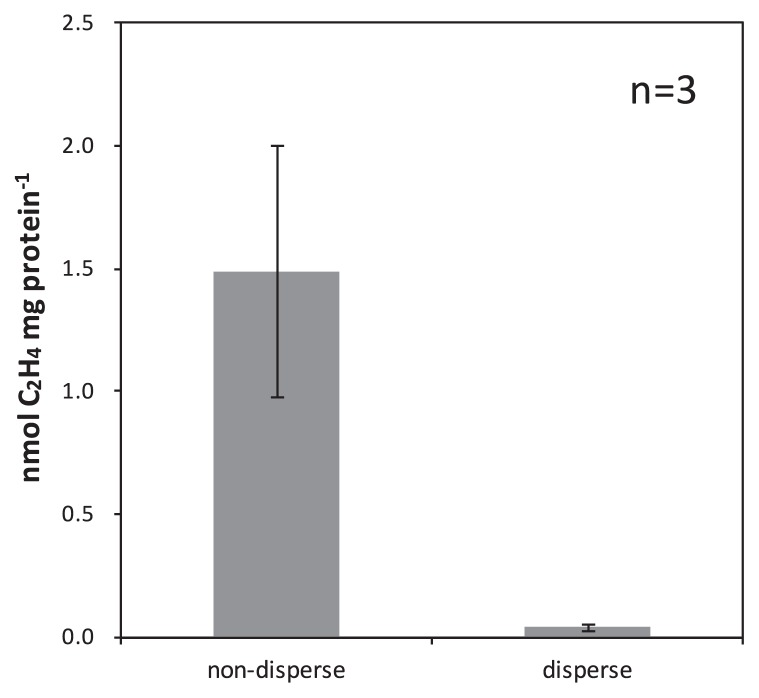
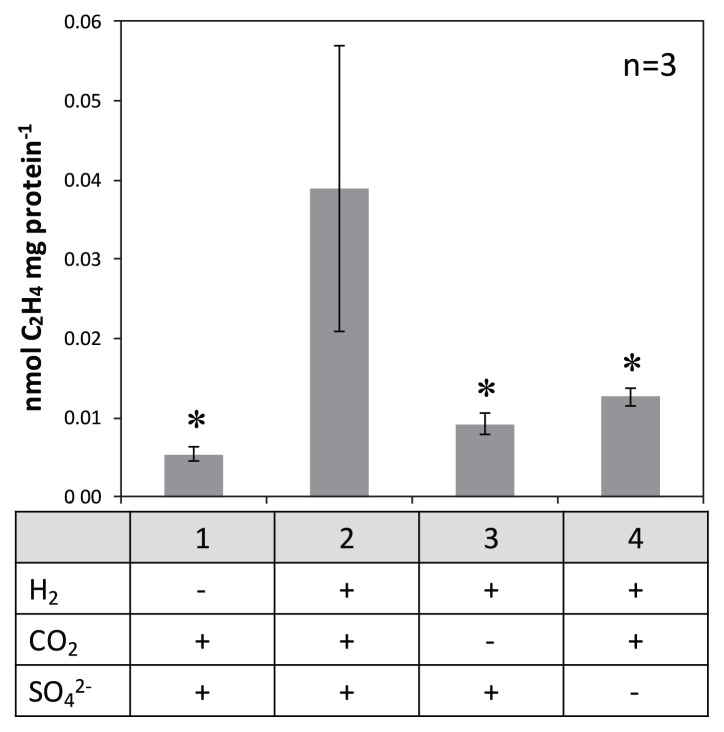
The activity of nitrogen fixation measured by acetylene reduction was examined in chemosynthetic microbial mats at 72-75°C in slightly-alkaline sulfidic hot springs in Nakabusa, Japan. Nitrogenase activity markedly varied from sampling to sampling. Nitrogenase activity did not correlate with methane production, but was detected in samples showing methane production levels less than the maximum amount, indicating a possible redox dependency of nitrogenase activity. Nitrogenase activity was not affected by 2-bromo-ethane sulfonate, an inhibitor of methanogenesis. However, it was inhibited by the addition of molybdate, an inhibitor of sulfate reduction and sulfur disproportionation, suggesting the involvement of sulfate-reducing or sulfur-disproportionating organisms. Nitrogenase activity was affected by different O2 concentrations in the gas phase, again supporting the hypothesis of a redox potential dependency, and was decreased by the dispersion of mats with a homogenizer. The loss of activity that occurred from dispersion was partially recovered by the addition of H2, sulfate, and carbon dioxide. These results suggested that the observed activity of nitrogen fixation was related to chemoautotrophic sulfate reducers, and fixation may be active in a limited range of ambient redox potential. Since thermophilic chemosynthetic communities may resemble ancient microbial communities before the appearance of photosynthesis, the present results may be useful when considering the ancient nitrogen cycle on earth.
Keywords: chemoautotrophic bacteria; microbial mats; nitrogen fixation; sulfate reduction; thermophilic bacteria.
Figures
References
-
- Alain K., Postec A., Grinsard E., Lesongeur F., Prieur D., Godfroy A. Thermodesulfatator atlanticus sp. nov., a thermophilic, chemolithoautotrophic, sulfate-reducing bacterium isolated from a Mid-Atlantic Ridge hydrothermal vent. Int J Syst Evol Microbiol. 2010;60:33–38. - PubMed
-
- Amend J.P., Shock E.L. Energetics of overall metabolic reactions of thermophilic and hyperthermophilic Archaea and Bacteria. FEMS Microbiol Rev. 2001;25:175–243. - PubMed
-
- Baena S., Perdomo N., Carvajal C., Díaz C., Patel B.K.C. Desulfosoma caldarium gen. nov., sp. nov., a thermophilic sulfatereducing bacterium from a terrestrial hot spring. Int J Syst Evol Microbiol. 2011;61:732–736. - PubMed
-
- Bebout B.M., Paerl H.W., Bauer J.E., Canfield D.E., Des Marais D.J. Nitrogen cycling in microbial mat communities: the quantitative importance of N-fixation and other sources of N for primary productivity. In: Stal LJ, Caumette P, editors. Microbial Mats. Springer-Verlag; Berlin: 1994. pp. 265–272.
MeSH terms
Substances
LinkOut - more resources
Full Text Sources
Other Literature Sources
