


Management of Mechanical Ventilation in Decompensated Heart Failure
- PMID: 29367576
- PMCID: PMC5715720
- DOI: 10.3390/jcdd3040033
Management of Mechanical Ventilation in Decompensated Heart Failure
Abstract
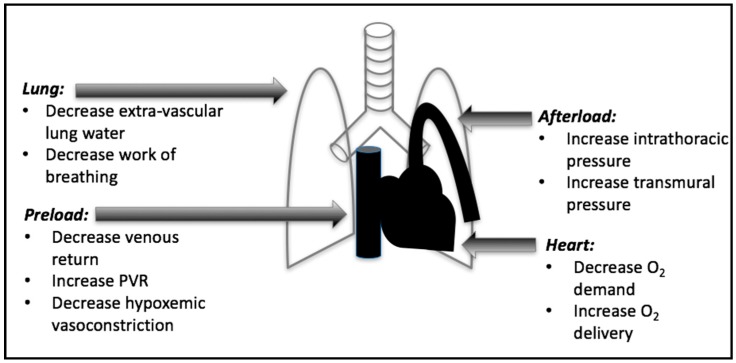
Mechanical ventilation (MV) is a life-saving intervention for respiratory failure, including decompensated congestive heart failure. MV can reduce ventricular preload and afterload, decrease extra-vascular lung water, and decrease the work of breathing in heart failure. The advantages of positive pressure ventilation must be balanced with potential harm from MV: volutrauma, hyperoxia-induced injury, and difficulty assessing readiness for liberation. In this review, we will focus on cardiac, pulmonary, and broader effects of MV on patients with decompensated HF, focusing on practical considerations for management and supporting evidence.
Keywords: congestive heart failure; mechanical ventilation; weaning.
Conflict of interest statement
The authors declare no conflict of interest.
Figures
References
-
- Sheldon R. Congestive heart failure and noninvasive positive pressure ventilation. Emerg. Med. Serv. 2005;34:64–67. - PubMed
-
- Barrett M.L., Smith M.W., Elixhauser A., Honigman L.S., Pines J.M. Utilization of Intensive Care Services, 2011. [(accessed on 23 August 2016)]; Available online: http://www.hcup-us.ahrq.gov/reports/statbriefs/sb185-Hospital-Intensive-.... - PubMed
-
- Esteban A., Anzueto A., Frutos F., Alía I., Brochard L., Stewart T.E., Benito S., Epstein S.K., Apezteguía C., Nightingale P., et al. Characteristics and outcomes in adult patients receiving mechanical ventilation: A 28-day international study. JAMA. 2002;287:345–355. doi: 10.1001/jama.287.3.345. - DOI - PubMed
Publication types
LinkOut - more resources
Full Text Sources
Other Literature Sources
Research Materials
Miscellaneous
