


Effects of temperature and photosynthetically active radiation on virioplankton decay in the western Pacific Ocean
- PMID: 29367730
- PMCID: PMC5784127
- DOI: 10.1038/s41598-018-19678-3
Effects of temperature and photosynthetically active radiation on virioplankton decay in the western Pacific Ocean
Abstract
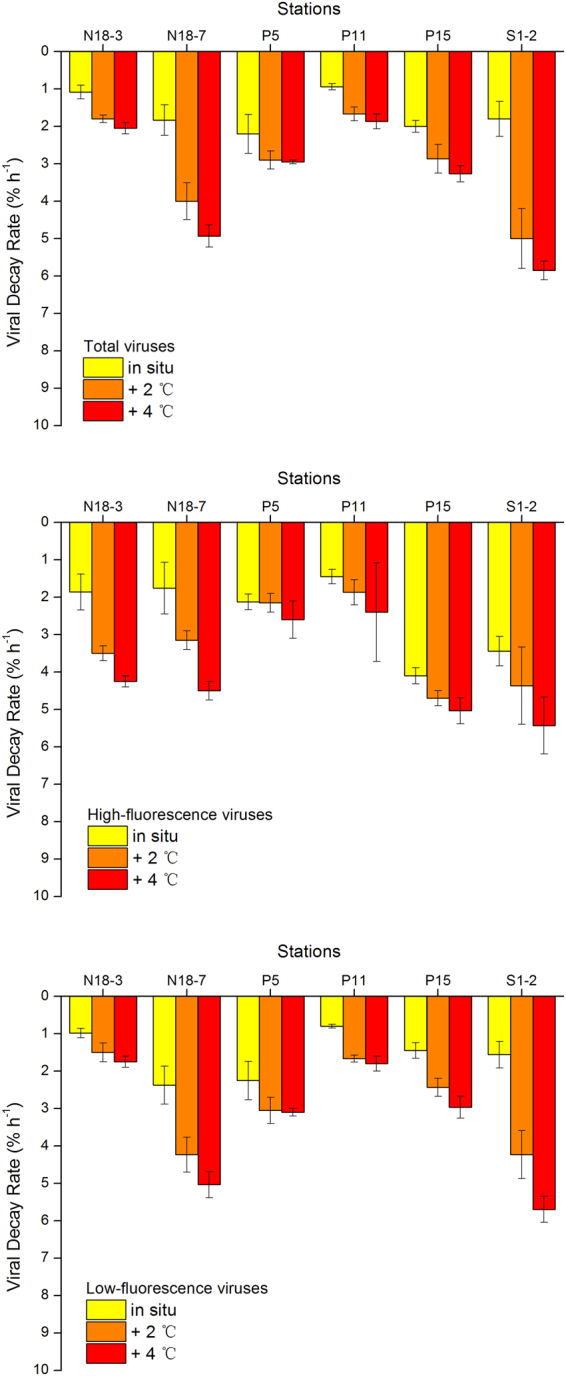
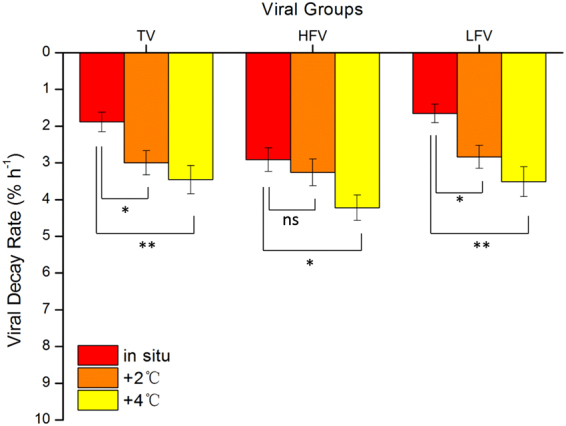
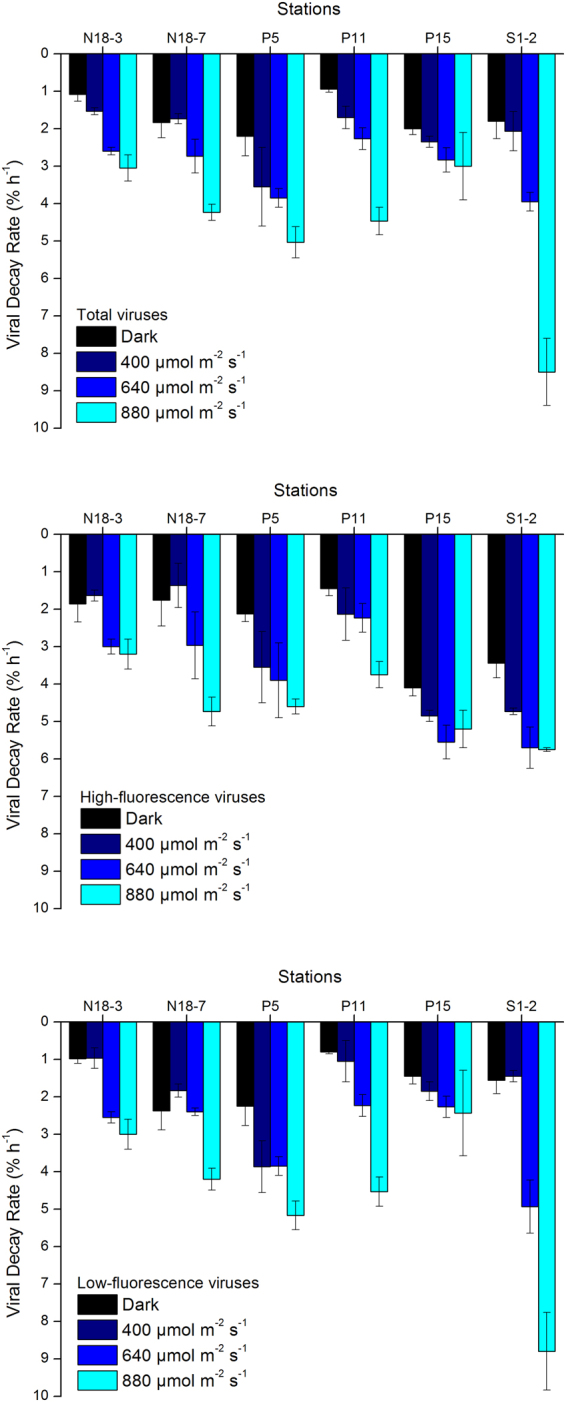
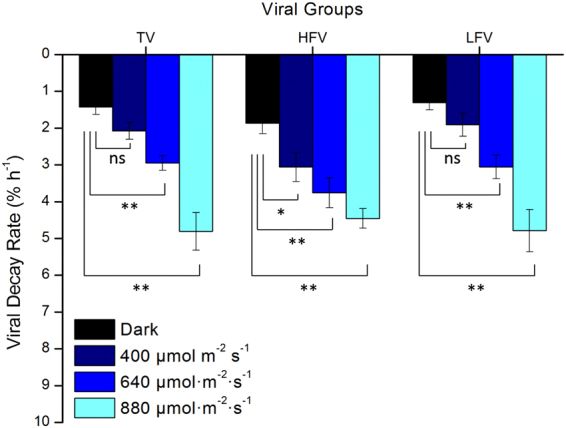
In this study, we investigated virioplankton decay rates and their responses to changes in temperature and photosynthetically active radiation (PAR) in the western Pacific Ocean. The mean decay rates for total, high-fluorescence, and low-fluorescence viruses were 1.64 ± 0.21, 2.46 ± 0.43, and 1.57 ± 0.26% h-1, respectively. Higher temperatures and PAR increased viral decay rates, and the increases in the decay rates of low-fluorescence viruses were greater than those of high-fluorescence viruses. Our results revealed that low-fluorescence viruses are more sensitive to warming and increasing PAR than are high-fluorescence viruses, which may be related to differences in their biological characteristics, such as the density of packaged nucleic acid materials. Our study provided experimental evidence for the responses of natural viral communities to changes in global environmental factors (e.g., temperature and solar radiation).
Conflict of interest statement
The authors declare that they have no competing interests.
Figures
References
-
- Stocker, T. F. et al. Intergovernmental panel on climate change. Climate change 2013: The physical science basis. Contribution of working group I to the fifth assessment report of the intergovernmental panel on climate change. (eds Stocker, T. F. et al.) 953–1028 (Cambridge Univ. Press, Cambridge/New York, 2013).
Publication types
LinkOut - more resources
Full Text Sources
Other Literature Sources
