


Of dogs and hookworms: man's best friend and his parasites as a model for translational biomedical research
- PMID: 29370855
- PMCID: PMC5785905
- DOI: 10.1186/s13071-018-2621-2
Of dogs and hookworms: man's best friend and his parasites as a model for translational biomedical research
Abstract
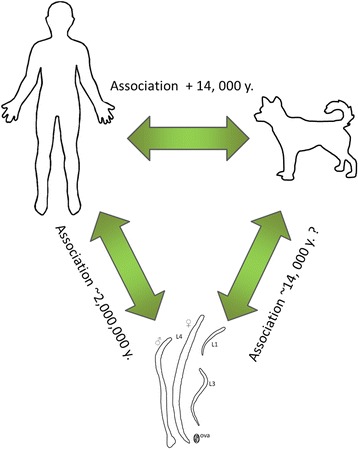
We present evidence that the dog hookworm (Ancylostoma caninum) is underutilised in the study of host-parasite interactions, particularly as a proxy for the human-hookworm relationship. The inability to passage hookworms through all life stages in vitro means that adult stage hookworms have to be harvested from the gut of their definitive hosts for ex vivo research. This makes study of the human-hookworm interface difficult for technical and ethical reasons. The historical association of humans, dogs and hookworms presents a unique triad of positive evolutionary pressure to drive the A. caninum-canine interaction to reflect that of the human-hookworm relationship. Here we discuss A. caninum as a proxy for human hookworm infection and situate this hookworm model within the current research agenda, including the various 'omics' applications and the search for next generation biologics to treat a plethora of human diseases. Historically, the dog hookworm has been well described on a physiological and biochemical level, with an increasing understanding of its role as a human zoonosis. With its similarity to human hookworm, the recent publications of hookworm genomes and other omics databases, as well as the ready availability of these parasites for ex vivo culture, the dog hookworm presents itself as a valuable tool for discovery and translational research.
Keywords: Ancylostoma caninum; Hookworm model; Human hookworm; Omics; Translational model.
Conflict of interest statement
Ethics approval and concent to participate
Not applicable.
Consent for publication
Not applicable.
Competing interests
The authors declare that they have no competing interests.
Publisher’s Note
Springer Nature remains neutral with regard to jurisdictional claims in published maps and institutional affiliations.
Figures
References
-
- The World Health Report . Making a difference. Geneva: World Health Organization; 1999. p. 1999.
-
- Soil-transmitted helminth infections. World Health Organisation; 2017. http://www.who.int/mediacentre/factsheets/fs366/en/.
Publication types
MeSH terms
Grants and funding
LinkOut - more resources
Full Text Sources
Other Literature Sources
