


The cost-effectiveness of trivalent and quadrivalent influenza vaccination in communities in South Africa, Vietnam and Australia
- PMID: 29373192
- PMCID: PMC5805858
- DOI: 10.1016/j.vaccine.2017.12.073
The cost-effectiveness of trivalent and quadrivalent influenza vaccination in communities in South Africa, Vietnam and Australia
Abstract
Background: To inform national healthcare authorities whether quadrivalent influenza vaccines (QIVs) provide better value for money than trivalent influenza vaccines (TIVs), we assessed the cost-effectiveness of TIV and QIV in low-and-middle income communities based in South Africa and Vietnam and contrasted these findings with those from a high-income community in Australia.
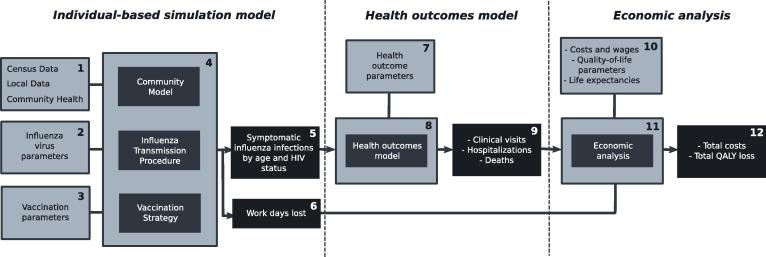
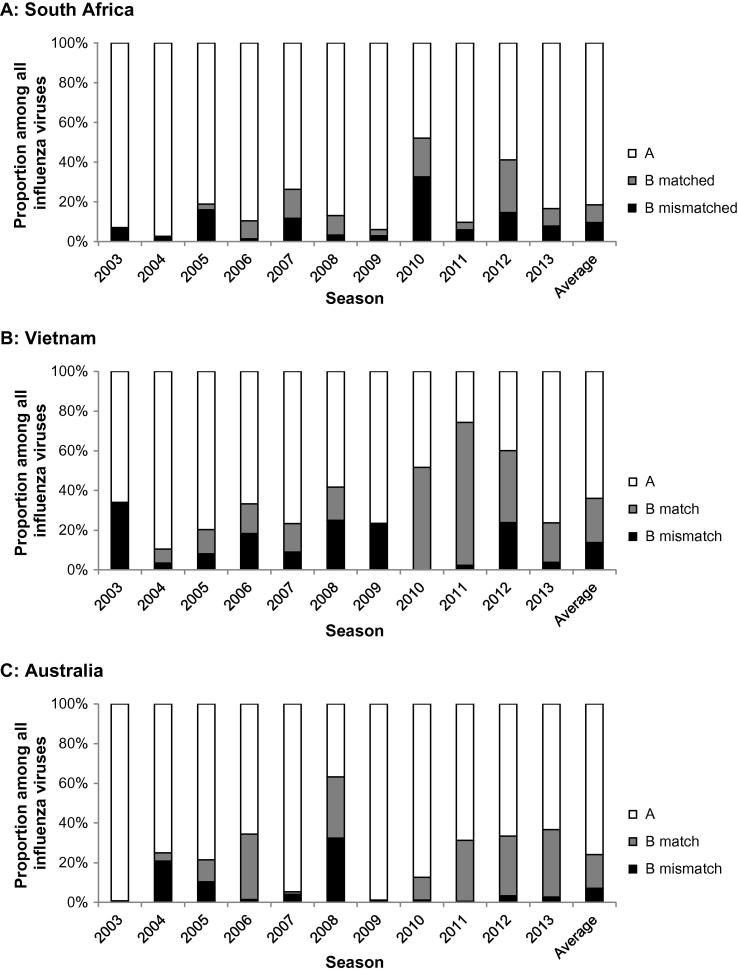
Methods: Individual based dynamic simulation models were interfaced with a health economic analysis model to estimate the cost-effectiveness of vaccinating 15% of the population with QIV or TIV in each community over the period 2003-2013. Vaccination was prioritized for HIV-infected individuals, before elderly aged 65+ years and young children. Country or region-specific data on influenza-strain circulation, clinical outcomes and costs were obtained from published sources. The societal perspective was used and outcomes were expressed in International$ (I$) per quality-adjusted life-year (QALY) gained.
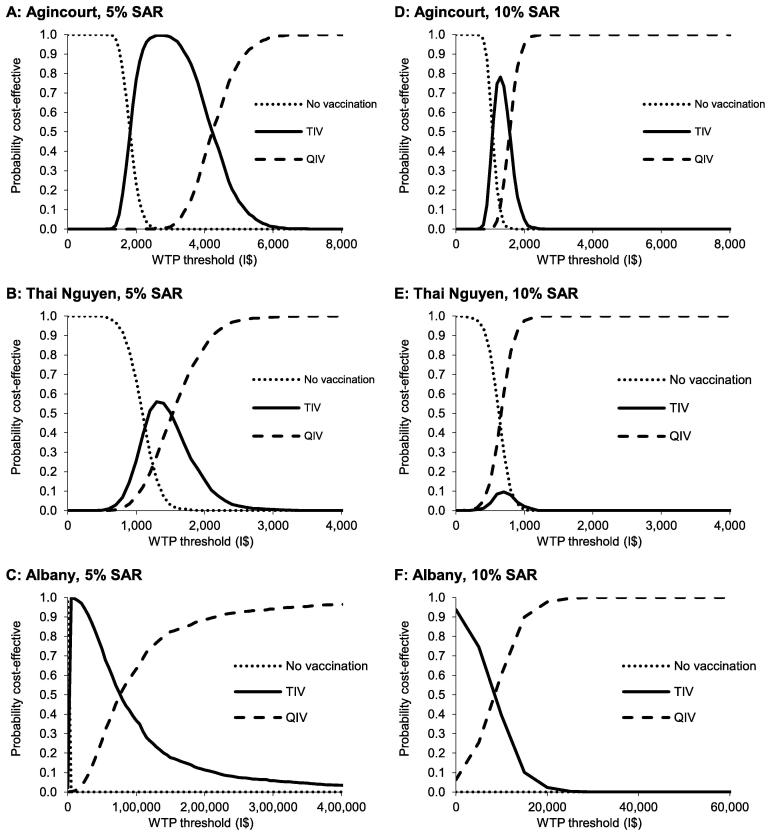
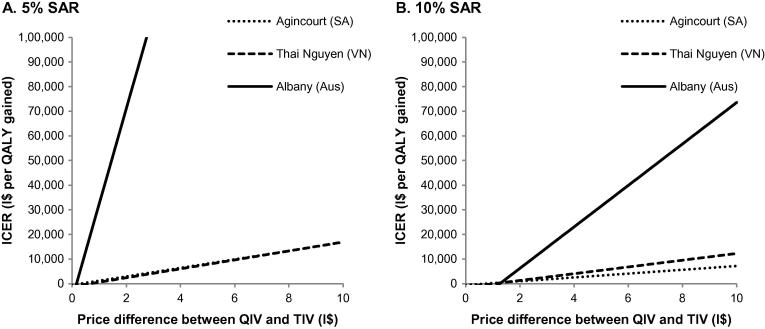
Results: When compared with TIV, we found that QIV would provide a greater reduction in influenza-related morbidity in communities in South Africa and Vietnam as compared with Australia. The incremental cost-effectiveness ratio of QIV versus TIV was estimated at I$4183/QALY in South Africa, I$1505/QALY in Vietnam and I$80,966/QALY in Australia.
Conclusions: The cost-effectiveness of QIV varied between communities due to differences in influenza epidemiology, comorbidities, and unit costs. Whether TIV or QIV is the most cost-effective alternative heavily depends on influenza B burden among subpopulations targeted forvaccination in addition to country-specific willingness-to-pay thresholds and budgetary impact.
Keywords: Cost-effectiveness; Dynamic transmission model; Influenza; Quadrivalent; Trivalent; Vaccination.
Copyright © 2018 The Authors. Published by Elsevier Ltd.. All rights reserved.
Figures
References
-
- World Health Organization (WHO). Factsheet Influenza (Seasonal). Available from: <http://www.who.int/mediacentre/factsheets/fs211/en/> [Accessed March 1, 2015].
-
- Centers for Disease Control and Prevention (CDC). Key Facts about Influenza (Flu) & Flu Vaccine. Available from: <http://www.cdc.gov/flu/keyfacts.htm> [Accessed May 1, 2015].
-
- de Francisco Shapovalova N., Donadel M., Jit M., Hutubessy R. A systematic review of the social and economic burden of influenza in low- and middle-income countries. Vaccine. 2015;33:6537–6544. - PubMed
-
- Peasah S.K., Meltzer M. Economic evaluation of influenza vaccination in preventing hospitalization in cardiovascular disease patients. Value Health. 2013;16:A283.
Publication types
MeSH terms
Substances
Grants and funding
LinkOut - more resources
Full Text Sources
Other Literature Sources
Medical
Molecular Biology Databases
