


Interrupting Prolonged Sitting with Regular Activity Breaks does not Acutely Influence Appetite: A Randomised Controlled Trial
- PMID: 29373503
- PMCID: PMC5852701
- DOI: 10.3390/nu10020125
Interrupting Prolonged Sitting with Regular Activity Breaks does not Acutely Influence Appetite: A Randomised Controlled Trial
Abstract
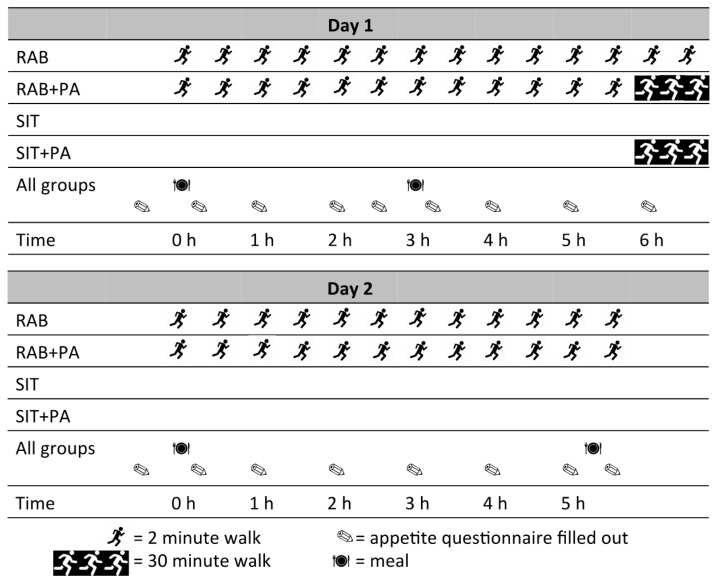
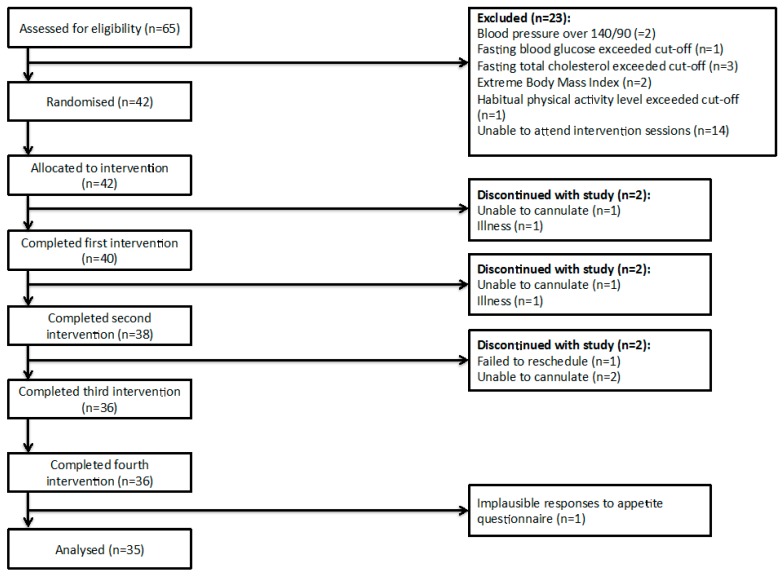
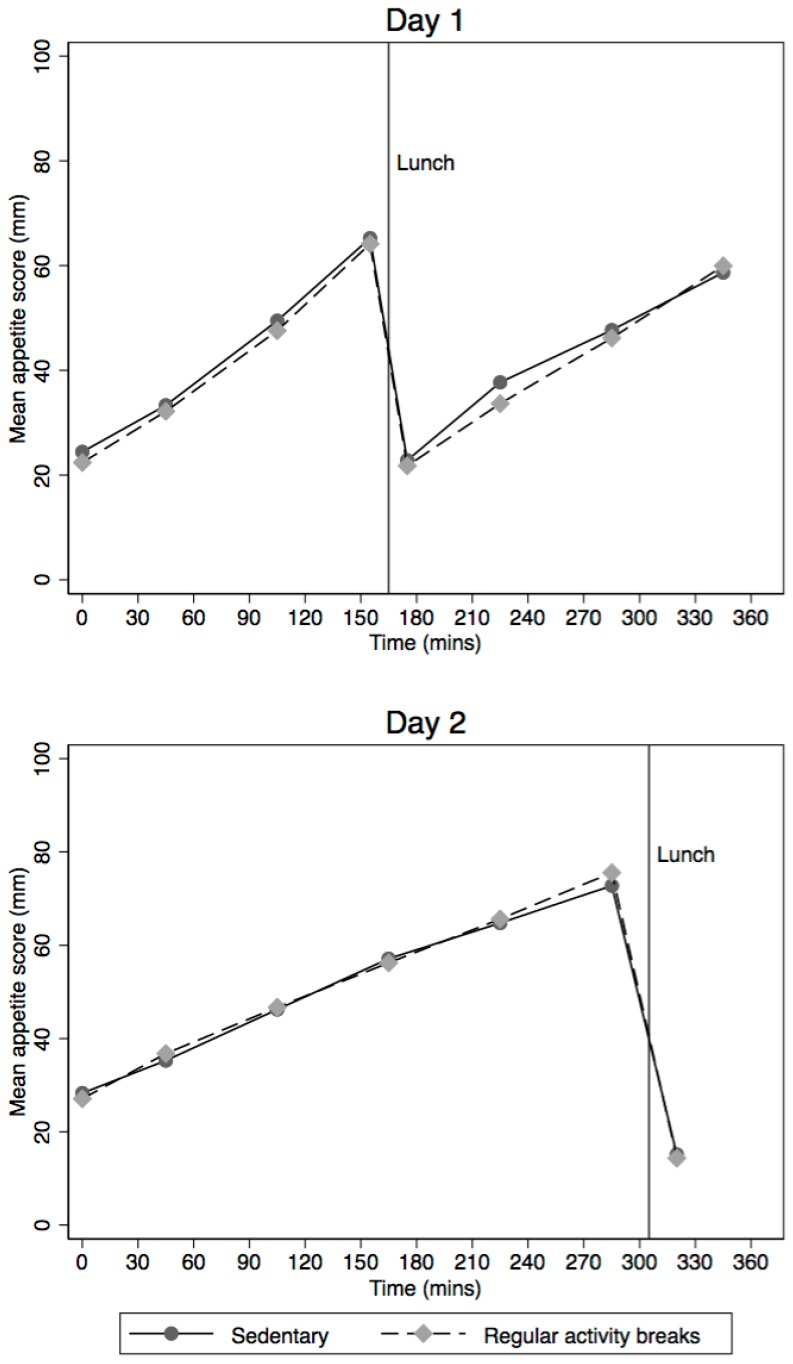
Regular activity breaks increase energy expenditure; however, this may promote compensatory eating behaviour. The present study compared the effects of regular activity breaks and prolonged sitting on appetite. In a randomised, cross-over trial, 36 healthy adults (BMI (Body Mass Index) 23.9 kg/m² (S.D. = 3.9)) completed four, two-day interventions: two with prolonged sitting (SIT), and two with sitting and 2 min of walking every 30 min (RAB). Standardized meals were provided throughout the intervention, with an ad libitum meal at the end of Day 2. Appetite and satiety were assessed throughout both days of each intervention using five visual analogue scales. The five responses were combined into a single appetite response at each time point. The area under the appetite response curve (AUC) was calculated for each day. Intervention effects for appetite response AUC and ad libitum meal intake were tested using linear mixed models. Appetite AUC did not differ between interventions (standardised effect of RAB compared to SIT: Day 1: 0.11; 95% CI: -0.28, 0.06; p = 0.212; Day 2: 0.04; 95% CI: -0.15, 0.24; p = 0.648). There was no significant difference in energy consumed at the ad libitum lunch meal on Day 2 between RAB and SIT. Interrupting prolonged sitting with regular activity breaks does not acutely influence appetite or volume of food consumed, despite inferred increases in energy expenditure. Longer-term investigation into the effects of regular activity breaks on energy balance is warranted.
Keywords: appetite; randomized controlled trial; regular activity breaks; sedentary.
Conflict of interest statement
The authors declare no conflict of interest.
Figures
References
-
- Sedentary Behaviour Research Network Letter to the editor: Standardized use of the terms “sedentary” and “sedentary behaviours”. Appl. Physiol. Nutr. Metab. 2012;37:540–542. - PubMed
-
- Biswas A., Oh P.I., Faulkner G.E., Bajaj R.R., Silver M.A., Mitchell M.S., Alter D.A. Sedentary time and its association with risk for disease incidence, mortality, and hospitalization in adults: A systematic review and meta-analysis. Ann. Intern. Med. 2015;162:123–132. doi: 10.7326/M14-1651. - DOI - PubMed
Publication types
MeSH terms
LinkOut - more resources
Full Text Sources
Other Literature Sources
Medical
