


Complete Chloroplast Genome Sequence and Phylogenetic Analysis of Paeonia ostii
- PMID: 29373520
- PMCID: PMC6017096
- DOI: 10.3390/molecules23020246
Complete Chloroplast Genome Sequence and Phylogenetic Analysis of Paeonia ostii
Abstract
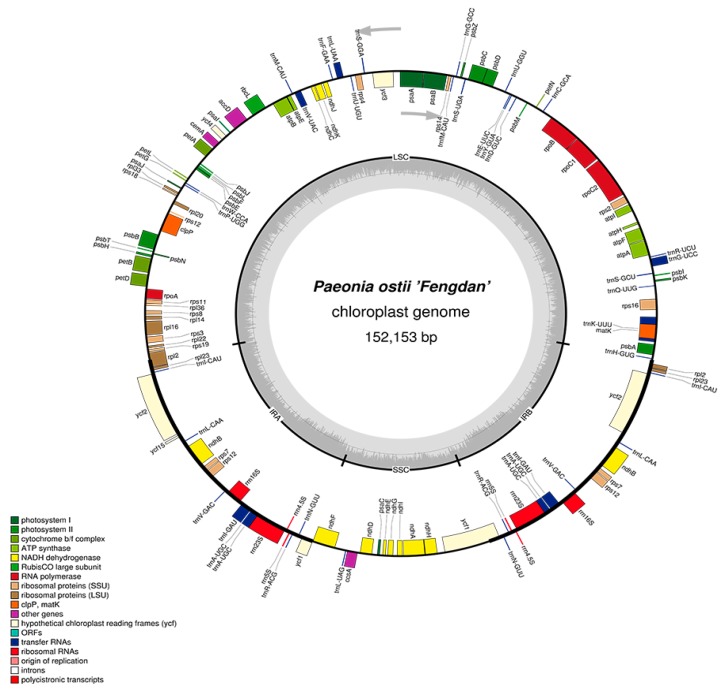
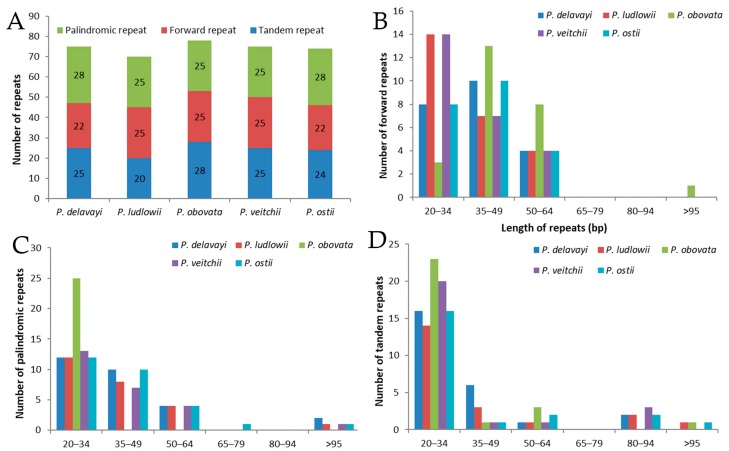
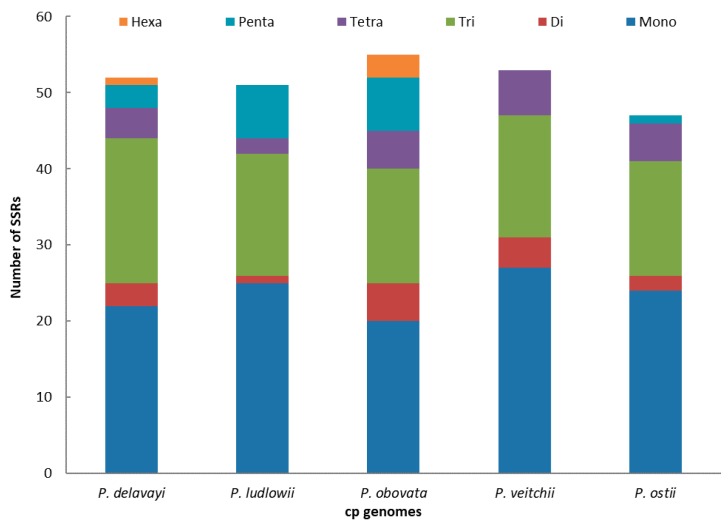
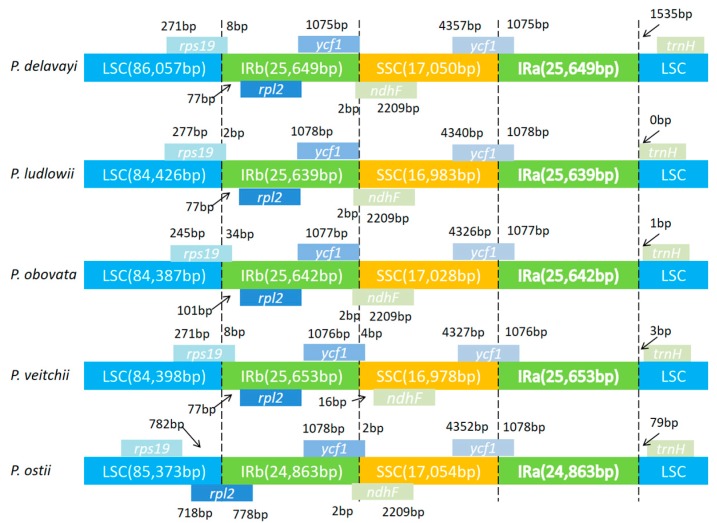
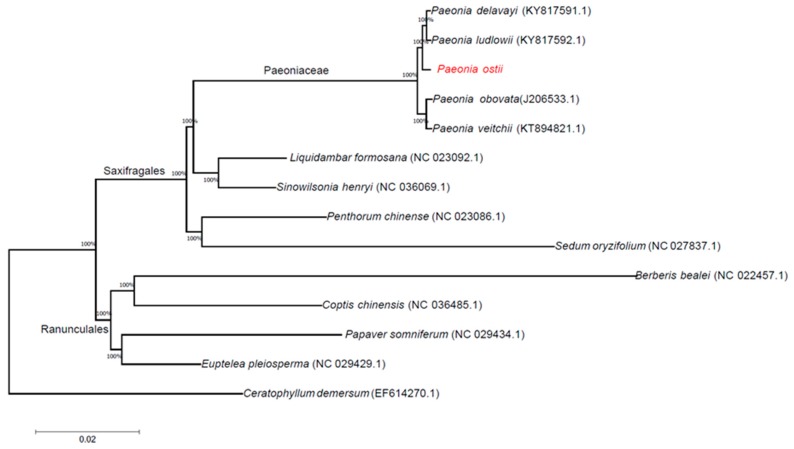
Paeonia ostii, a common oil-tree peony, is important ornamentally and medicinally. However, there are few studies on the chloroplast genome of Paeonia ostii. We sequenced and analyzed the complete chloroplast genome of P. ostii. The size of the P. ostii chloroplast genome is 152,153 bp, including a large single-copy region (85,373 bp), a small single-copy region (17,054 bp), and a pair of inverted repeats regions (24,863 bp). The P. ostii chloroplast genome encodes 111 genes, including 77 protein-coding genes, four ribosomal RNA genes, and 30 transfer RNA genes. The genome contains forward repeats (22), palindromic repeats (28), and tandem repeats (24). The presence of rich simple-sequence repeat loci in the genome provides opportunities for future population genetics work for breeding new varieties. A phylogenetic analysis showed that P. ostii is more closely related to Paeonia delavayi and Paeonialudlowii than to Paeoniaobovata and Paeoniaveitchii. The results of this study provide an assembly of the whole chloroplast genome of P. ostii, which may be useful for future breeding and further biological discoveries. It will provide a theoretical basis for the improvement of peony yield and the determination of phylogenetic status.
Keywords: Paeonia ostii; chloroplast genome; phylogeny.
Conflict of interest statement
The authors declare no conflict of interest.
Figures
References
-
- Yuan J.H., Cheng F.Y., Zhou S.L. The phylogeographic structure and conservation genetics of the endangered tree peony, Paeonia rockii (Paeoniaceae), inferred from chloroplast gene sequences. Conserv. Genet. 2011;12:1539–1549. doi: 10.1007/s10592-011-0251-8. - DOI
-
- Deng R.X., Liu Z., Qin L.L., Wang L., Liu X.Q., Liu P. Optimization of supercritical CO2 extraction and analysis of chemical composition of peony seed oil. Food Sci. 2010;10:142–145.
MeSH terms
Substances
LinkOut - more resources
Full Text Sources
Other Literature Sources
Molecular Biology Databases
