


AmPEP: Sequence-based prediction of antimicrobial peptides using distribution patterns of amino acid properties and random forest
- PMID: 29374199
- PMCID: PMC5785966
- DOI: 10.1038/s41598-018-19752-w
AmPEP: Sequence-based prediction of antimicrobial peptides using distribution patterns of amino acid properties and random forest
Abstract
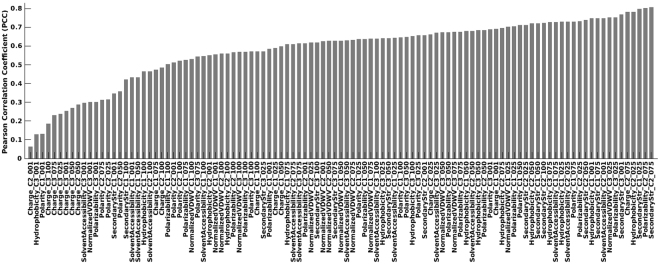
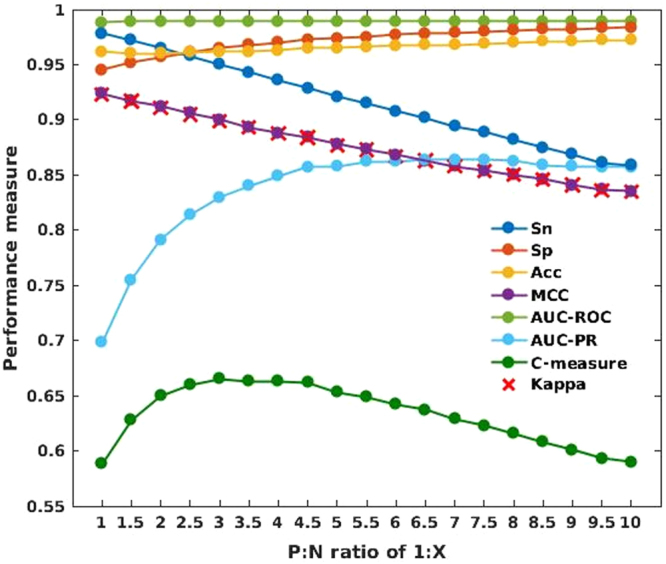
Antimicrobial peptides (AMPs) are promising candidates in the fight against multidrug-resistant pathogens owing to AMPs' broad range of activities and low toxicity. Nonetheless, identification of AMPs through wet-lab experiments is still expensive and time consuming. Here, we propose an accurate computational method for AMP prediction by the random forest algorithm. The prediction model is based on the distribution patterns of amino acid properties along the sequence. Using our collection of large and diverse sets of AMP and non-AMP data (3268 and 166791 sequences, respectively), we evaluated 19 random forest classifiers with different positive:negative data ratios by 10-fold cross-validation. Our optimal model, AmPEP with the 1:3 data ratio, showed high accuracy (96%), Matthew's correlation coefficient (MCC) of 0.9, area under the receiver operating characteristic curve (AUC-ROC) of 0.99, and the Kappa statistic of 0.9. Descriptor analysis of AMP/non-AMP distributions by means of Pearson correlation coefficients revealed that reduced feature sets (from a full-featured set of 105 to a minimal-feature set of 23) can result in comparable performance in all respects except for some reductions in precision. Furthermore, AmPEP outperformed existing methods in terms of accuracy, MCC, and AUC-ROC when tested on benchmark datasets.
Conflict of interest statement
The authors declare that they have no competing interests.
Figures
References
Publication types
MeSH terms
Substances
LinkOut - more resources
Full Text Sources
Other Literature Sources
Miscellaneous
