


Carcinoma associated fibroblasts derived from oral squamous cell carcinoma promote lymphangiogenesis via c-Met/PI3K/AKT in vitro
- PMID: 29375714
- PMCID: PMC5766077
- DOI: 10.3892/ol.2017.7301
Carcinoma associated fibroblasts derived from oral squamous cell carcinoma promote lymphangiogenesis via c-Met/PI3K/AKT in vitro
Abstract
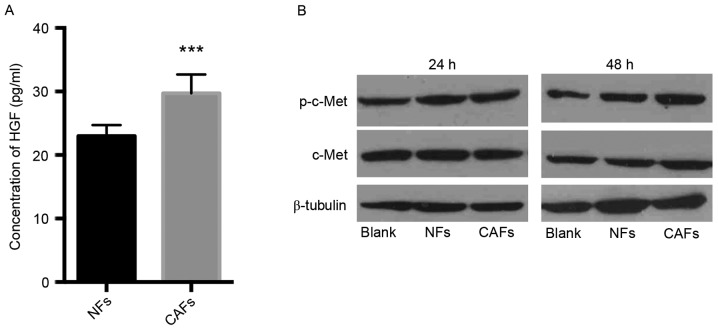
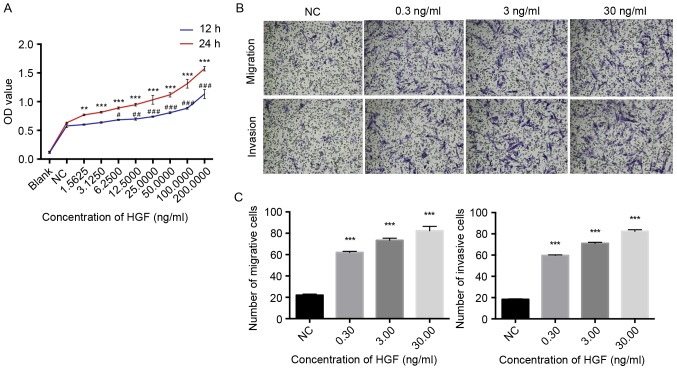
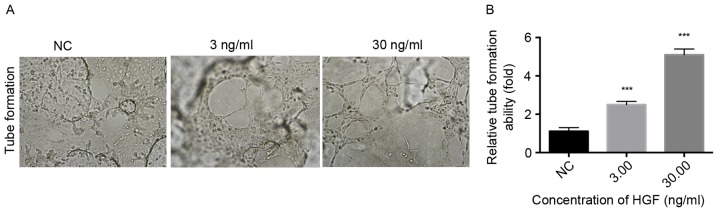
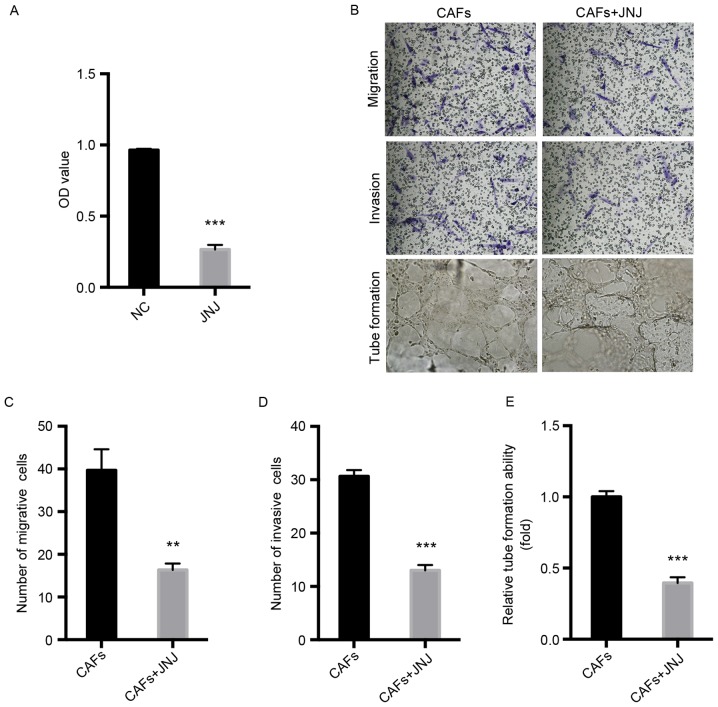
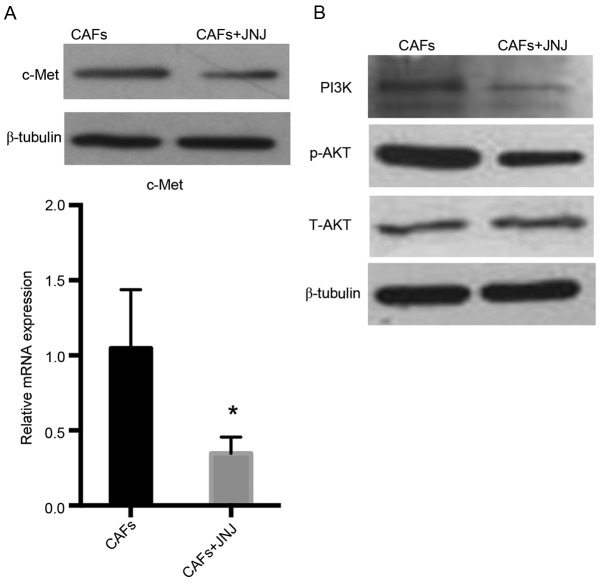
Carcinoma-associated fibroblasts (CAFs) are dominant components of the tumor microenvironment (TME) that promote the development, progression and metastasis of cancer. c-Met is a receptor of the hepatocyte growth factor (HGF), which is involved in lymphangiogenesis. Currently, the roles of CAFs during lymphangiogenesis are unknown. It has been hypothesized that CAFs contribute to lymphangiogenesis of oral squamous cell carcinoma (OSCC) via a HGF/c-Met complex. The expression of HGF in OSCC was determined using CAFs derived from OSCC tissue and it was demonstrated that HGF is overexpressed in OSCC-derived CAFs. It was also revealed that c-Met was highly expressed in human lymphatic endothelial cells (HLECs) when co-cultured with CAFs. Furthermore, it was demonstrated that recombinant human HGF significantly enhanced the proliferation, migration, invasion and tube formation of HLECs. By contrast, the inhibition of c-Met expression suppressed the aforementioned biological activities and also downregulated the expression of c-Met, phosphoinositide 3-kinase and phosphorylated protein kinase B. Taken together, these data demonstrate that c-Met is associated with the regulation of lymphangiogenesis. Thus, the results of the present study indicate that c-Met may be a promising novel therapeutic target to treat patients with OSCC.
Keywords: c-Met; carcinoma-associated fibroblasts; hepatocyte growth factor; lymphangiogenesis; oral squamous cell carcinoma.
Figures
References
-
- Roberts TJ, Colevas AD, Hara W, Holsinger FC, Oakley-Girvan I, Divi V. Number of positive nodes is superior to the lymph node ratio and American Joint Committee on Cancer N staging for the prognosis of surgically treated head and neck squamous cell carcinomas. Cancer. 2016;122:1388–1397. doi: 10.1002/cncr.29932. - DOI - PubMed
-
- Fullár A, Kovalszky I, Bitsche M, Romani A, Schartinger VH, Sprinzl GM, Riechelmann H, Dudás J. Tumor cell and carcinoma-associated fibroblast interaction regulates matrix metalloproteinases and their inhibitors in oral squamous cell carcinoma. Exp Cell Res. 2012;318:1517–1527. doi: 10.1016/j.yexcr.2012.03.023. - DOI - PMC - PubMed
LinkOut - more resources
Full Text Sources
Other Literature Sources
Miscellaneous