


Candida glabrata, Friend and Foe
- PMID: 29376912
- PMCID: PMC5753114
- DOI: 10.3390/jof1020277
Candida glabrata, Friend and Foe
Abstract
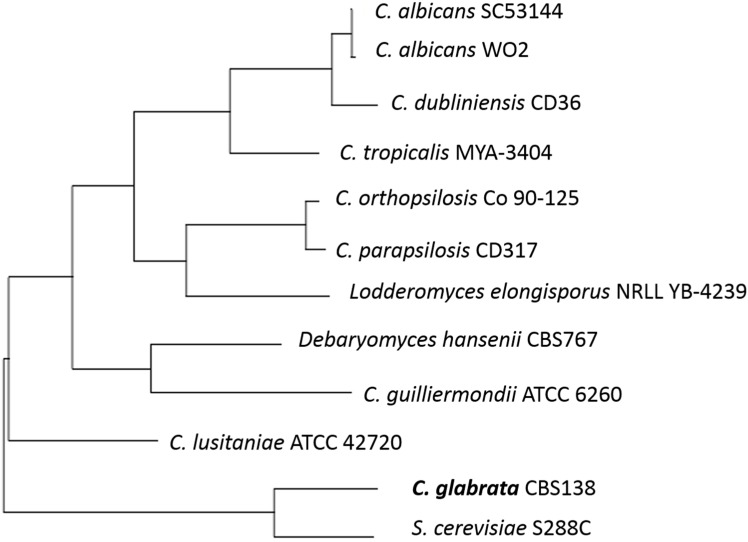
Candida glabrata is mostly good, but, at times, it is an opportunistic pathogen. Previously known as Torulopsis glabrata, it enjoyed a good reputation and was even present in starter cultures. Its haploid genome and lack of mating made it an attractive challenge for yeast genetics studies. However, more recently it has become better known due to its character as an emerging cause of candidiasis, and for its resistance to multidrugs that are employed for candidiasis treatment. While now classified as Candida glabrata, it is still not a good fit and tends to stand alone as a very unique yeast. In terms of sequence, it is dissimilar to other Candida yeast and most similar to Saccharomyces cerevisiae.
Keywords: Torulopsis; antifungal resistance; azole; candidiasis; ergosterol; opportunistic pathogen; starter culture; statins; yeast.
Conflict of interest statement
The authors declare no conflict of interest.
Figures
References
-
- Hommel R.K. Encyclopedia of Food Microbiology. 2nd ed. Academic Press; San Diego, CA, USA: 2014. Torulopsis; pp. 596–602.
-
- Sinnott J.T., Cullison J.P., Sweeney M.P. Candida (Torulopsis) glabrata. Infect. Control. 1987;8:334–336. - PubMed
Publication types
LinkOut - more resources
Full Text Sources
Other Literature Sources
