Review
. 2018 Mar;68(2):133-152.
doi: 10.3322/caac.21445. Epub 2018 Jan 29.

Factors influencing risk-based care of the childhood cancer survivor in the 21st century

Affiliations
Review

Factors influencing risk-based care of the childhood cancer survivor in the 21st century

Stephanie B Dixon et al. CA Cancer J Clin. 2018 Mar.

Abstract

The population of adult survivors of childhood cancer continues to grow as survival rates improve. Although it is well established that these survivors experience various complications and comorbidities related to their malignancy and treatment, this risk is modified by many factors that are not directly linked to their cancer history. Research evaluating the influence of patient-specific demographic and genetic factors, premorbid and comorbid conditions, health behaviors, and aging has identified additional risk factors that influence cancer treatment-related toxicity and possible targets for intervention in this population. Furthermore, although current long-term follow-up guidelines comprehensively address specific therapy-related risks and provide screening recommendations, the risk profile of the population continues to evolve with ongoing modification of treatment strategies and the emergence of novel therapeutics. To address the multifactorial modifiers of cancer treatment-related health risk and evolving treatment approaches, a patient-centered and risk-adapted approach to care that often requires a multidisciplinary team approach, including medical and behavioral providers, is necessary for this population. CA Cancer J Clin 2018;68:133-152. © 2018 American Cancer Society.

Keywords: adolescent; antineoplastic agents; cancer; child; delivery of health care; neoplasms; risk; survivors; treatment outcome.


Figures

Figure 1.
Figure 1.
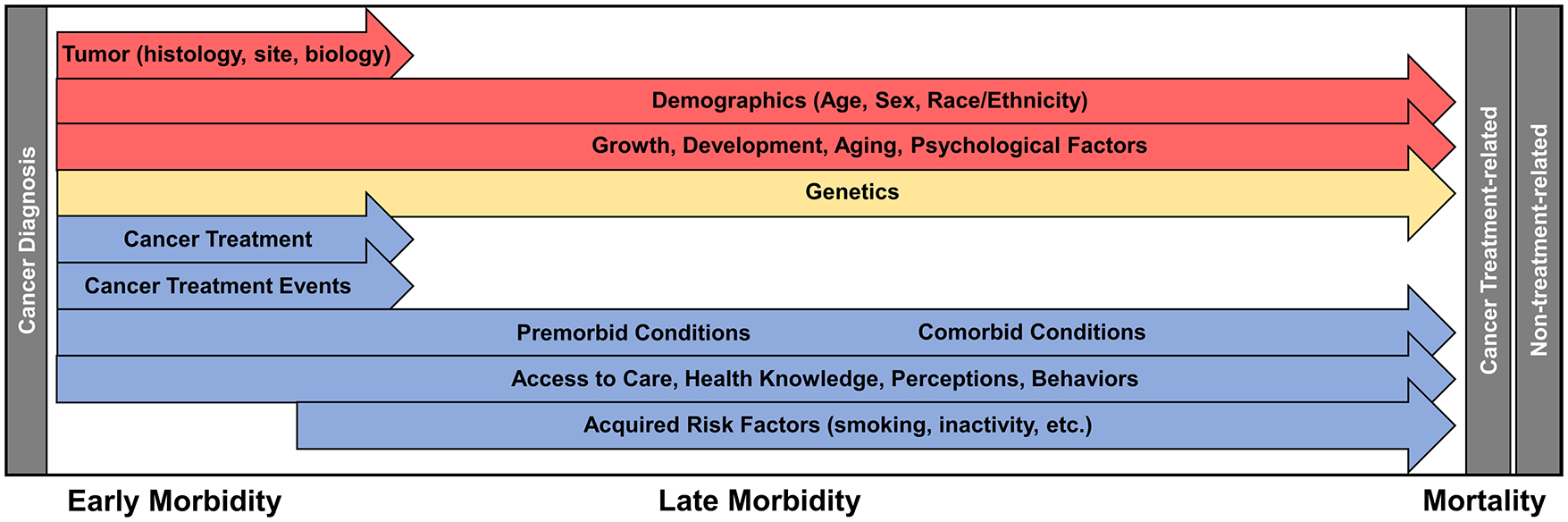
Factors influencing morbidity and mortality of the childhood cancer survivor. Each arrow demonstrates a different factor affecting morbidity and mortality which exert their effect along a continuum of care. Note that all effectors can begin exerting influence on morbidity during the period of cancer-directed therapy. Factors are separated into those that cannot be modified (red), those for which future interventions are plausible (yellow) and those for which there are known targets for interventions or areas where therapy and surveillance have already been modified (blue).
Figure 2.
Figure 2.
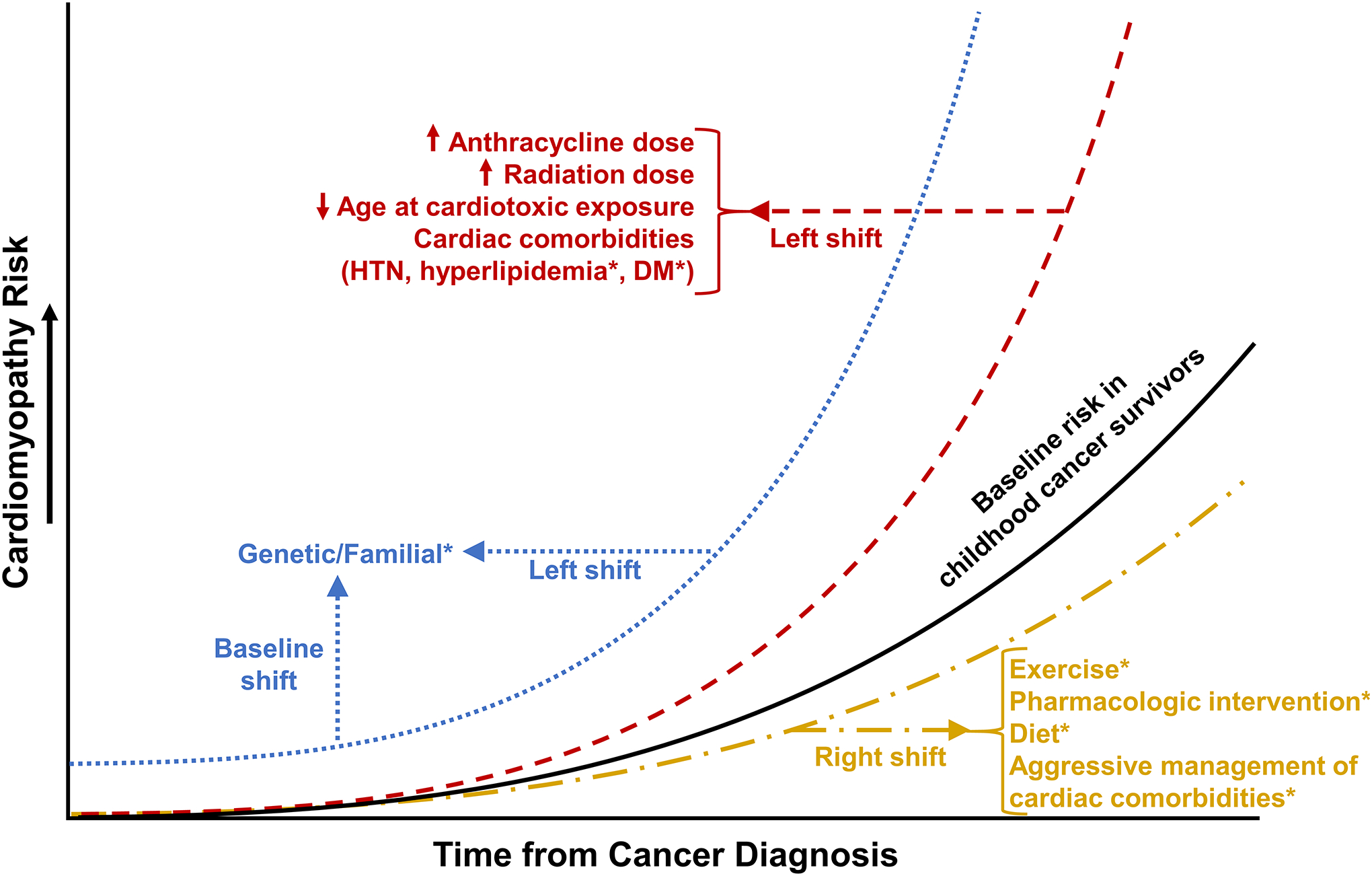
Conceptual schematic of cardiomyopathy risk and modifiers in childhood cancer survivors. Factors designated by an asterisk are under active investigation (knowledge gaps). HTN hypertension, DM diabetes mellitus. Reproduced with permission from Springer Publishing Company. Ehrhardt, MJ, Fulbright JM, Armenian SH. Cardiomyopathy in childhood cancer survivors: lessons from the past and challenges for the future. Curr Oncol Rep, 2016. 18(4): 22.
Figure 3.
Figure 3.
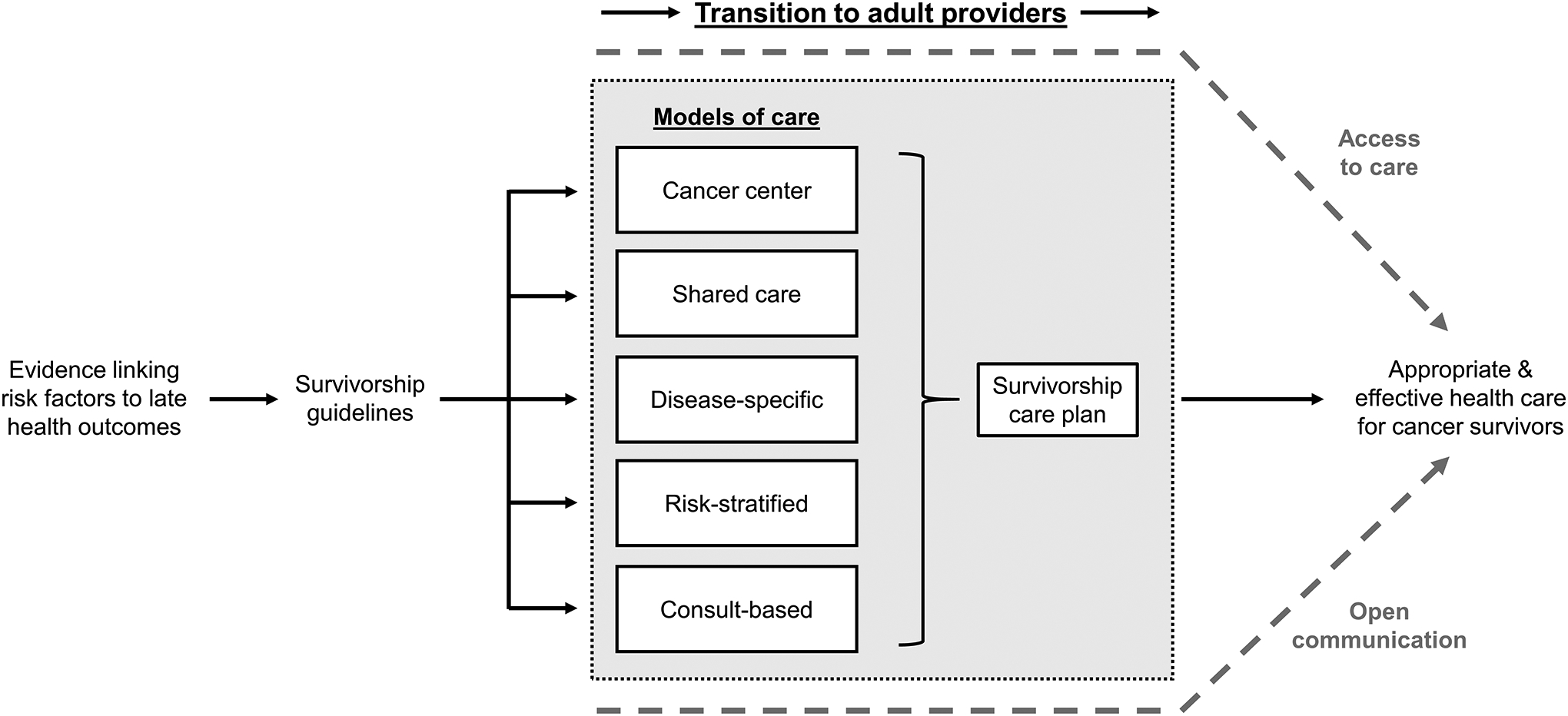
The continuum of childhood cancer survivor care delivery. “Cancer center” model: care provided within the cancer center, either by the primary oncology or dedicated survivorship teams. “Shared-care” model: care initially provided in the cancer center, with later transfer to community providers with ongoing communication and specialty support from the cancer center. “Disease-specific” model: cancer center-based survivorship clinics designed to specifically address the needs of a particular at-risk population (e.g. central nervous system tumor survivors). “Risk-stratified” model: stratified care is provided based on risk categorization, with survivors at higher risk of late effects being seen at more comprehensive centers and those with lower risk cared for in the community. “Consult-based” model: care administered in the community care provider’s office (i.e. the general pediatric or adult medicine provider) with consultation for specific late effects obtained as needed without ongoing specialty involvement unless clinically indicated.
Figure 4.
Figure 4.
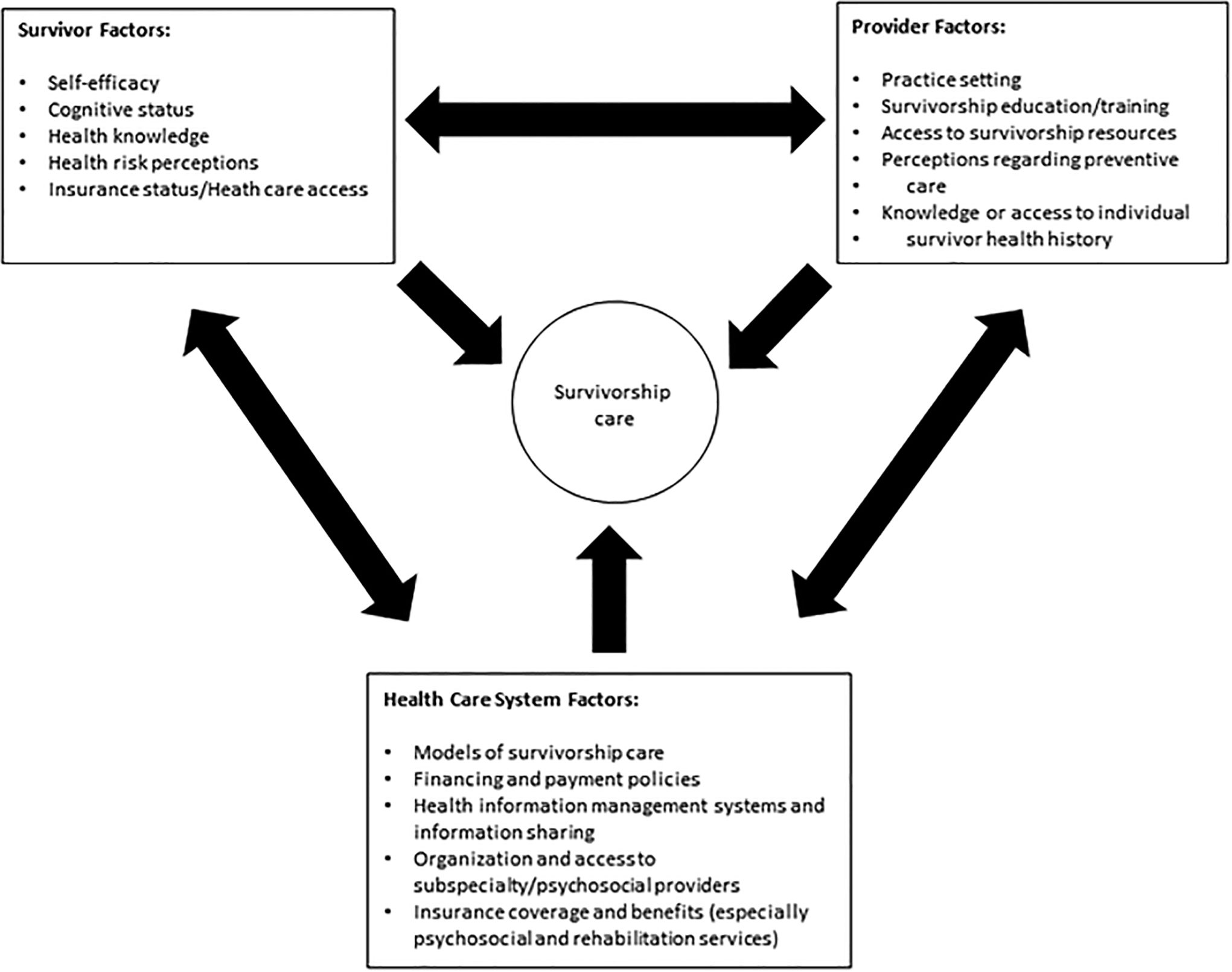
Survivor, provider and health care system factors that may act as barriers to survivorship care. The arrows demonstrate that factors in one domain may influence other domains. Directed interventions should be developed within the setting and context of care system.

References

    1. Howlader N, Noone AM, Krapcho M, et al. SEER Cancer Statistics Review, 1975–2014. Bethesda, MD: National Cancer Institute; 2017.
    1. Siegel RL, Miller KD, Jemal A. Cancer Statistics, 2017. CA Cancer J Clin. 2017;67(1):7–30. - PubMed
    1. Robison LL, Hudson MM. Survivors of childhood and adolescent cancer: life-long risks and responsibilities. Nat Rev Cancer. 2014;14(1):61–70. - PMC - PubMed
    1. Armstrong GT, Kawashima T, Leisenring W, et al. Aging and risk of severe, disabling, life-threatening, and fatal events in the Childhood Cancer Survivor Study. J Clin Oncol. 2014;32(12):1218–1227. - PMC - PubMed
    1. Hudson MM, Ness KK, Gurney JG, et al. Clinical ascertainment of health outcomes among adults treated for childhood cancer. JAMA. 2013;309(22):2371–2381. - PMC - PubMed