. 2018 Feb 7;140(5):1945-1951.
doi: 10.1021/jacs.7b13095. Epub 2018 Jan 29.

Controlled Formation and Binding Selectivity of Discrete Oligo(methyl methacrylate) Stereocomplexes

Affiliations

Controlled Formation and Binding Selectivity of Discrete Oligo(methyl methacrylate) Stereocomplexes

Jing M Ren et al. J Am Chem Soc. .

Abstract

The triple-helix stereocomplex of poly(methyl methacrylate) (PMMA) is a unique example of a multistranded synthetic helix that has significant utility and promise in materials science and nanotechnology. To gain a fundamental understanding of the underlying assembly process, discrete stereoregular oligomer libraries were prepared by combining stereospecific polymerization techniques with automated flash chromatography purification. Stereocomplex assembly of these discrete building blocks enabled the identification of (1) the minimum degree of polymerization required for the stereocomplex formation and (2) the dependence of the helix crystallization mode on the length of assembling precursors. More significantly, our experiments resolved binding selectivity between helical strands with similar molecular weights. This presents new opportunities for the development of next-generation polymeric materials based on a triple-helix motif.


Conflict of interest statement

The authors declare no competing financial interest.

Figures
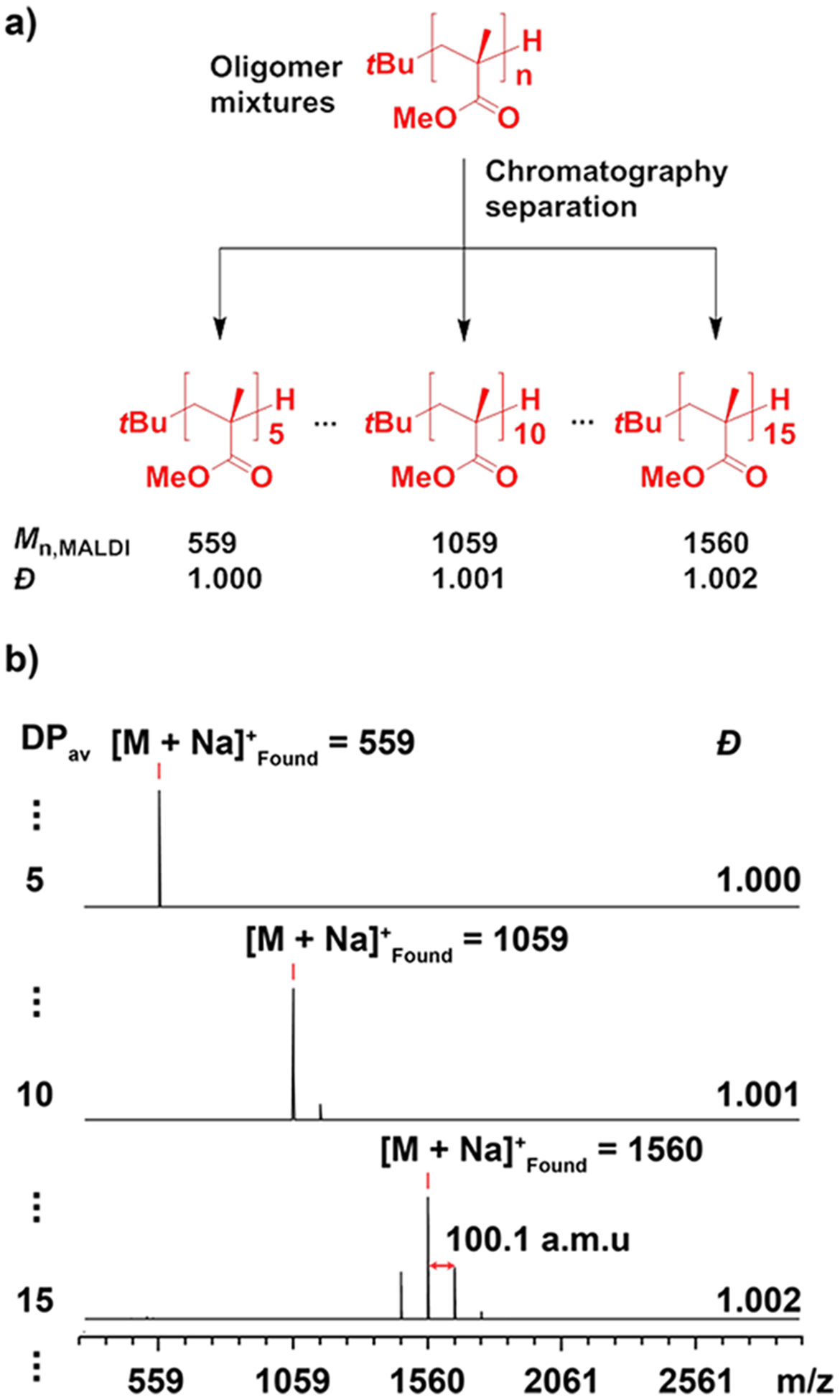
Figure 1.
Figure 1.
(a) Schematic illustration of OMMA separation using low MW it-OMMA as an example. (b) MALDI-ToF mass spectra of the isolated it-OMMA samples (DP = 5, 10, and 15).
Figure 2.
Figure 2.
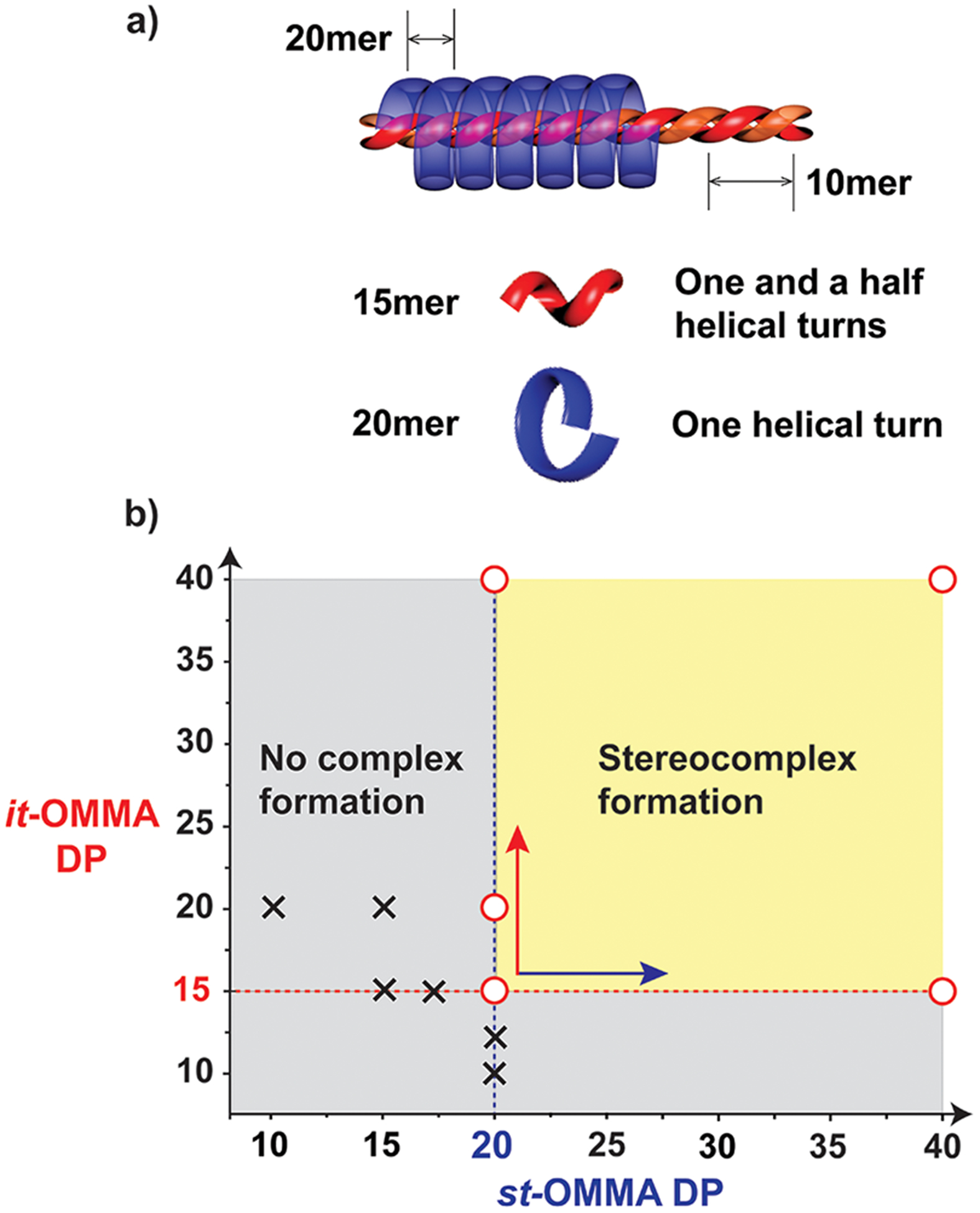
(a) Schematic illustration of the minimal configurations of stereoregular OMMA helices. (b) Diagram illustrating the chain length requirements for it-/st-OMMAs to form the triple-helix stereocomplex, as determined by XRD and DSC. Circle (○) and cross (×) indicate complexation and no complexation observed, respectively.
Figure 3.
Figure 3.
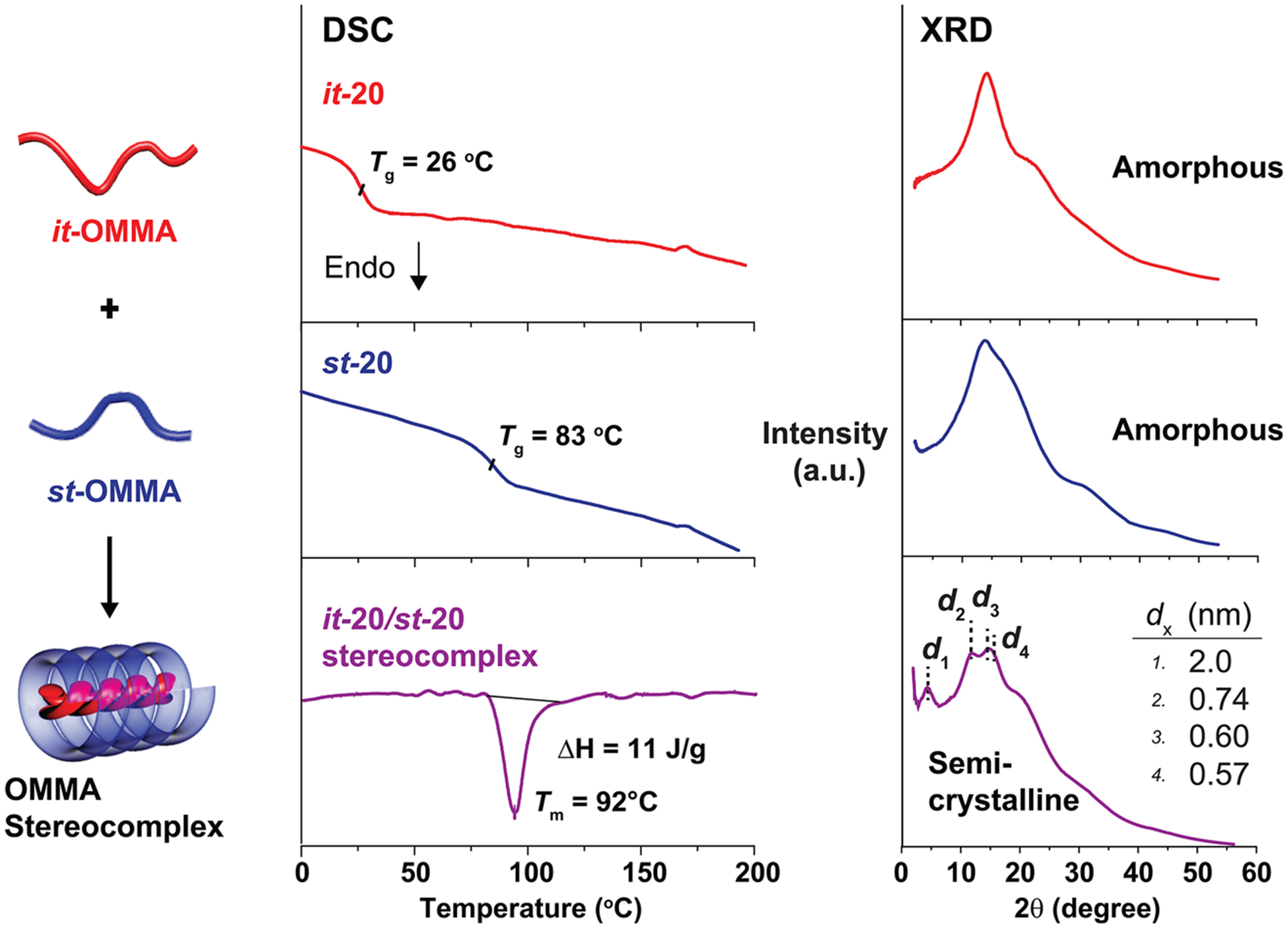
DSC thermograms and XRD patterns of it-20, st-20, and their stereocomplex (it-/st- molar ratio = 1:2).
Figure 4.
Figure 4.
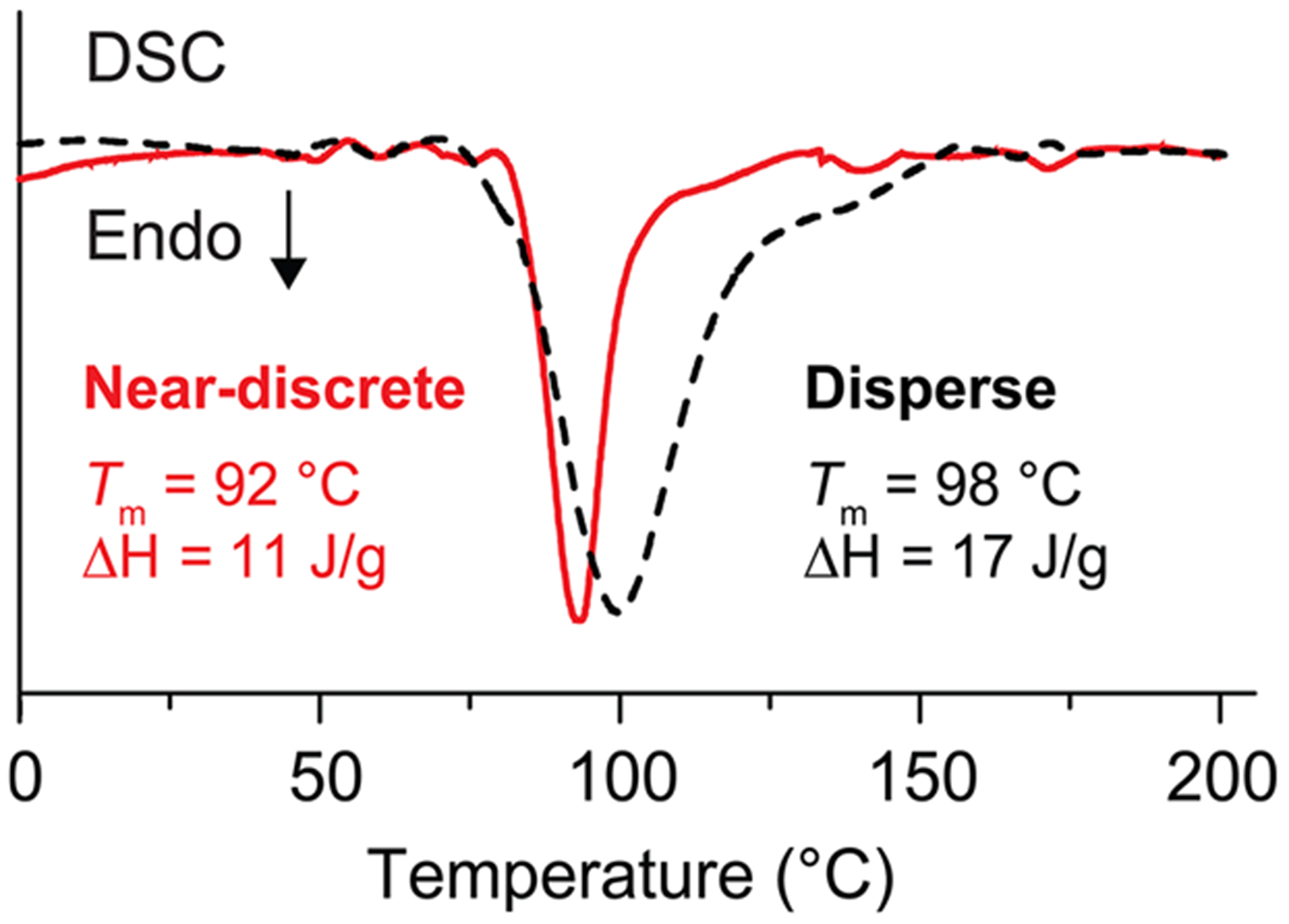
DSC traces of the stereocomplexes prepared from near-discrete and disperse it-/st-oligomer pairs (DPav = 20) (it-/st- molar ratio = 1:2).
Figure 5.
Figure 5.
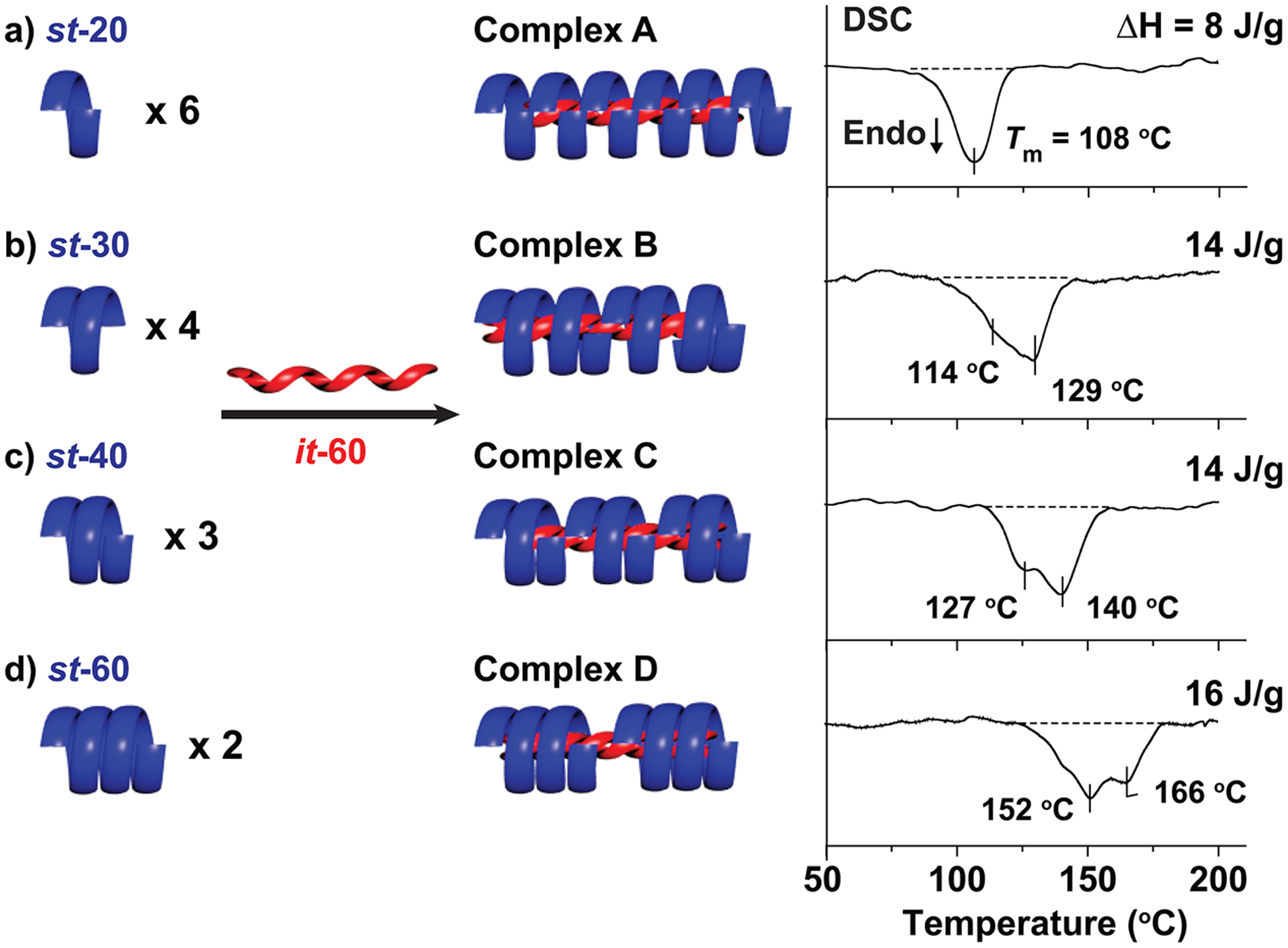
Schematic illustration of a series of helical “isomers” with the same total helical length, prepared from it-60 with (a) st-20, (b) st-30, (c) st-40, and (d) st-60 samples, respectively (it-/st- molar ratio = 1:2).
Figure 6.
Figure 6.
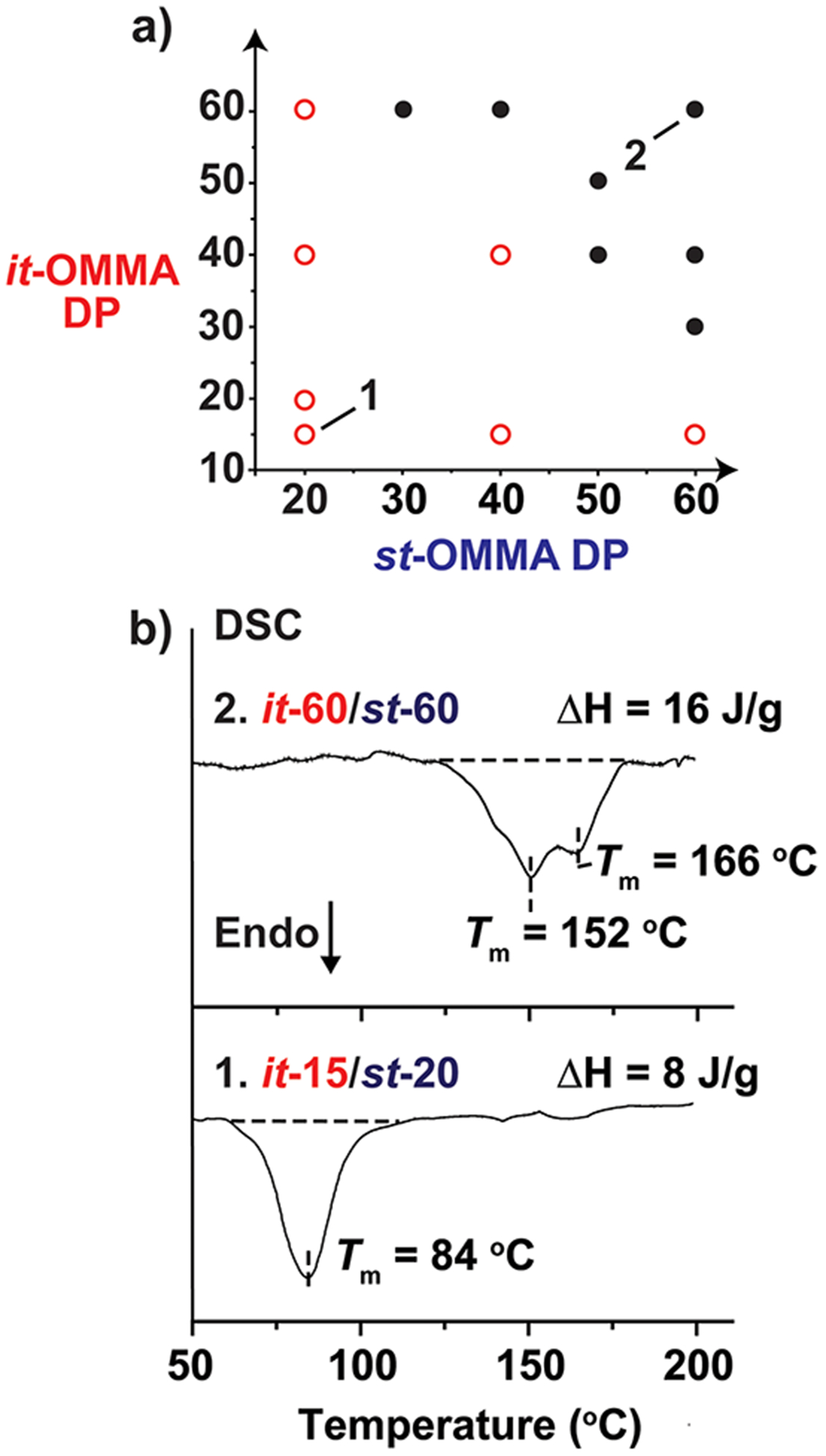
(a) Diagram illustrating the melting behavior of OMMA stereocomplexes as a function of it-/st-OMMA chain lengths. Open (○) and closed (●) circles refer to samples with one and two melting peaks, respectively. (b) Differential scanning calorimetry (DSC) profiles of two illustrative stereocomplex examples (i.e., it-60/st-60 and it-15/st-20) showing melting transitions with two peaks and a single peak, respectively.
Figure 7.
Figure 7.
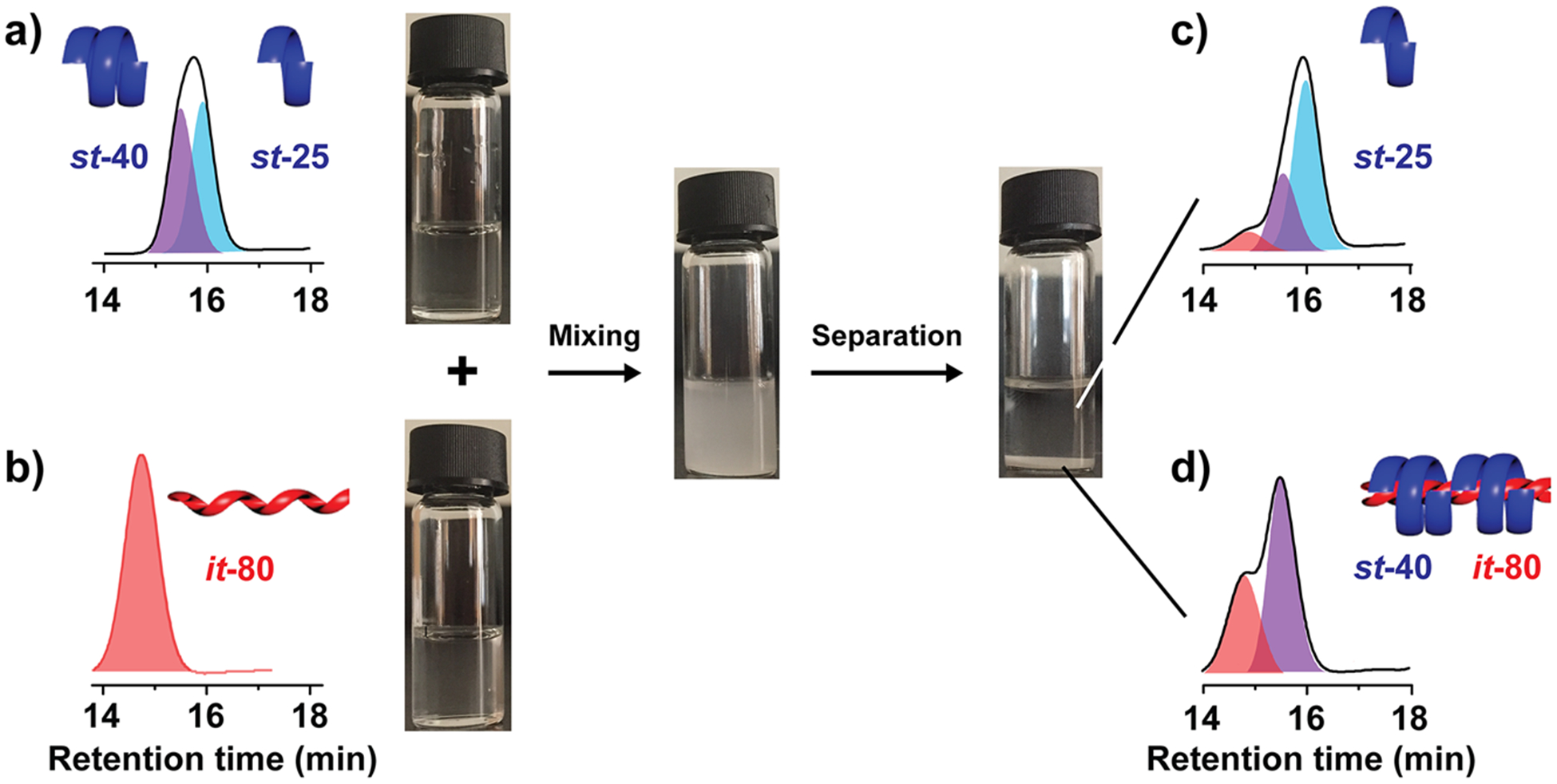
Schematic illustrates the binding selectivity of OMMA toward high MW complementary species. Samples and GPC dRI traces of (a) 50:50 wt % mixture of st-25 and st-40, (b) it-80, (c) the supernatant, and (d) the precipitate collected after mixing the initial OMMA solutions (it-/st-molar ratio = 1:4).
Scheme 1.
Scheme 1.
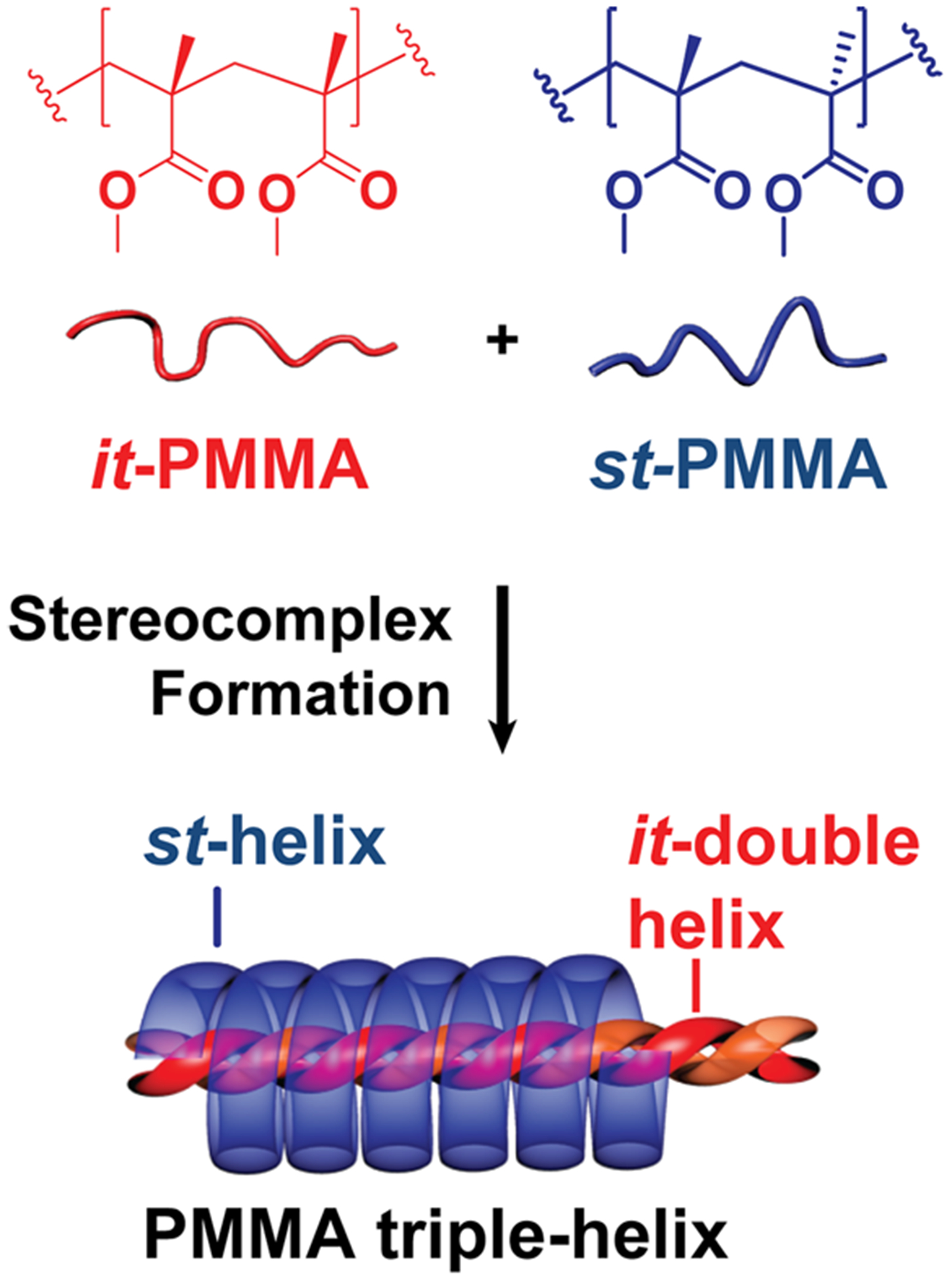
Illustration of PMMA Triple-Helix Stereocomplex Formation
Scheme 2.
Scheme 2.
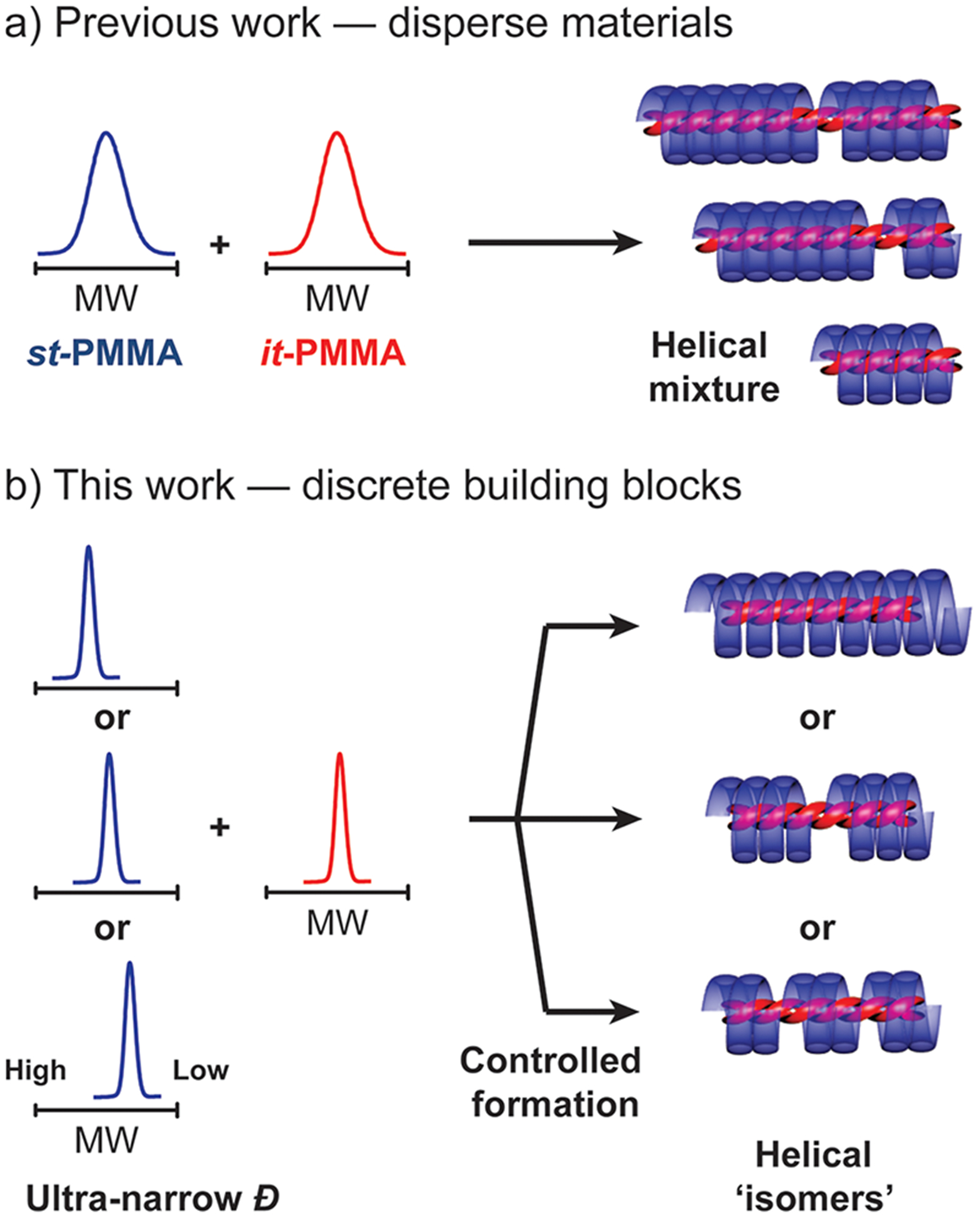
Illustration of (a) PMMA Stereocomplexes Prepared from Disperse Materials; (b) Designer PMMA Stereocomplexes Prepared from Discrete Building Blocks
Scheme 3.
Scheme 3.
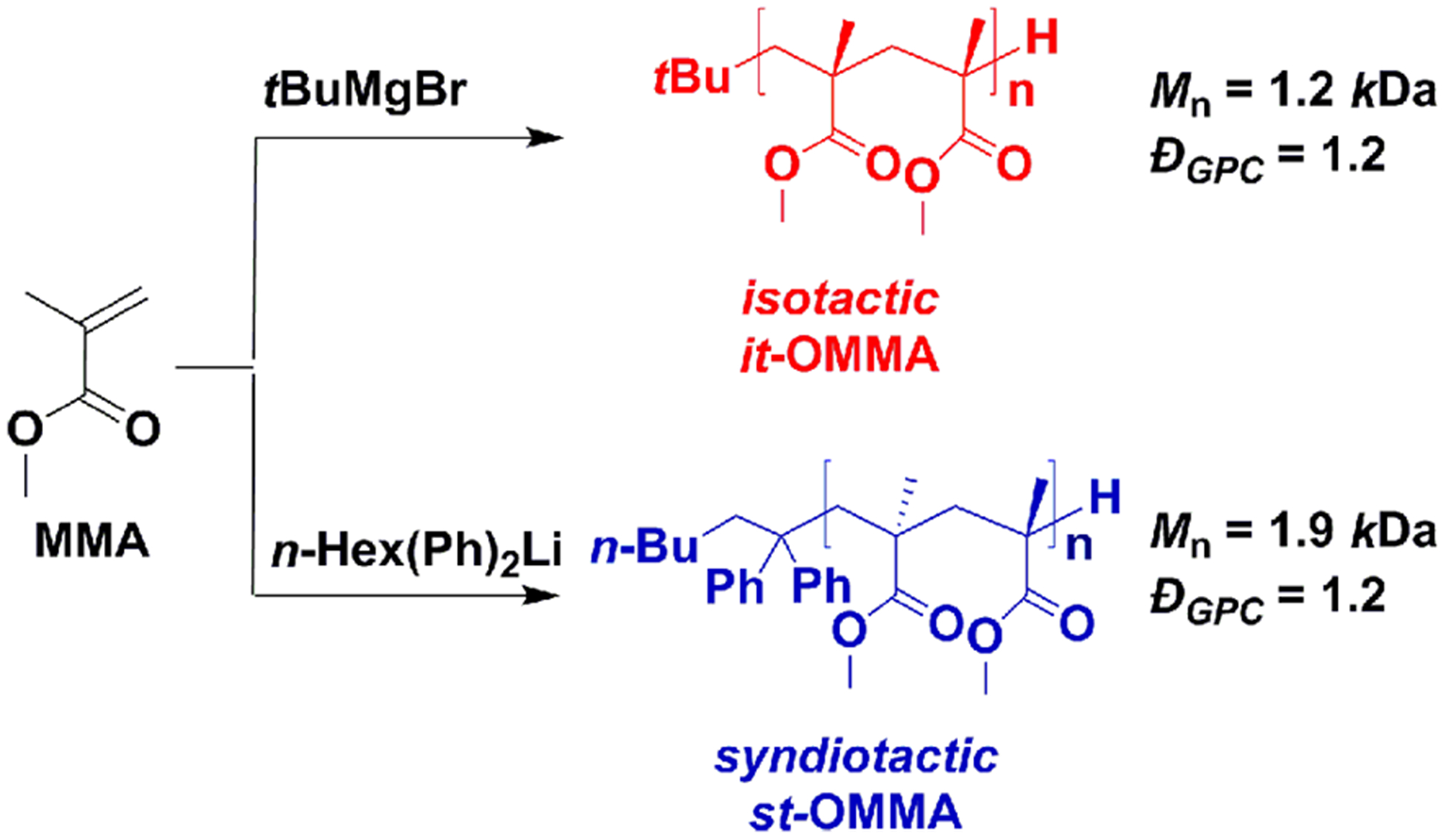
Synthesis of Isotactic (it-) and Syndiotactic (st-) Oligo(methyl methacrylate)s (OMMA)s

References

    1. Watson JD; Crick FHC Nature 1953, 171, 964–967. - PubMed
    1. Pauling L; Corey RB; Branson HR Proc. Natl. Acad. Sci. U.S. A 1951, 37, 205–211. - PMC - PubMed
    1. Yashima E; Ousaka N; Taura D; Shimomura K; Ikai T; Maeda K Chem. Rev 2016, 116, 13752–13990. - PubMed
    1. Cornelissen JJLM; Rowan AE; Nolte RJM; Sommerdijk NAJM Chem. Rev 2001, 101, 4039–4070. - PubMed
    1. Yashima E; Maeda K; Furusho Y Acc. Chem. Res 2008, 41, 1166–1180. - PubMed

Publication types

Substances