


Clinical importance of eflornithine (α-difluoromethylornithine) for the treatment of malignant gliomas
- PMID: 29378419
- PMCID: PMC5977277
- DOI: 10.2217/cns-2017-0031
Clinical importance of eflornithine (α-difluoromethylornithine) for the treatment of malignant gliomas
Abstract
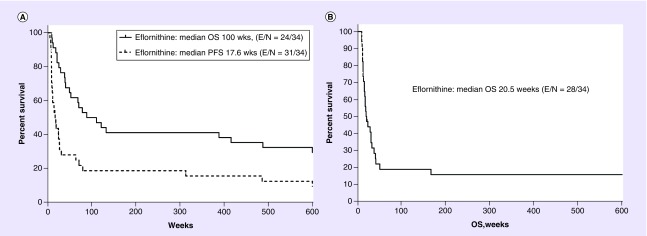
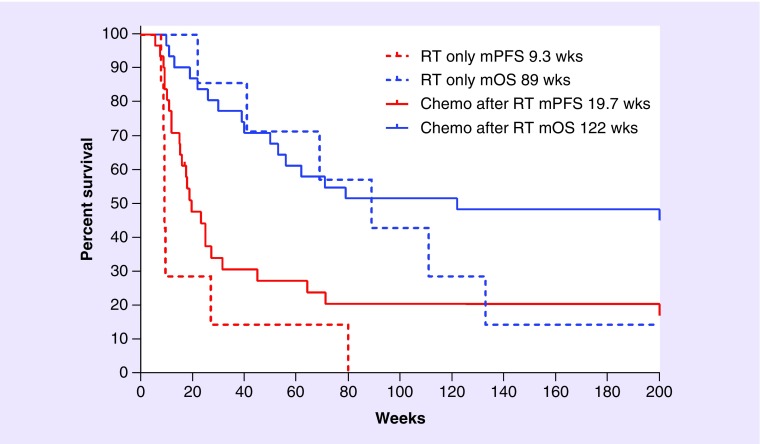
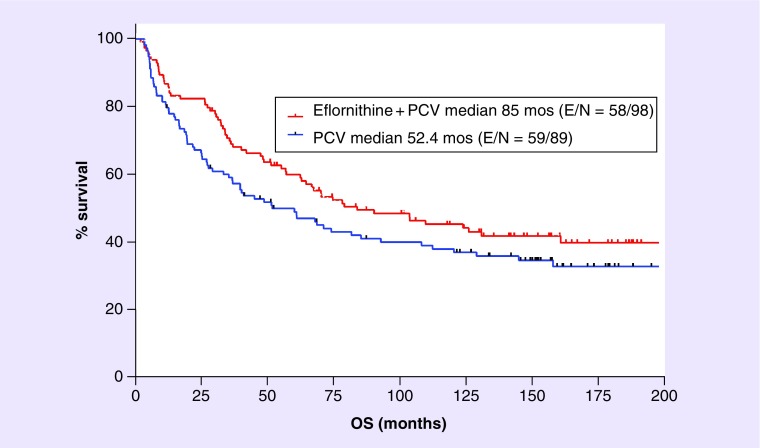
This review covers the literature between 1989 and 2007 on studies relevant to the neuro-oncology usage of eflornithine (α-difluoromethylornithine), an oral agent that irreversibly inhibits the enzyme ornithine decarboxylase. It covers the use of eflornithine, alone or in combination, to treat high-grade gliomas. In addition, we provide an update on overall survival from The University of Texas MD Anderson Cancer Center Community Clinical Oncology Program and Clinical Trials Data Office that demonstrates a meaningful benefit in overall survival for eflornithine as a single agent and in combination with nitrosourea-based therapies for anaplastic gliomas. We also provide a framework for understanding the basis and study design of the ongoing pivotal, registrational Phase III multicenter trial for recurrent/progressive anaplastic astrocytoma.
Keywords: anaplastic oligoastrocytoma; anaplastic oligodendroglioma; astrocytoma; glioblastoma; polyamine inhibition.
Conflict of interest statement
This work is licensed under the Attribution-NonCommercial-NoDerivatives 4.0 Unported License. To view a copy of this license, visit
Figures
References
-
- Shantz LM, Levin VA. Regulation of ornithine decarboxylase during oncogenic transformation: mechanisms and therapeutic potential. Amino Acids. 2007;33(2):213–223. - PubMed
-
- Bachmann AS, Levin VA. Clinical applications of polyamine-based therapeutics. In: Woster PM, Casero R, editors. Polyamine Drug Discovery. RSC Publishing; London, UK: 2012. pp. 257–276.
-
- Clinical Investigator Brochure Ornidyl (eflornithine hydrochloride) Merrell Dow Research Institute; Cincinnati, USA: 1987. Report No.: X-81–02.
-
- Carbone PP, Douglas JA, Thomas J, et al. Bioavailability study of oral liquid and tablet forms of α-difluoromethylornithine. Clin. Cancer Res. 2000;6(10):3850–3854. - PubMed
-
- Levin VA, Chamberlain MC, Prados MD, et al. Phase I–II study of eflornithine and mitoguazone combined in the treatment of recurrent primary brain tumors. Cancer Treat. Rep. 1987;71(5):459–464. - PubMed
Publication types
MeSH terms
Substances
Grants and funding
LinkOut - more resources
Full Text Sources
Other Literature Sources
Medical
