


Prevalence and characteristics of COPD among pneumoconiosis patients at an occupational disease prevention institute: a cross-sectional study
- PMID: 29378587
- PMCID: PMC5789671
- DOI: 10.1186/s12890-018-0581-0
Prevalence and characteristics of COPD among pneumoconiosis patients at an occupational disease prevention institute: a cross-sectional study
Abstract
Background: Pneumoconiosis may play an important role in the development of chronic obstructive pulmonary disease (COPD), and the complication of COPD may impose a heavy burden of illness.
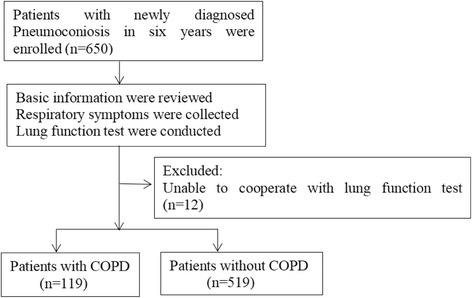
Methods: The study was conducted in Hunan Province in China from December 1, 2015, to December 1, 2016. Consecutive underground male pneumoconiosis patients employed for at least 1 year were recruited from the Hunan Occupational Disease Prevention Institute. Patient information, respiratory symptoms and clinical data were collected using a structured questionnaire. The diagnosis of COPD were assessed using the Global Initiative for Chronic Obstructive Lung Disease (GOLD) criteria. Logistic regression analyses were conducted to examine the clinical and demographic risk factors of COPD among pneumoconiosis patients.
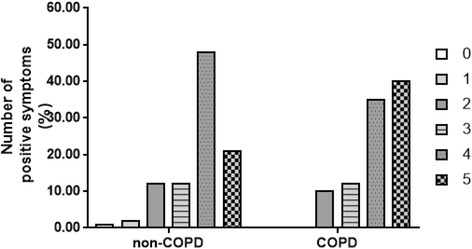
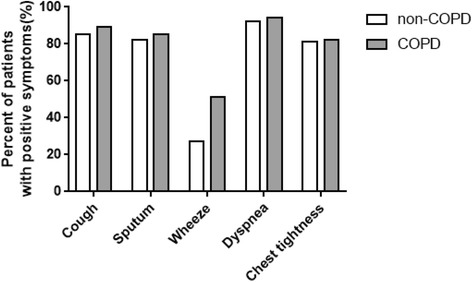
Results: The prevalence of COPD in our sample of pneumoconiosis patients was 18.65% (119/638). In pneumoconiosis patients with and without smoking history, the prevalence of COPD was 19.32 and 16.77%. Compared with non-COPD patients, those with COPD are older in age, have longer exposure time, have lower body mass index (BMI), have a higher smoking index and have worse pulmonary function (all p < 0.05). For the five respiratory symptoms (cough, sputum, wheeze, dyspnea, and chest tightness), only the presence of wheeze and the severity scores for wheeze or dyspnea showed significant differences between the COPD and non-COPD groups (p < 0.01). Multivariate logistic regression analysis revealed that advanced pneumoconiosis category, older age and the presence of wheeze symptoms were significant risk factors for the development of COPD among pneumoconiosis patients.
Conclusion: Pneumoconiosis patients are at a high risk of COPD, and pneumoconiosis patients with COPD may suffer more severe respiratory symptoms, such as wheeze and dyspnea, than patients without COPD. Advanced pneumoconiosis category, older age and the presence of wheeze symptoms are associated with an increased risk of COPD in pneumoconiosis. We proposed that a routine assessment of lung function is necessary for timely and adequate clinical management.
Keywords: COPD; Pneumoconiosis; Prevalence; Risk factors.
Conflict of interest statement
Ethics approval and consent to participate
The study was reviewed by the chair of the Institutional Review Board Ethics Committee in Hunan Institute of Occupational Disease Prevention (NO.2015001). Written informed consent was obtained from each participant. None of the authors has a financial relationship with a commercial entity that has interest in the subject of this manuscript. The authors declare that they have no competing interests in this work.
Consent for publication
Not applicable.
Competing interests
The authors declare that they have no competing interests.
Publisher’s Note
Springer Nature remains neutral with regard to jurisdictional claims in published maps and institutional affiliations.
Figures
References
-
- Weston A. Work-related lung diseases. IARC Sci Publ. 2011;163:387–405. - PubMed
-
- Ministry of Health of China. National occupational diseases report for 2013. (2014). Availableat:http://www.nhfpc.gov.cn/jkj/s5899t/201406/ed8ed220d0b74010bcb6dcd8e340f4.... Accessed June 2014.
MeSH terms
Grants and funding
LinkOut - more resources
Full Text Sources
Other Literature Sources
Medical
