


GO FEAT: a rapid web-based functional annotation tool for genomic and transcriptomic data
- PMID: 29379090
- PMCID: PMC5789007
- DOI: 10.1038/s41598-018-20211-9
GO FEAT: a rapid web-based functional annotation tool for genomic and transcriptomic data
Abstract
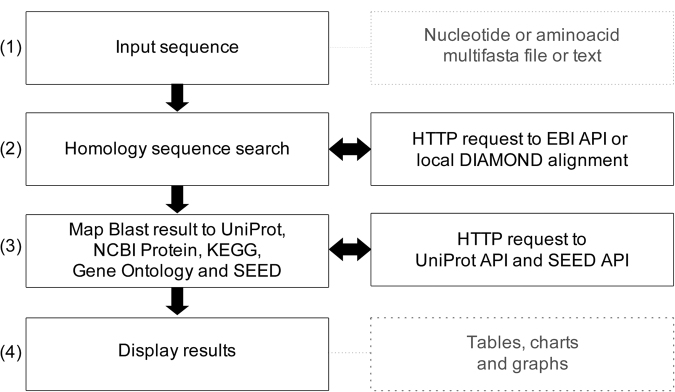
Downstream analysis of genomic and transcriptomic sequence data is often executed by functional annotation that can be performed by various bioinformatics tools and biological databases. However, a full fast integrated tool is not available for such analysis. Besides, the current available software is not able to produce analytic lists of annotations and graphs to help users in evaluating the output results. Therefore, we present the Gene Ontology Functional Enrichment Annotation Tool (GO FEAT), a free web platform for functional annotation and enrichment of genomic and transcriptomic data based on sequence homology search. The analysis can be customized and visualized as per users' needs and specifications. GO FEAT is freely available at http://computationalbiology.ufpa.br/gofeat/ and its source code is hosted at https://github.com/fabriciopa/gofeat .
Conflict of interest statement
The authors declare that they have no competing interests.
Figures
References
Publication types
MeSH terms
LinkOut - more resources
Full Text Sources
Other Literature Sources
