


Climate change promotes parasitism in a coral symbiosis
- PMID: 29379177
- PMCID: PMC5864192
- DOI: 10.1038/s41396-018-0046-8
Climate change promotes parasitism in a coral symbiosis
Abstract
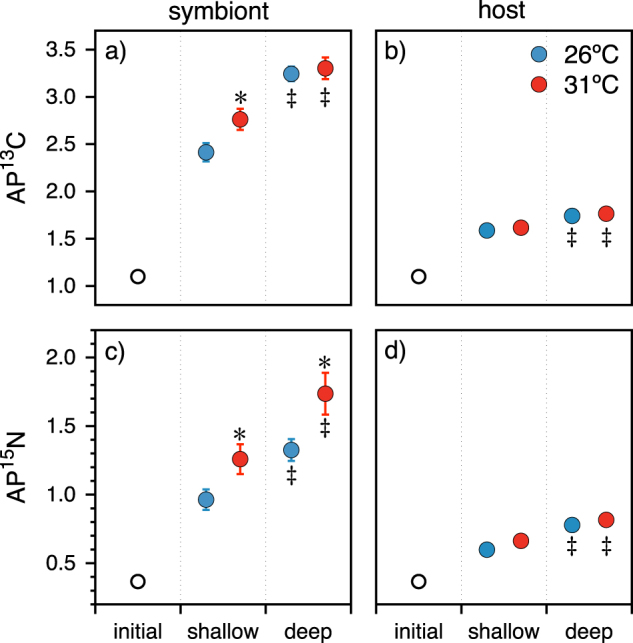
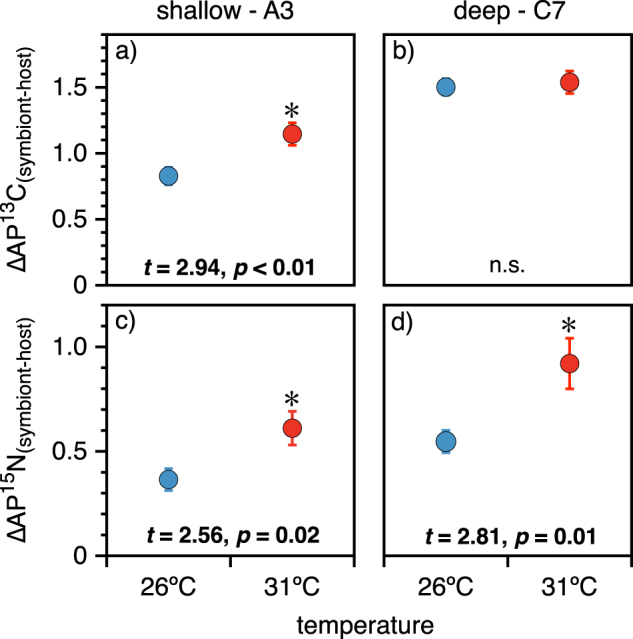
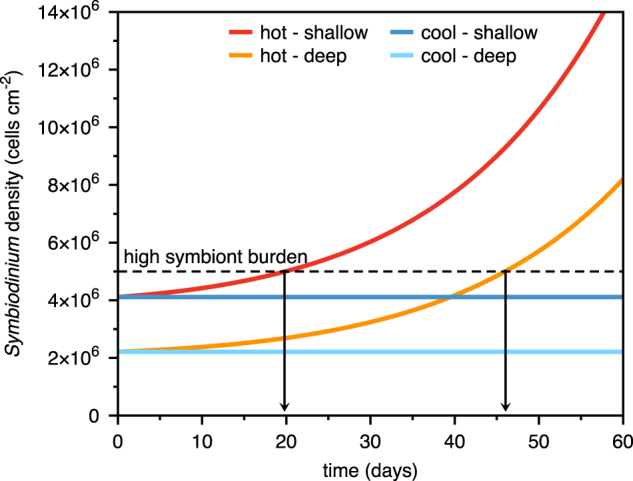
Coastal oceans are increasingly eutrophic, warm and acidic through the addition of anthropogenic nitrogen and carbon, respectively. Among the most sensitive taxa to these changes are scleractinian corals, which engineer the most biodiverse ecosystems on Earth. Corals' sensitivity is a consequence of their evolutionary investment in symbiosis with the dinoflagellate alga, Symbiodinium. Together, the coral holobiont has dominated oligotrophic tropical marine habitats. However, warming destabilizes this association and reduces coral fitness. It has been theorized that, when reefs become warm and eutrophic, mutualistic Symbiodinium sequester more resources for their own growth, thus parasitizing their hosts of nutrition. Here, we tested the hypothesis that sub-bleaching temperature and excess nitrogen promotes symbiont parasitism by measuring respiration (costs) and the assimilation and translocation of both carbon (energy) and nitrogen (growth; both benefits) within Orbicella faveolata hosting one of two Symbiodinium phylotypes using a dual stable isotope tracer incubation at ambient (26 °C) and sub-bleaching (31 °C) temperatures under elevated nitrate. Warming to 31 °C reduced holobiont net primary productivity (NPP) by 60% due to increased respiration which decreased host %carbon by 15% with no apparent cost to the symbiont. Concurrently, Symbiodinium carbon and nitrogen assimilation increased by 14 and 32%, respectively while increasing their mitotic index by 15%, whereas hosts did not gain a proportional increase in translocated photosynthates. We conclude that the disparity in benefits and costs to both partners is evidence of symbiont parasitism in the coral symbiosis and has major implications for the resilience of coral reefs under threat of global change.
Conflict of interest statement
The authors declare that they have no conflict of interest.
Figures
References
-
- Wooldridge SA. Instability and breakdown of the coral–algae symbiosis upon exceedence of the interglacial pCO2 threshold (>260 ppmv): the ‘missing’ Earth-System feedback mechanism. Coral Reefs. 2017;36:1025–37. doi: 10.1007/s00338-017-1594-5. - DOI
-
- Lesser MP, Stat M, Gates RD. The endosymbiotic dinoflagellates (Symbiodinium sp.) of corals are parasites and mutualists. Coral Reefs. 2013;32:603–11. doi: 10.1007/s00338-013-1051-z. - DOI
Publication types
MeSH terms
Substances
LinkOut - more resources
Full Text Sources
Other Literature Sources
Medical
