. 2017 Dec 31;13(12):417-429.
doi: 10.6026/97320630013417. eCollection 2017.

Computer aided epitope design as a peptide vaccine component against Lassa virus

Affiliations

Computer aided epitope design as a peptide vaccine component against Lassa virus

Ar-Rafi Md Faisal et al. Bioinformation. .

Abstract

Lassa virus (LASV) is an arena virus causing hemorrhagic fever and it is endemic in several regions of West Africa. The disease-causing virus records high mortality rate in endemic regions due to lack of appropriate treatment and prevention strategies. Therefore, it is of interest to design and develop viable vaccine components against the virus. We used the Lassa virus envelope glyco-proteins as a vaccine target to identify linear peptides as potential epitopes with immunogenic properties by computer aided epitope prediction tools. We report a T-cell epitope 'LLGTFTWTL' and a B-cell epitope 'AELKCFGNTAVAKCNE' with predicted potential immunogenicity for further in vivo and in vitro consideration.

Keywords: Lassa virus; envelope glycoprotein; epitope-based vaccine.


Figures
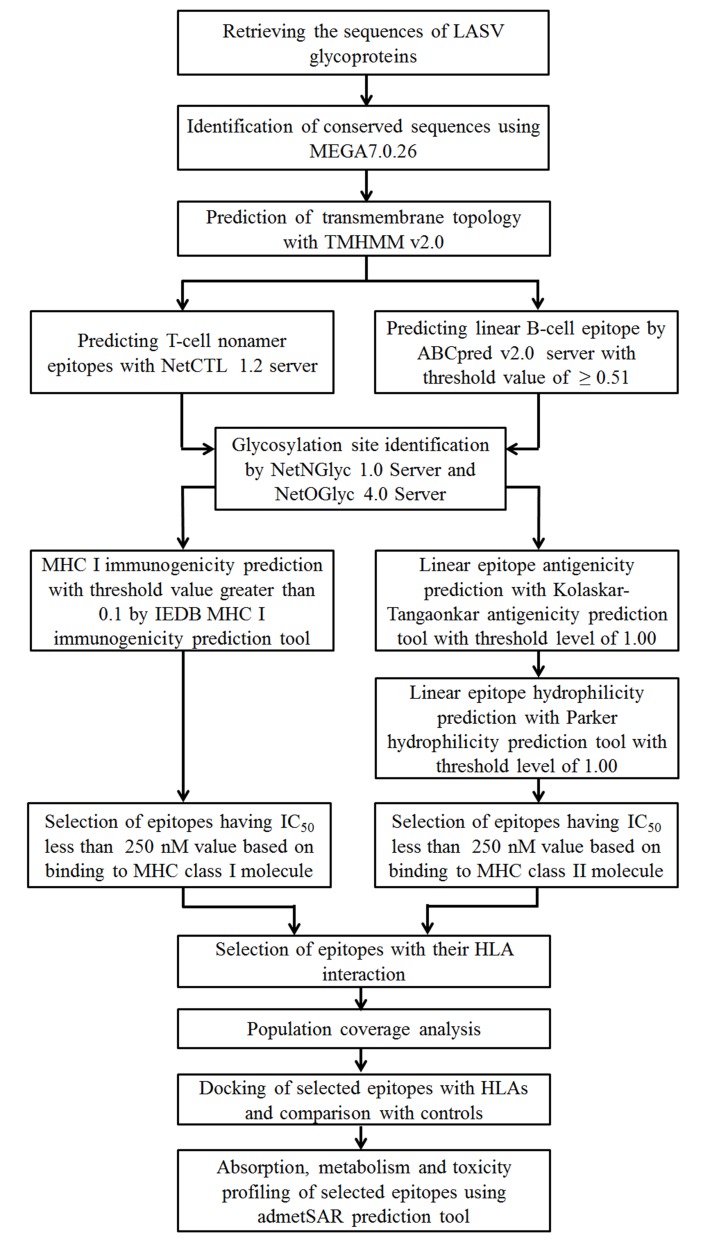
Figure 1
Figure 1
A workflow for the design of epitope as a peptide vaccine component against LASV.
Figure 2
Figure 2
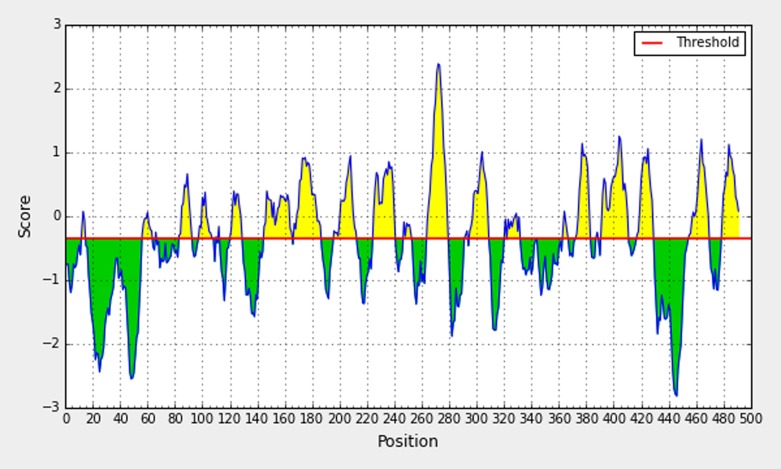
Bepipred linear epitope prediction tool depicting a B cell epitope.
Figure 3
Figure 3
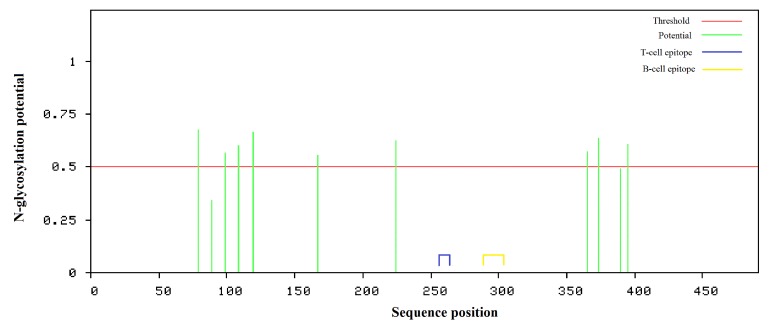
Schematic diagram of the N-glycosylation sites of LASV glycoprotein (491 amino acids). Amino acids residue numbers 79, 89, 99, 109, 119, 167, 224, 365, 373, 390 and 395 are predicted to be N-glycosylation sites. The blue and the yellow area indicate the predicted T-cell candidate epitope 'LLGTFTWTL' region (258-266) and predicted B-cell candidate epitope 'AELKCFGNTAVAKCNE' region (288-303). Both the epitopes do not possess any glycosylation site.
Figure 4
Figure 4
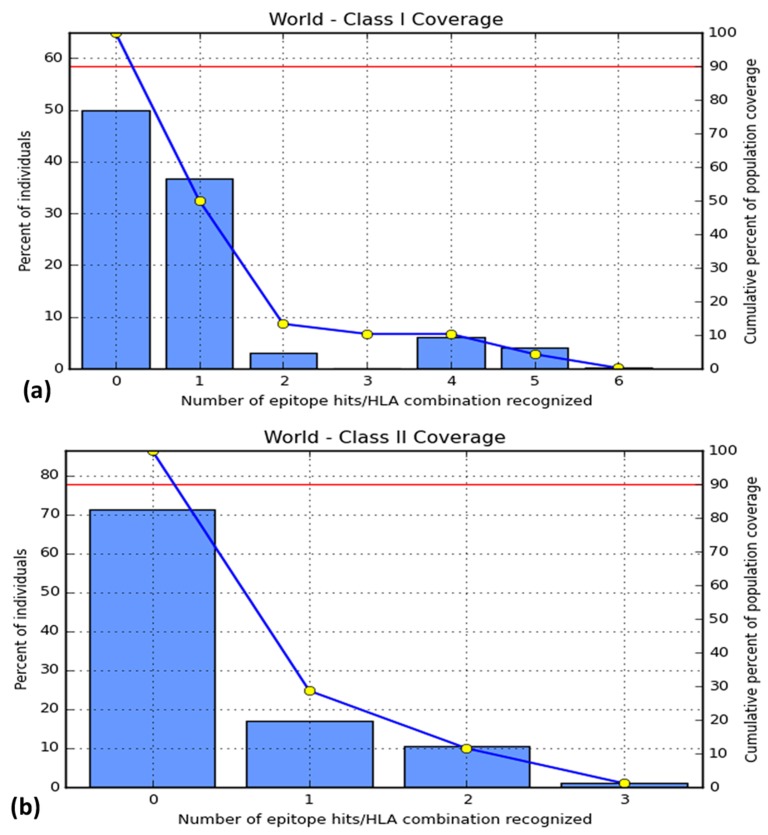
Worldwide population coverage of (a) T-cell epitopes and (b) B-cell epitopes with MHC class I alleles and MHC class II alleles respectively. Bar '0' indicates the percentage of people not elucidating immune response by the epitopes. In the figures (a) and (b), bar '1' indicates the highest interaction showed by the epitopes 'LLGTFTWTL' and 'AELKCFGNTAVAKCNE' respectively.
Figure 5
Figure 5
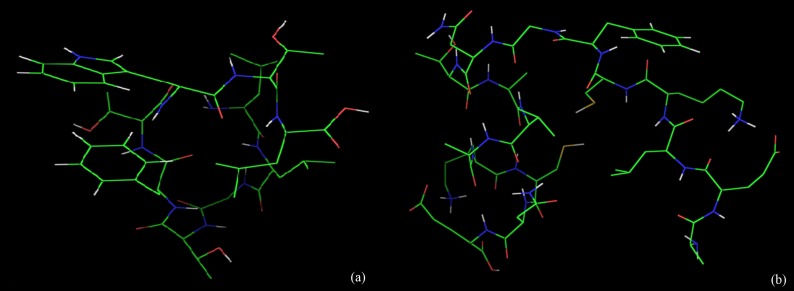
The epitopes from the conserved regions of LASV glycoproteins. (a) T-cell epitope 'LLGTFTWTL' (b) B-cell epitope 'AELKCFGNTAVAKCNE'
Figure 6
Figure 6
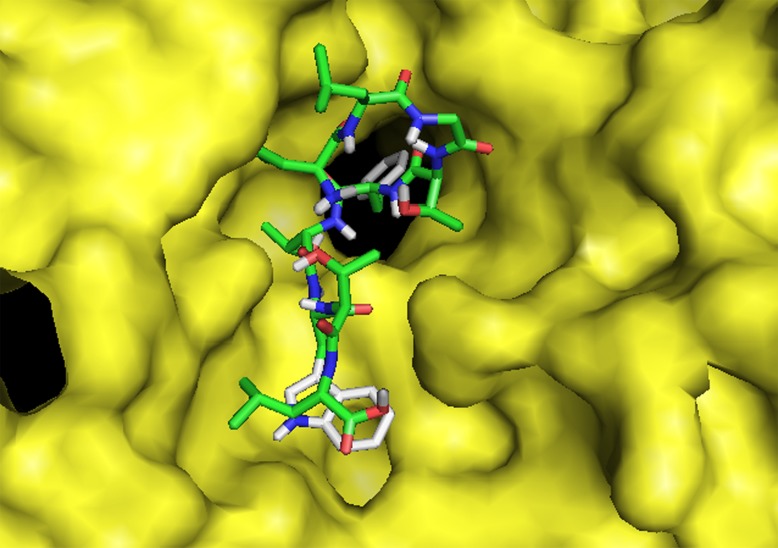
Molecular docking peptide 'LLGTFTWTL' to the binding grooves of MHC class I molecule, HLA-A*02:01. Binding energy was -10.5 kcal/mol.
Figure 7
Figure 7
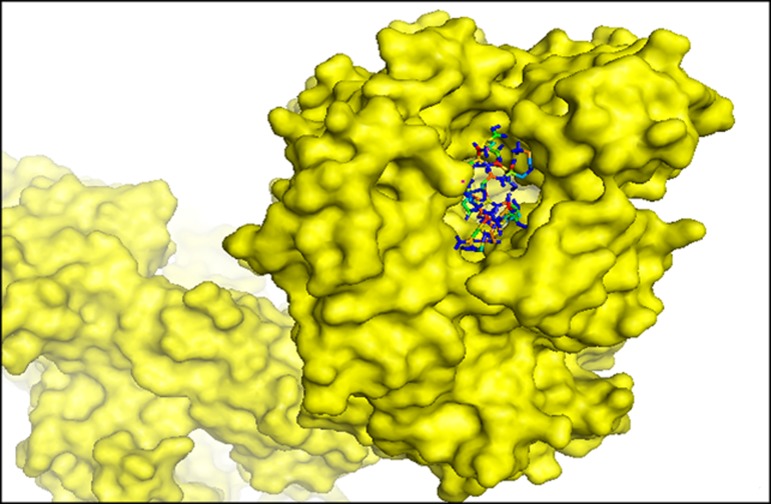
Molecular docking of candidate epitopic peptides to MHC class II molecule, HLA-DRB1*01:01. The bindings of predicted peptide, 'AELKCFGNTAVAKCNE' to the binding grooves of HLA-DRB1*01:01 and binding energy was found to be -14.1 kcal/mol.

References

    1. Meyer B, et al. Curr Top Microbiol Immunol. 2002;262:139. - PubMed
    1. Brosh-Nissimov T. Disaster Mil Med. 2016;2:8. - PMC - PubMed
    1. Ogbu O, et al. J Vector Borne Dis. 2007;44:1. - PubMed
    1. Okokhere PO, et al. J Med Case Rep. 2009;3:36. - PMC - PubMed
    1. Fisher-Hoch S, et al. Proc Natl Acad Sci U S A. 1989;86:317. - PMC - PubMed

LinkOut - more resources