


Cardamom (Elettaria cardamomum) perinatal exposure effects on the development, behavior and biochemical parameters in mice offspring
- PMID: 29379379
- PMCID: PMC5775110
- DOI: 10.1016/j.sjbs.2017.08.012
Cardamom (Elettaria cardamomum) perinatal exposure effects on the development, behavior and biochemical parameters in mice offspring
Abstract
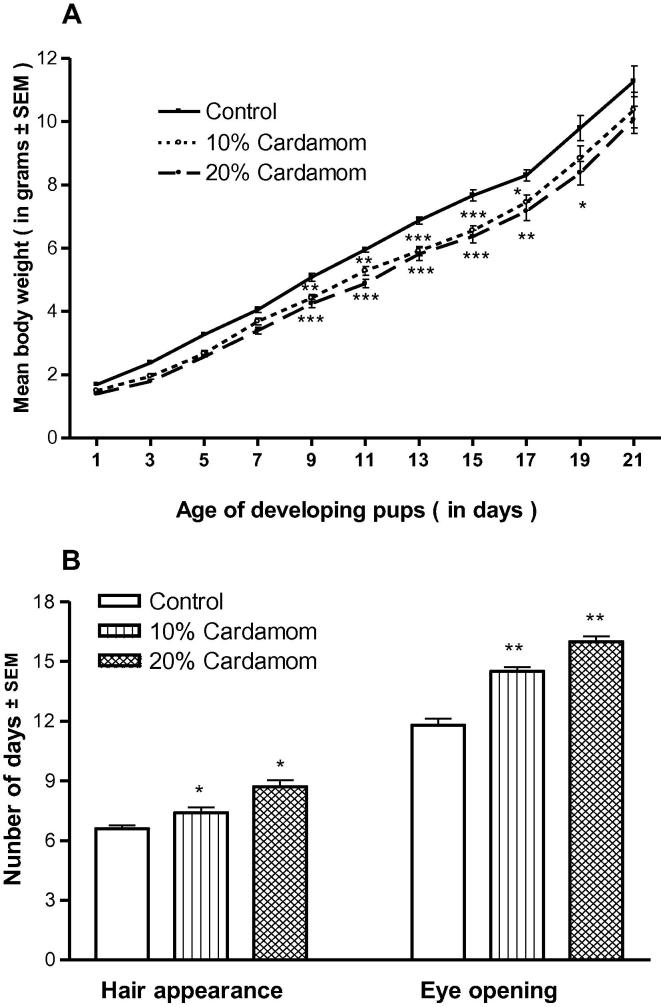
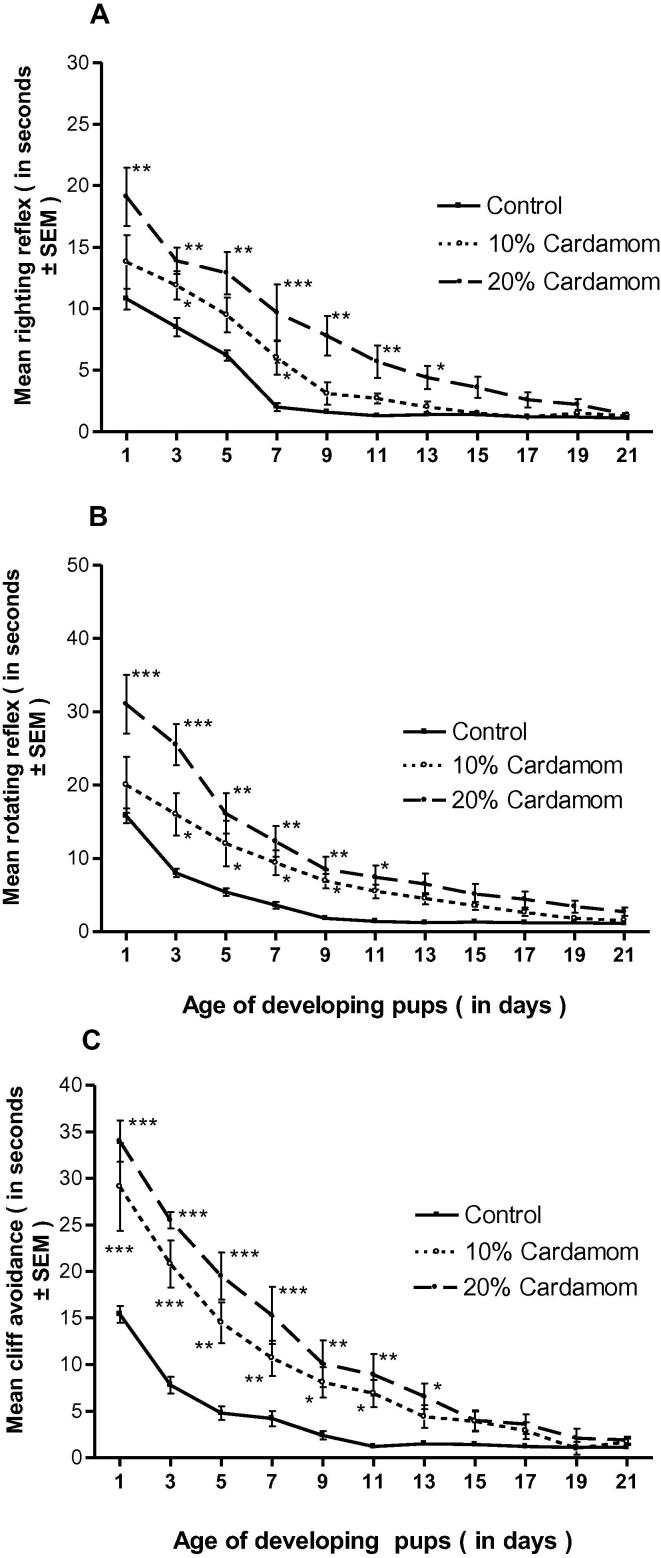
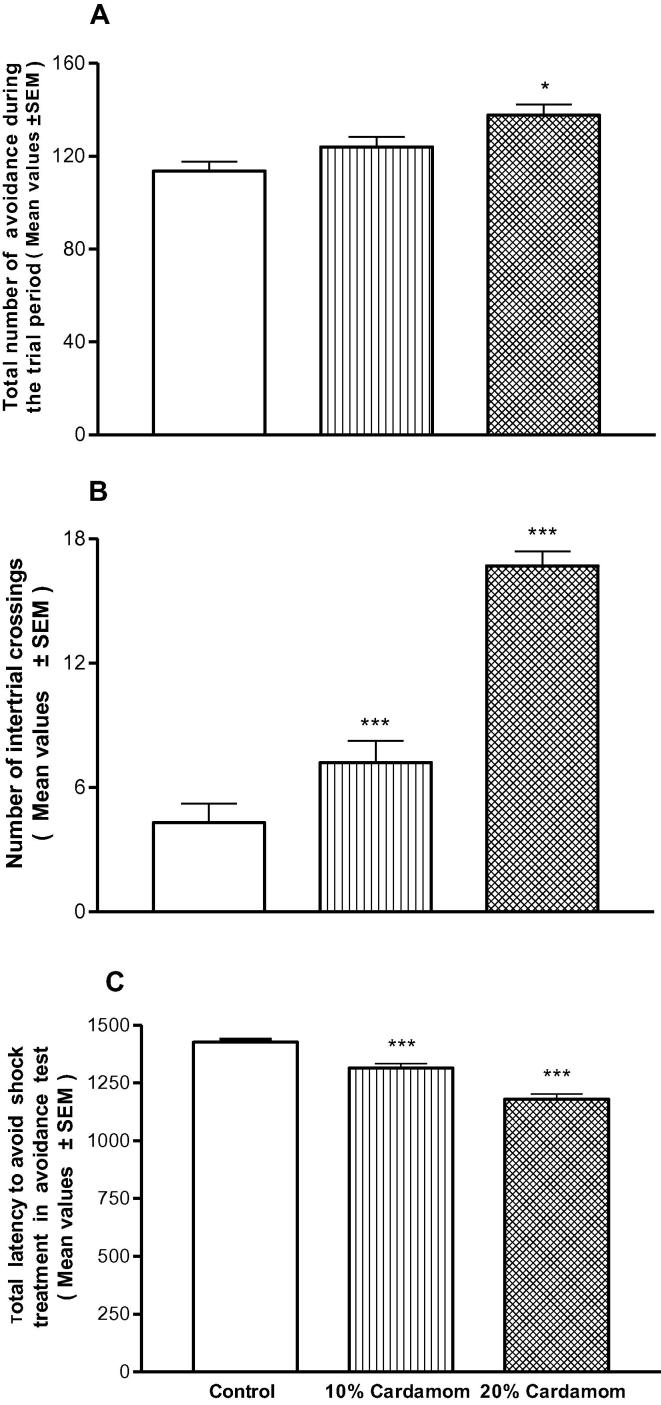
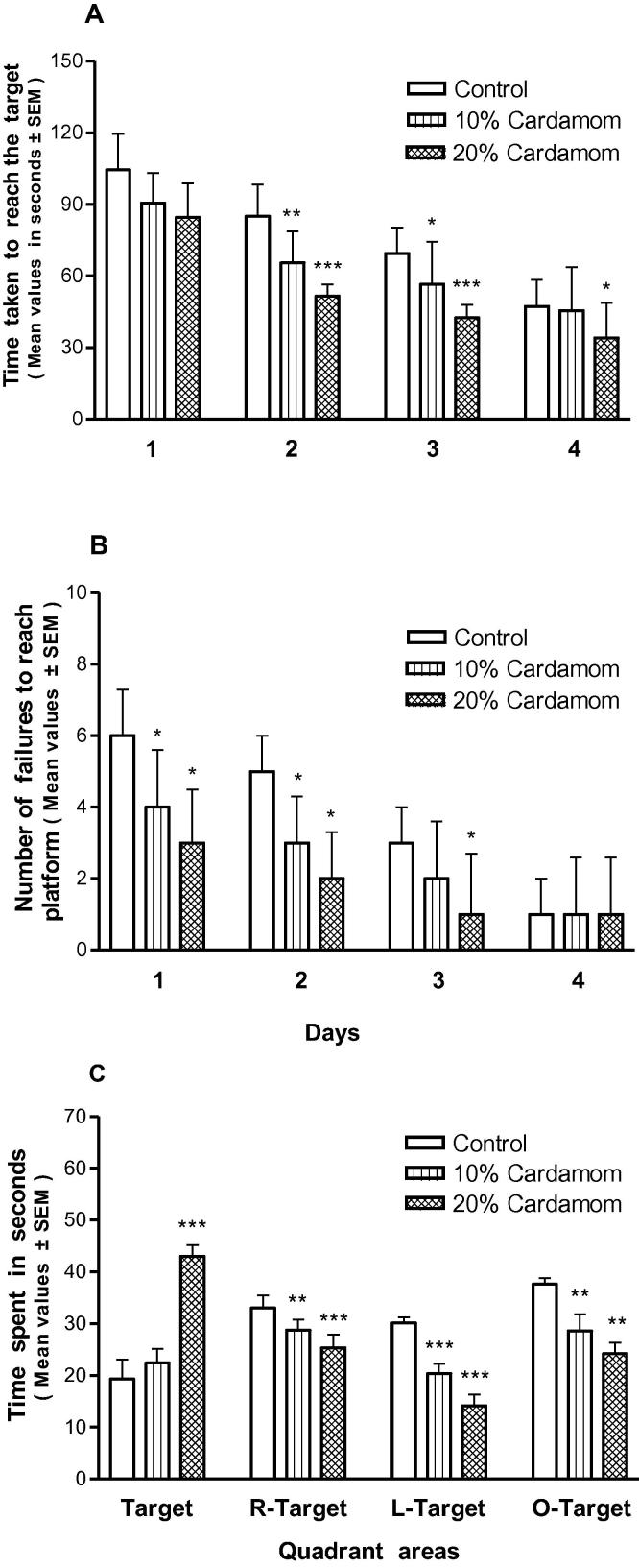
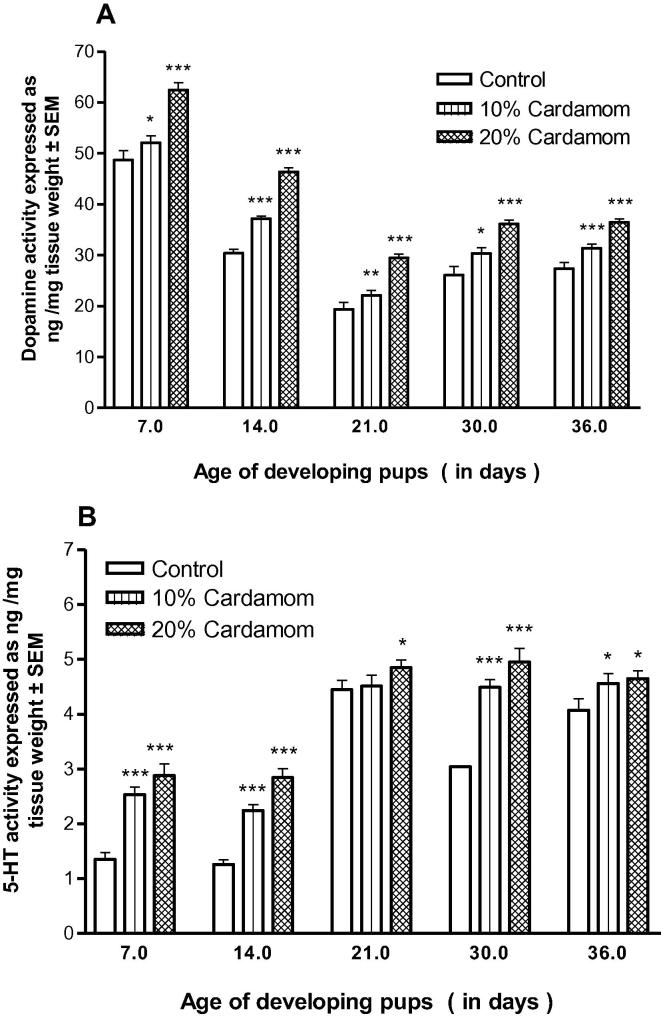
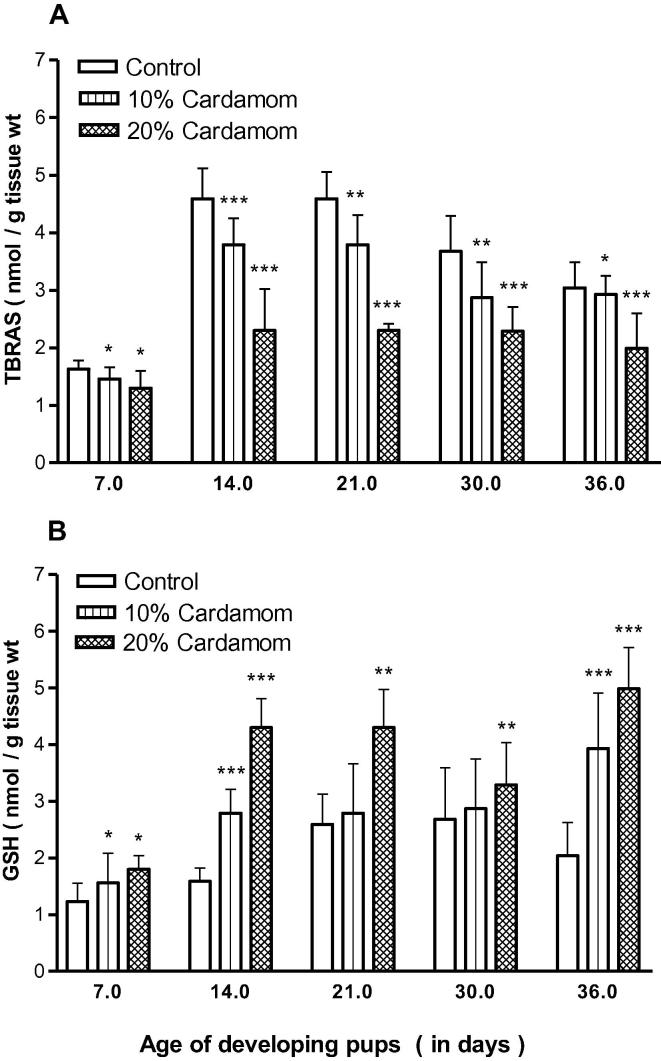
Cardamom is a strong antioxidant plant, so it is called the queen of spices. In the present study, we explored the potentials of cardamom on developmental, learning ability and biochemical parameters of mice offspring. Thirty pregnant mice were allocated to three groups of ten animals in each. Groups Π and Ш received pilsbury's Diet containing 10 and 20% of cardamom (w/w) respectively, whereas Group I used as control. Cardomom was administered from the first day of pregnancy and was continued until post-natal day 15 (PD 15) and thereafter the mothers were switched to plain pilsbury's Diet. During the weaning period, three pups in each litter were color marked from the others, and were subjected to various tests (Physical assessment such body weight and eye opening and hair appearance; the neuromaturation of reflexes like righting, rotating, and cliff avoidance reflexes; learning ability and memory retention; estimation of monoamines neurotransmitters like dopamine and serotonin, non-enzymatic oxidative stress such as TBARS and GSH in forebrain at different ages of pups). The results indicated that the body weight gain was declining significantly. Hair appearance and eyes opening were delayed significantly. Righting, rotating, and cliff avoidance reflexes were delayed in treated animals. Exposure to cardamom led to enhance learning and memory retention as compared to control. Monoamines (DA, 5-HT) and GSH were elevated, whereas TBARS was inhibited significantly. In conclusion, perinatal cardamom exposure enhanced learning and memory as compared to control. Cardamom and its benefit compounds were transported via placenta or/and milk during lactation. Cardamom needs more researches to investigate its benefits on other kinds of behavior.
Keywords: Cardamom; Elettaria cardamomum; Learning; Mice offspring.
Figures
References
-
- Abdelkader S.M., Bauomi A.A., Abdel-Rahman M., Mohammaden T., Rezk M.M. Antioxidant potentials of (Elletaria cardamomum) cardamom against Uranium hazarda. Int. J. Basic Life Sci. 2015;3:64–181.
-
- Aboelnaga S.M. Effect of some levels of cardamom, clove and anise on hepatotoxicity in rats caused by CCL4. World Appl. Sci. J. 2015;33(6):854–865.
-
- Abu-Taweel G.M. Effects of perinatal exposure of lithium on neuro-behaviour of developing mice offspring. Indian J. Exp. Biol. 2012;50(10):696–701. - PubMed
-
- Abu-Taweel G.M., Ajarem J.S., Ahmad M. Neurobehavioral toxic effects of perinatal oral exposure to aluminium on the developmental motor reflexes, learning, memory and brain neurotransmitters of mice offspring. Pharmacol. Biochem. Behav. 2012;101(1):49–56. - PubMed
LinkOut - more resources
Full Text Sources
Other Literature Sources
Research Materials
Miscellaneous
