


What goes up must come down: homeostatic synaptic plasticity strategies in neurological disease
- PMID: 29379396
- PMCID: PMC5772176
- DOI: 10.2217/fnl-2017-0028
What goes up must come down: homeostatic synaptic plasticity strategies in neurological disease
Abstract
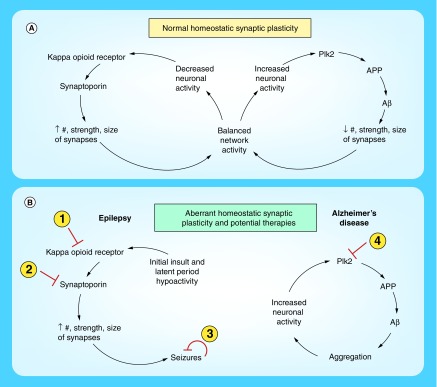
Brain activity levels are tightly regulated to minimize imbalances in activity state. Deviations from the normal range of activity are deleterious and often associated with neurological disorders. To maintain optimal levels of activity, regulatory mechanisms termed homeostatic synaptic plasticity establish desired 'set points' for neural activity, monitor the network for deviations from the set point and initiate compensatory responses to return activity to the appropriate level that permits physiological function [1,2]. We speculate that impaired homeostatic control may contribute to the etiology of various neurological disorders including epilepsy and Alzheimer's disease, two disorders that exhibit hyperexcitability as a key feature during pathogenesis. Here, we will focus on recent progress in developing homeostatic regulation of neural activity as a therapeutic tool.
Keywords: Alzheimer's disease; CA3; Plk2; antiseizure drugs; dentate gyrus; epilepsy; homeostatic synaptic plasticity; kappa opioid receptors; mossy fiber; synaptoporin.
Conflict of interest statement
Financial & competing interests disclosure The authors have received grants from the NIH (R01NS097762 to PAF; R03AG052730 and RF1AG056603 to DTSP). The authors have no relevant affiliations or financial involvement with any organization or entity with a financial interest in or financial conflict with the subject matter or materials discussed in the manuscript apart from those disclosed. No writing assistance was used in the production of this manuscript.
Figures
References
Publication types
Grants and funding
LinkOut - more resources
Full Text Sources
Other Literature Sources
Miscellaneous