


Training pharmacists in the stage-of-change model of smoking cessation and motivational interviewing: A randomized controlled trial
- PMID: 29379624
- PMCID: PMC5779937
- DOI: 10.1177/2055102917736429
Training pharmacists in the stage-of-change model of smoking cessation and motivational interviewing: A randomized controlled trial
Abstract
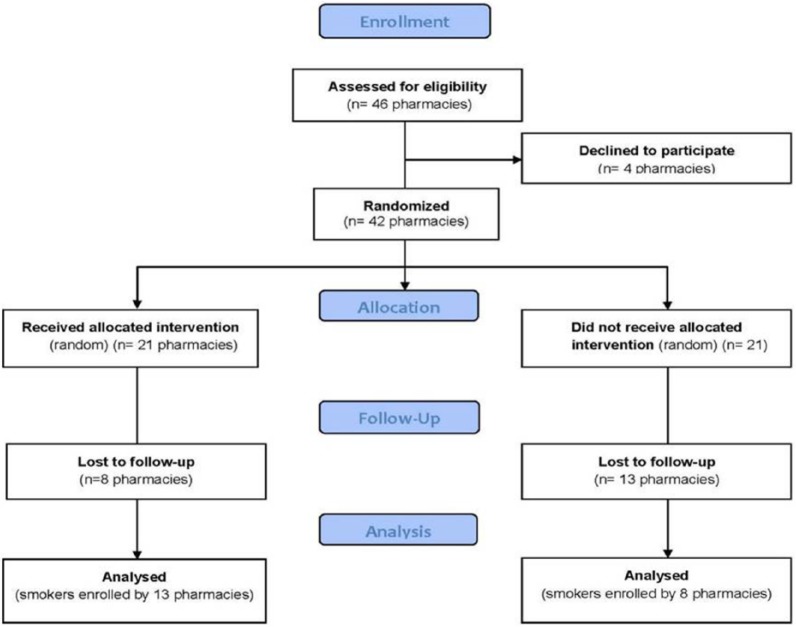
This study evaluated the effect of training pharmacists in the stage-of-change model for smoking cessation and motivational interviewing on smoking cessation outcomes. A training based on the stage-of-change model for smoking cessation and motivational interviewing was introduced to pharmacists. Pharmacists were randomly assigned to the intervention or control group. The control group attended a 3-hour training session, whereas the intervention group also attended a further 6-hour training session. At week 24, 12.2 percent of the smokers quit smoking in the intervention group, whereas 1.6 percent of the smokers quit smoking in the control group. The findings of this study showed that training pharmacists, in the stage-of-change model for smoking cessation and motivational interviewing, improves smoking reduction and cessation rates.
Keywords: adults; clinical health psychology; community health psychology; health promotion; nicotine dependence; public health psychology.
Conflict of interest statement
Declaration of conflicting interests: The author(s) declared no potential conflicts of interest with respect to the research, authorship and/or publication of this article.
Figures


References
-
- Bond CM, Sinclair HK, Winfield AJ, et al. (1993) Community pharmacists’ attitudes to their advice-giving role and to the deregulation of medicines. International Journal of Pharmacy Practice 2(1): 26–30.
-
- Coggans N, Johnson I, Mckellar S, et al. (2000) Health promotion in community pharmacy: Perceptions and expectations of consumers and health professionals. Report Commissioned by the Scottish Office, Department of Pharmaceutical Studies, University of Strathclyde, Glasgow.
-
- Cornuz J, Humair JP, Seematter L, et al. (2002) Efficacy of resident training in smoking cessation: A randomized, controlled trial of a program based on application of behavioral theory and practice with standardized patients. Annals of Internal Medicine 136(6): 429–437. - PubMed
-
- Couchenour RL, Carson DS, Segal AR. (2002) Patients’ views of pharmacists as providers of smoking cessation services. Journal of the American Pharmaceutical Association 42(3): 510–512. - PubMed
LinkOut - more resources
Full Text Sources
Other Literature Sources
