


Purification and biochemical characterization of an Aspergillus niger phytase produced by solid-state fermentation using triticale residues as substrate
- PMID: 29379768
- PMCID: PMC5773450
- DOI: 10.1016/j.btre.2017.12.004
Purification and biochemical characterization of an Aspergillus niger phytase produced by solid-state fermentation using triticale residues as substrate
Abstract
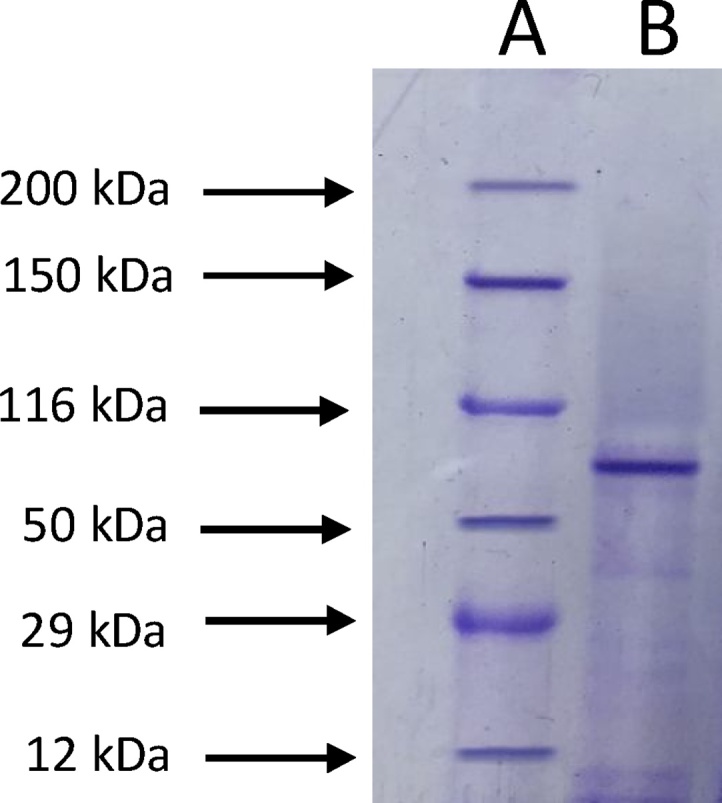
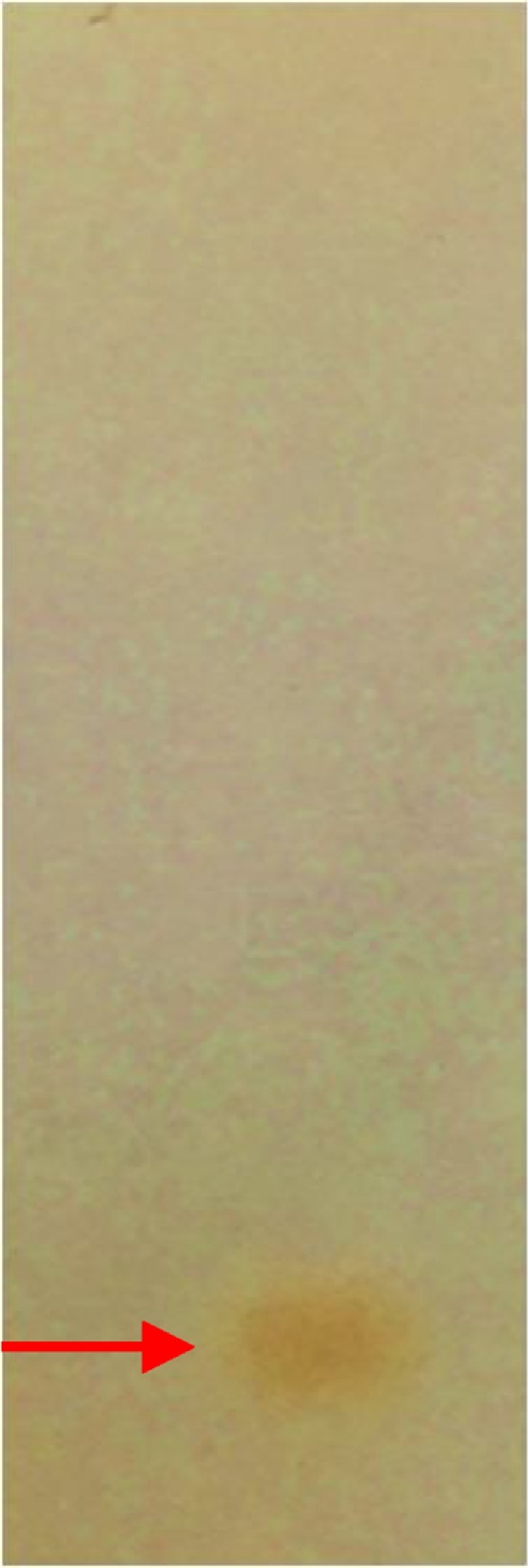
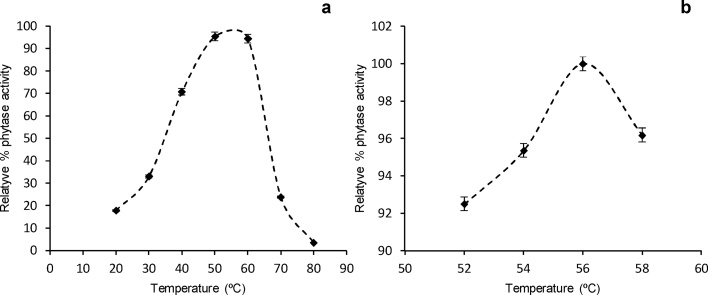
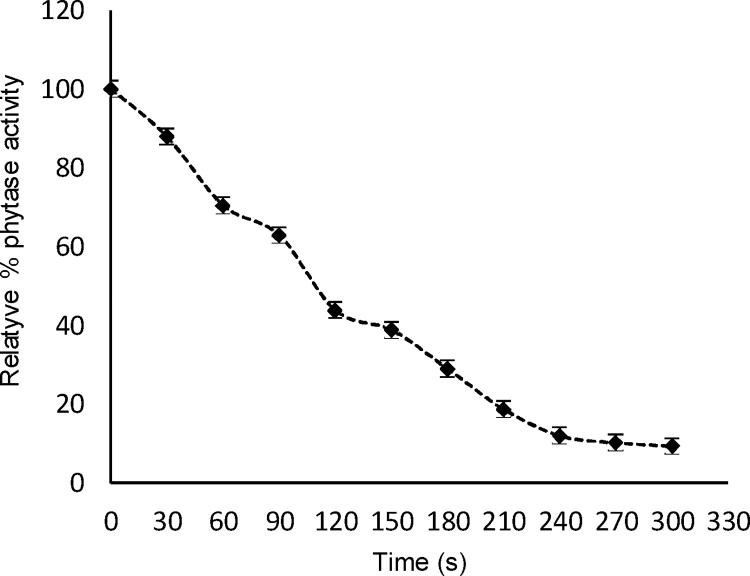
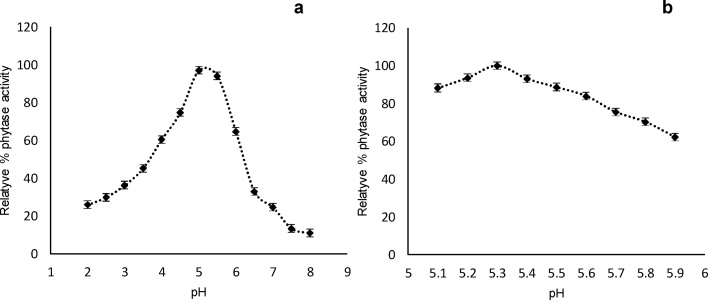
In this study, an extracellular phytase produced by Aspergillus niger 7A-1, was biochemically characterized for possible industrial application. The enzyme was purified from a crude extract obtained by solid-state fermentation (SSF) of triticale waste. The extract was obtained by microfiltration, ultrafiltration (300, 100 and 30 kDa) and DEAE-Sepharose column chromatography. The molecular weight of the purified enzyme was estimated to be 89 kDa by SDS-PAGE. The purified enzyme was most active at pH 5.3 and 56 °C, and retained 50% activity over a wide pH range of 4 to 7. The enzymatic thermostability assay showed that the enzyme retained more than 70% activity at 80 °C for 60 s, 40% activity for 120 s and 9% after 300 s. The phytase showed broad substrate specificity, a Km value of 220 μM and Vmax of 25 μM/min. The purified phytase retained 50% of its activity with phosphorylated compounds such as phenyl phosphate, 1-Naphthyl phosphate, 2-Naphthyl phosphate, p-Nitrophenyl phosphate and Glycerol-2-phosphate. The inhibition of phytase activity by metal ions was observed to be drastically inhibited (50%) by Ca++ and was slightly inhibited (10%) by Ni++, K+, and Na+, at 10 and 20 mM concentrations. A positive effect was obtained with Mg++, Mn++, Cu++, Cd++ and Ba++ at 25 and 35% with stimulatory effect on the phytase activity.
Keywords: Animal feed; Aspergillus niger; Biochemical characterization; Phytase; Solid-state fermentation.
Figures
References
-
- Bilgiçli N., Elgün A., Türker S. Effects of various phytase sources on phytic acid content, mineral extractability and protein digestibility of tarhana. Food Chem. 2006;98:329–337.
-
- Albarracín M., González R.J., Drago S.R. Effect of soaking process on nutrient bio-accessibility and phytic acid content of brown rice cultivar. LWT – Food Sci. Technol. 2013;53:76–80.
-
- Fei B., Xu H., Zhang F., Li X., Ma S., Cao Y.Y., Xie J., Qiao D., Cao Y.Y. Relationship between Escherichia coli AppA phytase’s thermostability and salt bridges. J. Biosci. Bioeng. 2013;115:623–627. - PubMed
-
- Vats P., Bhushan B., Banerjee U.C. Studies on the dephosphorylation of phytic acid in livestock feed using phytase from Aspergillus niger van Teighem. Bioresour. Technol. 2009;100:287–291. - PubMed
LinkOut - more resources
Full Text Sources
Other Literature Sources