


Analysis of yield of retinal imaging in a rural diabetes eye care model
- PMID: 29380765
- PMCID: PMC5819102
- DOI: 10.4103/ijo.IJO_500_17
Analysis of yield of retinal imaging in a rural diabetes eye care model
Abstract
Purpose: The aim of this study is to analyze the yield of retinal images obtained in a rural diabetes eye care model.
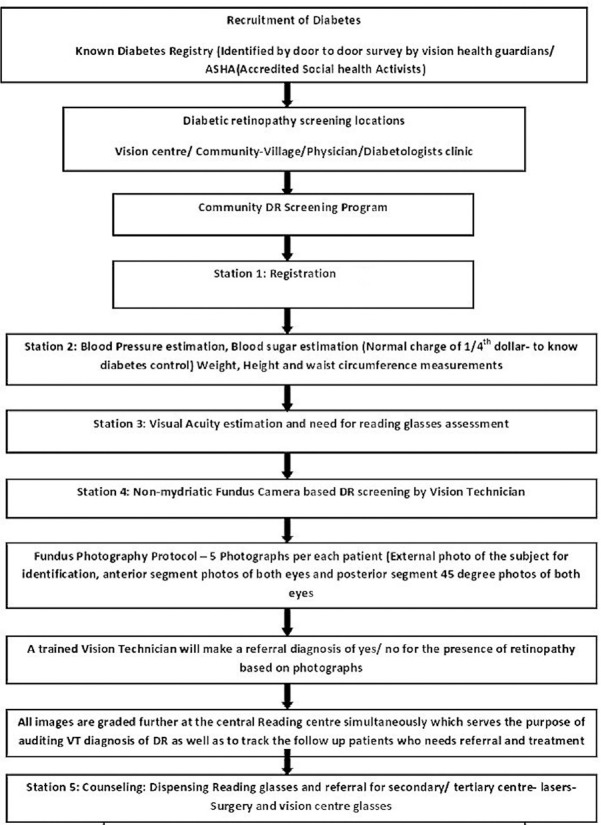
Methods: An analysis of a sample of nonmydriatic fundus photography (NMFP) of posterior segment ophthalmic images, obtained by an indigenous equipment (3 nethra-Forus Royal), was done in a district-wide rural diabetic retinopathy (DR) screening program; a trained optometrist did the initial image grading. DR and diabetic macular edema (DME) were classified based on international DR and DME severity scale. The agreement between the optometrist and retina specialist was very good (κ = 0.932; standard error = 0.030; 95% confidence interval = 0.874-0.991).
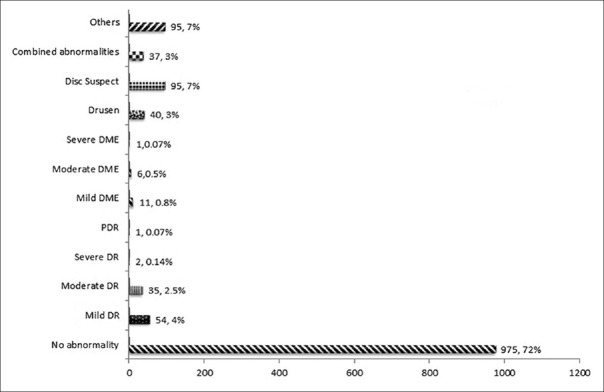
Results: Posterior segment images of 2000 eyes of 1000 people with diabetes mellitus (DM) were graded. The mean age of the participants was 55.7 ± 11.5 standard deviation years. Nearly 42% of the screened participants (n = 420/1000) needed referral. The most common referable posterior segment abnormality was DR (8.2%). The proportion of people with any form of DR was seen in 110/1225 eyes, and sight-threatening DR was seen in 35/1225 eyes. About 62% of posterior segment images were gradable. The reasons for ungradable posterior segment images (34%) were small pupil, unfocused/partially available field of images, and cataract.
Conclusion: A NMFP model was able to detect referable posterior segment abnormalities in a rural diabetes eye care program. Reasons found for ungradability of images in the present study can be addressed while designing future DR screening programs in the rural areas.
Conflict of interest statement
There are no conflicts of interest.
Figures
Comment in
-
Diabetic retinopathy screening: Telemedicine, the way to go!Indian J Ophthalmol. 2018 Feb;66(2):187-188. doi: 10.4103/ijo.IJO_1155_17. Indian J Ophthalmol. 2018. PMID: 29380754 Free PMC article. No abstract available.
References
-
- Xu Y, Wang L, He J, Bi Y, Li M, Wang T, et al. Prevalence and control of diabetes in Chinese adults. JAMA. 2013;310:948–59. - PubMed
-
- Wild S, Roglic G, Green A, Sicree R, King H. Global prevalence of diabetes: Estimates for the year 2000 and projections for 2030. Diabetes Care. 2004;27:1047–53. - PubMed
Publication types
MeSH terms
LinkOut - more resources
Full Text Sources
Medical
