


Mechanical ventilation strategies alter cardiovascular biomarkers in an infant rat model
- PMID: 29380954
- PMCID: PMC5789718
- DOI: 10.14814/phy2.13553
Mechanical ventilation strategies alter cardiovascular biomarkers in an infant rat model
Abstract
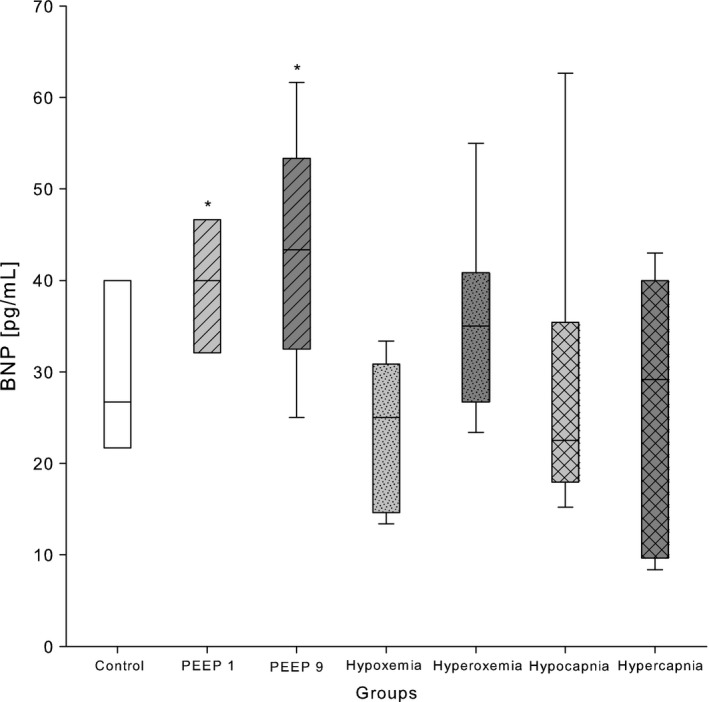
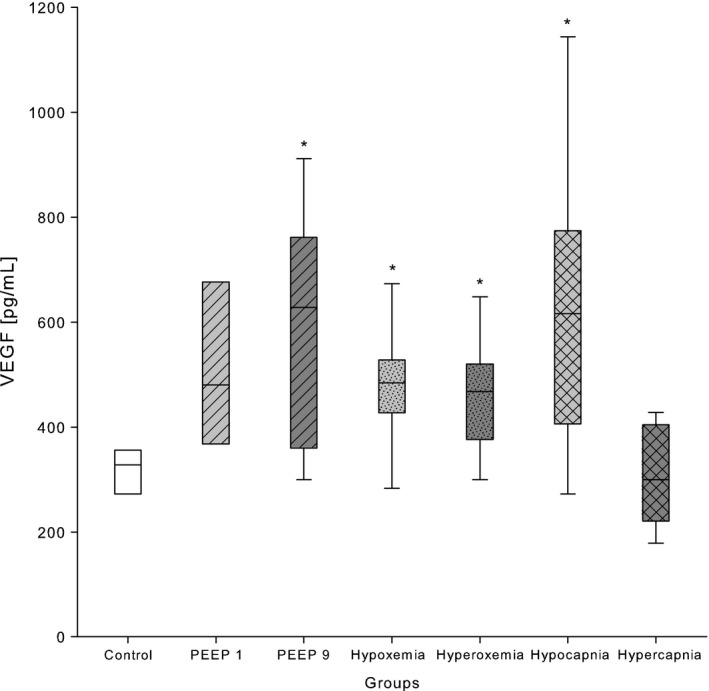
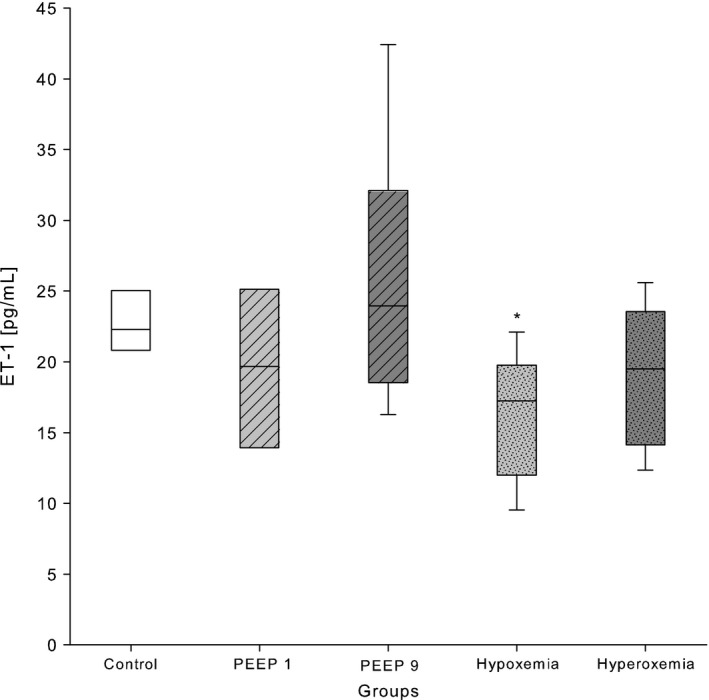
Mechanical ventilation (MV) is routinely used in pediatric general anesthesia and critical care, but may adversely affect the cardiocirculatory system. Biomarkers are increasingly measured to assess cardiovascular status and improve clinical treatment decision-making. As the impact of mechanical ventilation strategies on cardiovascular biomarkers in ventilated infants is largely unknown, we conducted this retrospective study in a healthy in vivo infant rat ventilation model using 14-days old Wistar rats. We hypothesized that 2 h of mechanical ventilation with high and low positive end-expiratory pressure (PEEP), hyperoxemia, hypoxemia, hypercapnia, and hypocapnia would significantly impact B-type natriuretic peptide (BNP), vascular endothelial growth factor (VEGF), and endothelin-1 (ET-1). We found BNP to be driven by both high (9 cmH2 O) and low (1 cmH2 O) PEEP compared to ventilated control animals (P < 0.05). VEGF concentrations were associated with high PEEP, hyperoxemia, hypoxemia, and hypocapnia (P < 0.05), whereas ET-1 levels were changed only in response to hypoxemia (P < 0.05). In conclusion, the mode of mechanical ventilation alters plasma biomarker concentrations. Moreover, BNP and VEGF might serve as surrogate parameters for ventilation induced cardiovascular compromise and lung tissue damage. Furthermore, our data support the hypothesis, that sudden onset of hyperoxemia may trigger a quick VEGF release as a possible cellular survival reflex.
Keywords: Biomarker; hyperoxia; hypoxia; positive end-expiratory pressure.
© 2018 The Authors. Physiological Reports published by Wiley Periodicals, Inc. on behalf of The Physiological Society and the American Physiological Society.
Figures
References
-
- Adrogué, H. J. , and Madias N. E.. 1998a. Management of life‐threatening acid‐base disorders I. N. Engl. J. Med. 338:26–34. - PubMed
-
- Adrogué, H. J. , and Madias N. E.. 1998b. Management of life‐threatening acid‐base disorders II. N. Engl. J. Med. 338:107–111. - PubMed
-
- Alon, T. , Hemo I., Itin A., Pe'er J., Stone J., and Keshet E.. 1995. Vascular endothelial growth factor acts as a survival factor for newly formed retinal vessels and has implications for retinopathy of prematurity. Nat. Med. 1:1024–1028. - PubMed
-
- Barreira, E. R. , Munoz G. O., Cavalheiro P. O., Suzuki A. S., Degaspare N. V., Shieh H. H., et al. 2015. Epidemiology and outcomes of acute respiratory distress syndrome in children according to the Berlin definition: a multicenter prospective study. Crit. Care Med. 43:947–953. - PubMed
-
- Berger, D. , Moller P. W., Weber A., Bloch A., Bloechlinger S., Haenggi M., et al. 2016. Effect of PEEP, blood volume, and inspiratory hold maneuvers on venous return. Am. J. Physiol. 311:H794–H806. - PubMed
Publication types
MeSH terms
Substances
LinkOut - more resources
Full Text Sources
Other Literature Sources
Research Materials
