


Evaluation of the osteogenesis and osseointegration of titanium alloys coated with graphene: an in vivo study
- PMID: 29382859
- PMCID: PMC5790016
- DOI: 10.1038/s41598-018-19742-y
Evaluation of the osteogenesis and osseointegration of titanium alloys coated with graphene: an in vivo study
Abstract
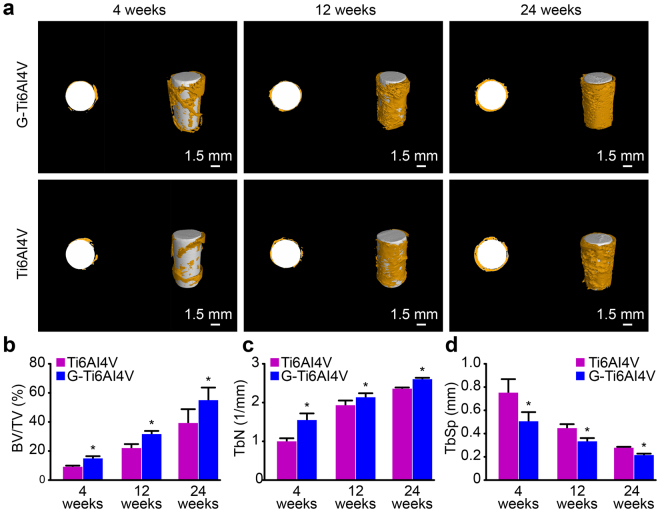
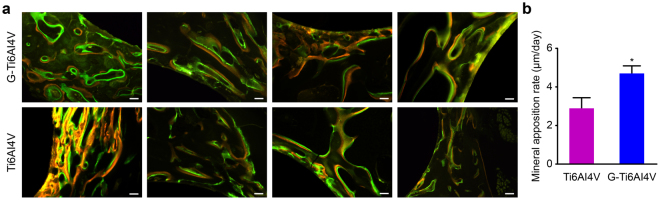
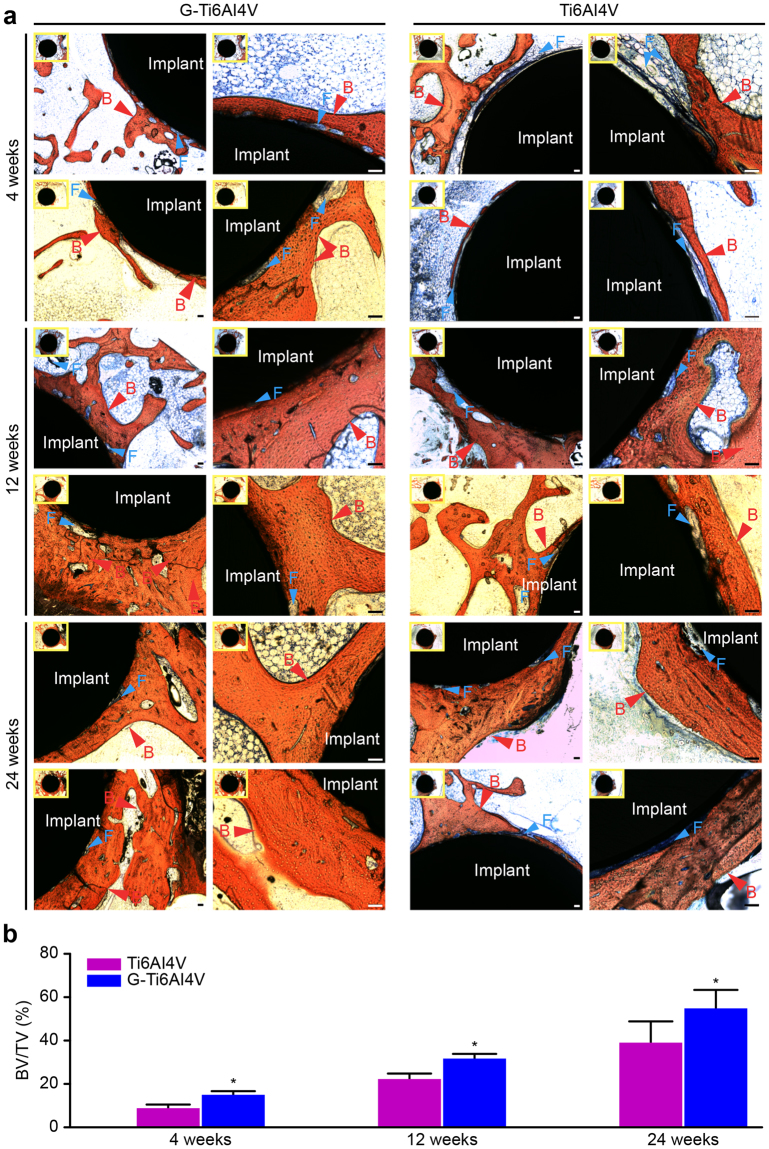
The aim of this study was to investigate whether a surface coating with graphene could enhance the surface bioactivation of titanium alloys (Ti6Al4V) to further accelerate in vivo osteogenesis and osseointegration at the implant surface. In this study, a New Zealand white rabbit femoral condyle defect model was established. After 4, 12 and 24 weeks, biomechanical testing, micro-computed tomography (Micro-CT) analyses and histological observations were performed. At the highest push-out forces during the test, microstructure parameters, such as the bone volume/total volume fraction (BV/TV) and mineral apposition rate (MAR), of the new bone were significantly higher in the graphene-coated Ti6Al4V group (G-Ti6Al4V) than in the Ti6Al4V group (P < 0.05). Van Gieson (VG) staining showed that the G-Ti6Al4V group had more new bone formation than the Ti6Al4V group, and the G-Ti6Al4V group showed a closer fit between the bone and implant. In conclusion, graphene might be a novel type of nano-coating material for enhancing the surface biological activity of Ti-based alloy materials and may further promote in vivo osteogenesis and osseointegration.
Conflict of interest statement
The authors declare that they have no competing interests.
Figures


References
Publication types
MeSH terms
Substances
LinkOut - more resources
Full Text Sources
Other Literature Sources
