


Neutrophilia, gelatinase release and microvascular leakage induced by human mast cell tryptase in a mouse model: Lack of a role of protease-activated receptor 2 (PAR2)
- PMID: 29383785
- PMCID: PMC5969079
- DOI: 10.1111/cea.13108
Neutrophilia, gelatinase release and microvascular leakage induced by human mast cell tryptase in a mouse model: Lack of a role of protease-activated receptor 2 (PAR2)
Abstract
Background: Tryptase, the most abundant protease of the human mast cell, has been implicated as a key mediator of allergic inflammation that acts through activation of PAR2.
Objectives: To investigate the contribution of PAR2 in the pro-inflammatory actions mediated by tryptase in a mice model.
Methods: We have injected recombinant human βII-tryptase into the peritoneum of PAR2-deficient and wild-type C57BL/6 mice. After 6, 12 and 24 hours, mice were killed, peritoneal lavage performed and inflammatory changes investigated.
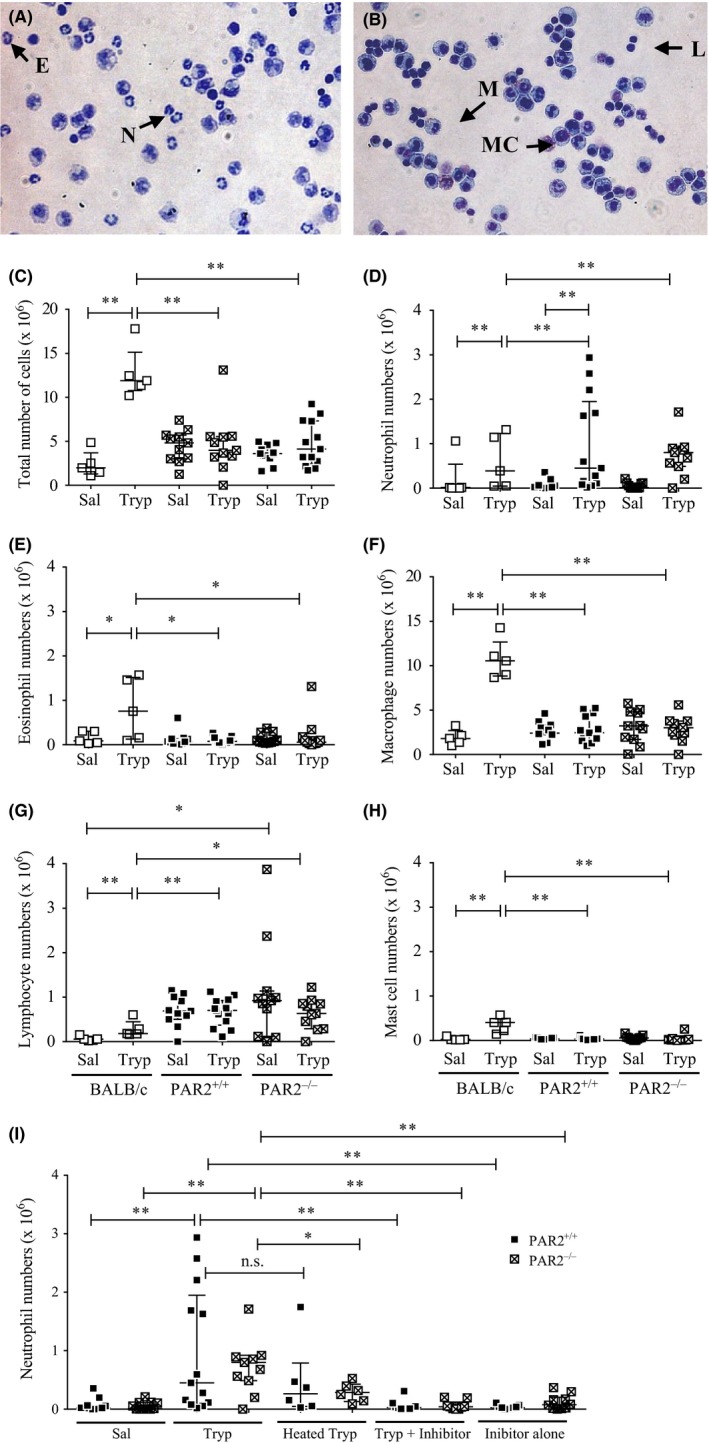
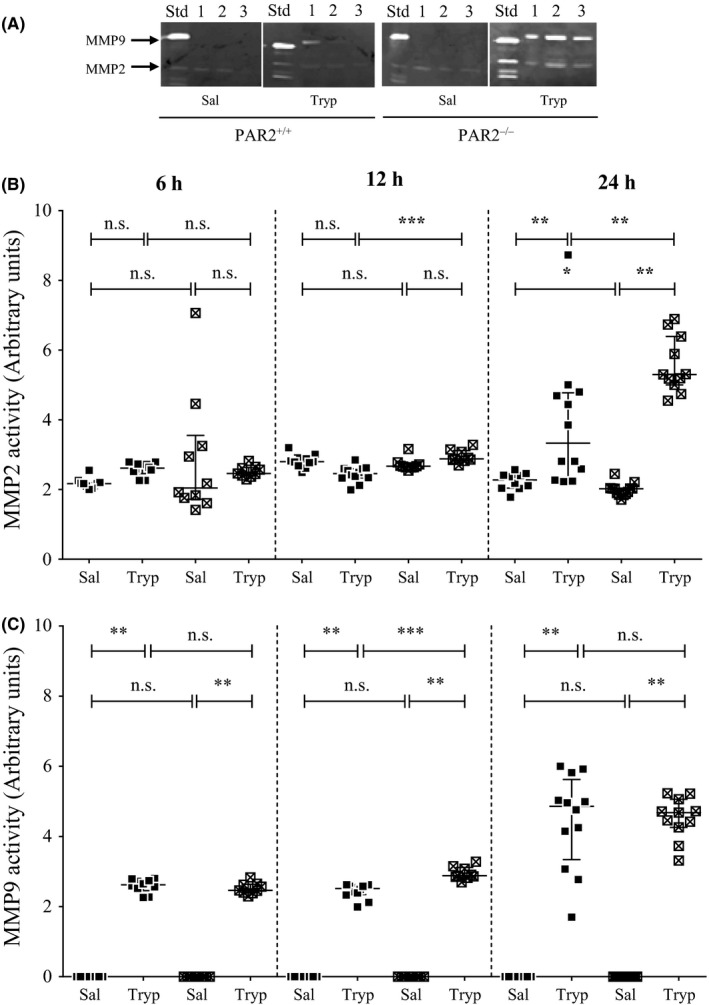
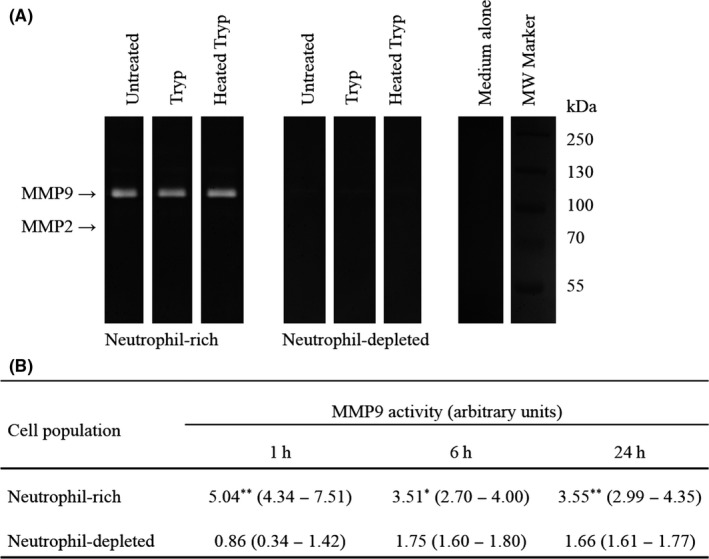
Results: Tryptase stimulated an increase in neutrophil numbers in the peritoneum, but responses did not differ between PAR2-deficient and wild-type mice. Heat inactivation of tryptase or pre-incubation with a selective tryptase inhibitor reduced neutrophilia, but neutrophil accumulation was not elicited with a peptide agonist of PAR2 (SLIGRL-NH2 ). Zymography indicated that tryptase stimulated the release of matrix metalloproteinases (MMP) 2 and 9 in the peritoneum of both mouse strains. Studies involving immunomagnetic isolation of neutrophils suggested that neutrophils represent the major cellular source of tryptase-induced MMP2 and MMP9. At 24 hours after tryptase injection, there was increased microvascular leakage as indicated by high levels of albumin in peritoneal lavage fluid, and this appeared to be partially abolished by heat-inactivating tryptase or addition of a protease inhibitor. There was no corresponding increase in levels of histamine or total protein. The extent of tryptase-induced microvascular leakage or gelatinase release into the peritoneum did not differ between PAR2-deficient and wild-type mice.
Conclusions: Our findings indicate that tryptase is a potent stimulus for neutrophil accumulation, MMP release and microvascular leakage. Although these actions required an intact catalytic site, the primary mechanism of tryptase in vivo would appear to involve processes independent of PAR2.
Keywords: allergy; inflammation; mast cells/basophils; neutrophils; transgenic/knockout mice.
© 2018 The Authors. Clinical & Experimental Allergy Published by John Wiley & Sons Ltd.
Figures
References
-
- Molino M, Barnathan ES, Numerof R, et al. Interactions of mast cell tryptase with thrombin receptors and PAR‐2. J Biol Chem. 1997;272:4043‐4049. - PubMed
-
- Mirza H, Schmidt VA, Derian CK, Jesty J, Bahou WF. Mitogenic responses mediated through the proteinase‐activated receptor‐2 are induced by expressed forms of mast cell alpha‐ or beta‐tryptases. Blood. 1997;90:3914‐3922. - PubMed
-
- Wakita H, Furukawa F, Takigawa M. Thrombin and trypsin induce granulocyte‐macrophage colony‐stimulating factor and interleukin‐6 gene expression in cultured normal human keratinocytes. Proc Assoc Am Physicians. 1997;109:190‐207. - PubMed
-
- Vliagoftis H, Befus AD, Hollenberg MD, Moqbel R. Airway epithelial cells release eosinophil survival‐promoting factors (GM‐CSF) after stimulation of proteinase‐activated receptor 2. J Allergy Clin Immunol. 2001;107:679‐685. - PubMed
Publication types
MeSH terms
Substances
Grants and funding
LinkOut - more resources
Full Text Sources
Other Literature Sources
Medical
Miscellaneous
