


A systematic review of odontological sex estimation methods
- PMID: 29384732
- PMCID: PMC6100233
A systematic review of odontological sex estimation methods
Abstract
Background: In human identification sex estimation plays an important role in the search for ante-mortem data.
Aim: To systematically review studies describing and testing/validating methods of odontological sex estimation. The set research question was: What odontological sex estimation method is the most accurate?
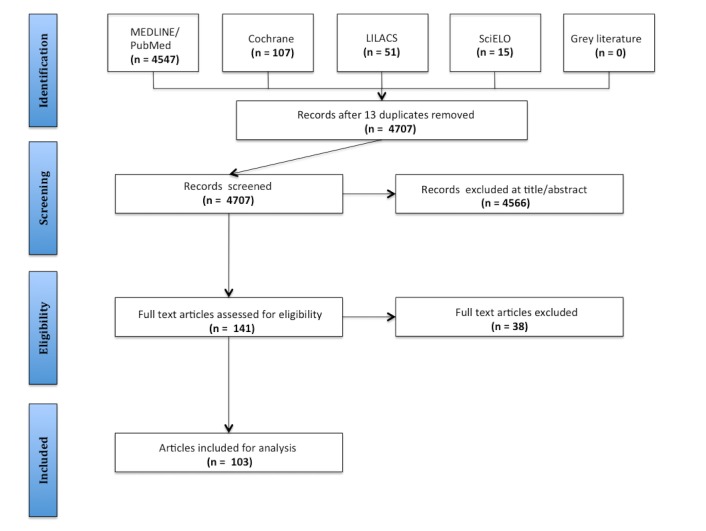
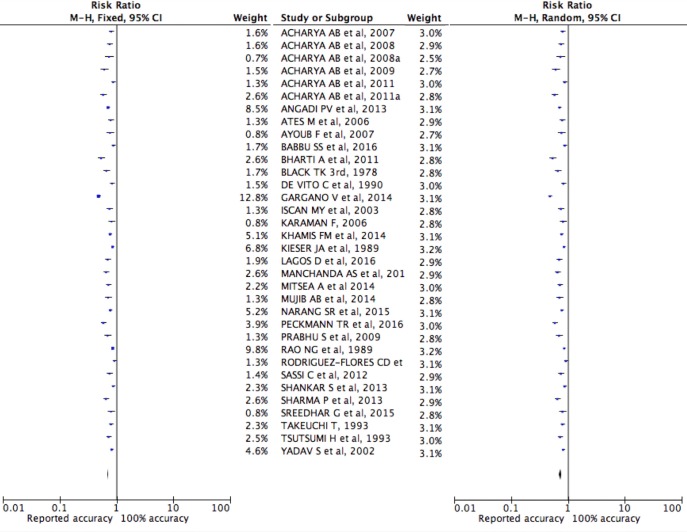
Materials and methods: An electronic search until November 29th 2016 was performed in 5 databases: MEDLINE/PubMed, Cochrane, SciELO, LILACS and Grey literature. The PRISMA guidelines were used. Studies were assessed and included based on the reported data. In particular data criteria were set regarding the considered population, sample size, age range, sex estimation method, type of statistical analysis and study outcome. The extracted data enabled to classify the included studies. Meta-analysis was used to compare the study outcomes per obtained study group.
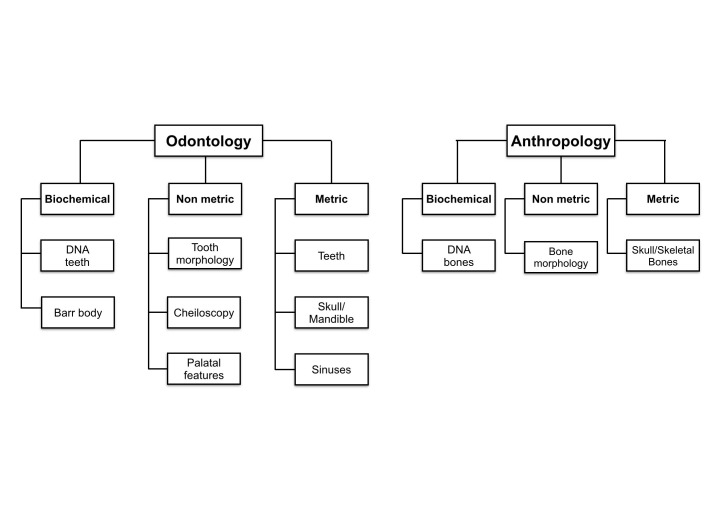
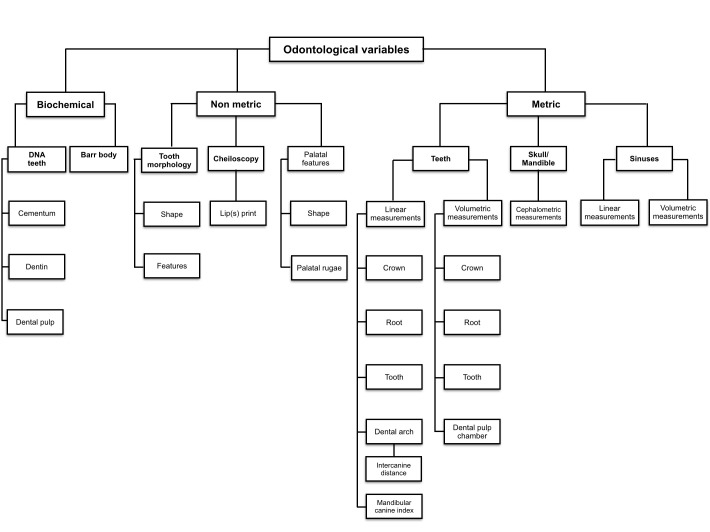
Results: The established search string detected 4720 studies. 103 were considered eligible after review of title, abstract and full-text. The odontological sex estimation methods were classified based on dental metric and non-metric measurements (n=65), cephalometric analysis (n=13), frontal and maxillary sinuses (n=5), cheiloscopy (n=4), palatal features (n=3) and biochemical analysis of teeth (n=13). Teeth measurements for sex estimation were mainly performed on casts (n=34), followed by skeletal remains (n=13), medical imaging (n=5), intraoral measurements/ photography (n=4), and cascades of the above (n=4).
Conclusion: The variety of published odontological sex estimation methods highlights the importance of sex estimation in human identification. Biochemical analysis of teeth proved to be the most accurate method, but in forensic practice, a need to select the most appropriate evidence based odontological sex estimation method exists.
Conflict of interest statement
Figures
References
-
- Joseph AP, Harish RK, Rajeesh Mohammed PK, Vinod Kumar RB. How reliable is sex differentiation from teeth measurements. Oral Maxillofac Pathol J. 2013;4(1):289–92.
-
- DVI Guide INTERPOL 2014.
-
- Eboh DEO. A dimorphic study of maxillary first molar crown dimensions of urhobos in Abraka, South-Southern Nigeria. J Morphol Sci. 2012;2:96–100.
-
- Parekh DH, Patel SV, Zalawadia AZ, Patel SM. Odontometric Study Of Maxillary Canine Teeth To Establish Sexual Dimorphism In Gujarat Population. Int J Biol Med Res. 2012;3(3):1935–7.
Publication types
MeSH terms
LinkOut - more resources
Full Text Sources
