


Not in wilderness: African vulture strongholds remain in areas with high human density
- PMID: 29385172
- PMCID: PMC5791984
- DOI: 10.1371/journal.pone.0190594
Not in wilderness: African vulture strongholds remain in areas with high human density
Abstract
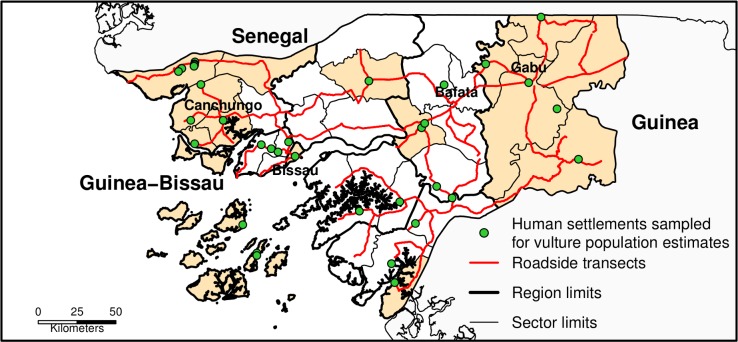
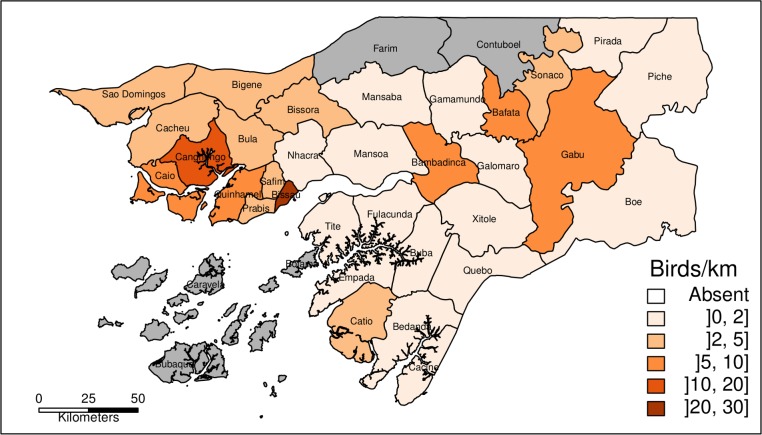
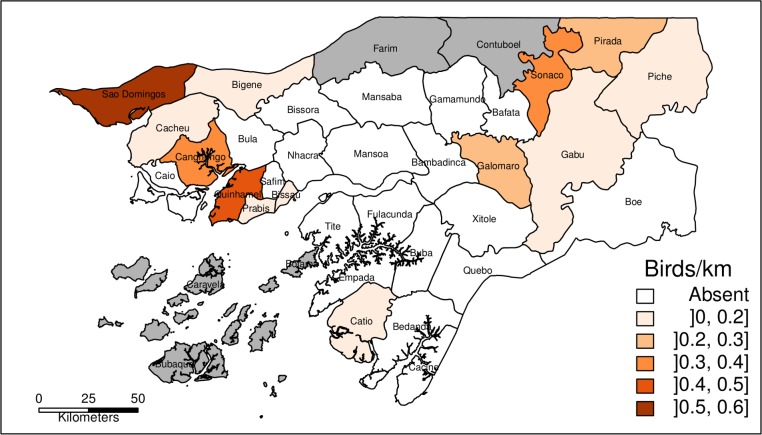
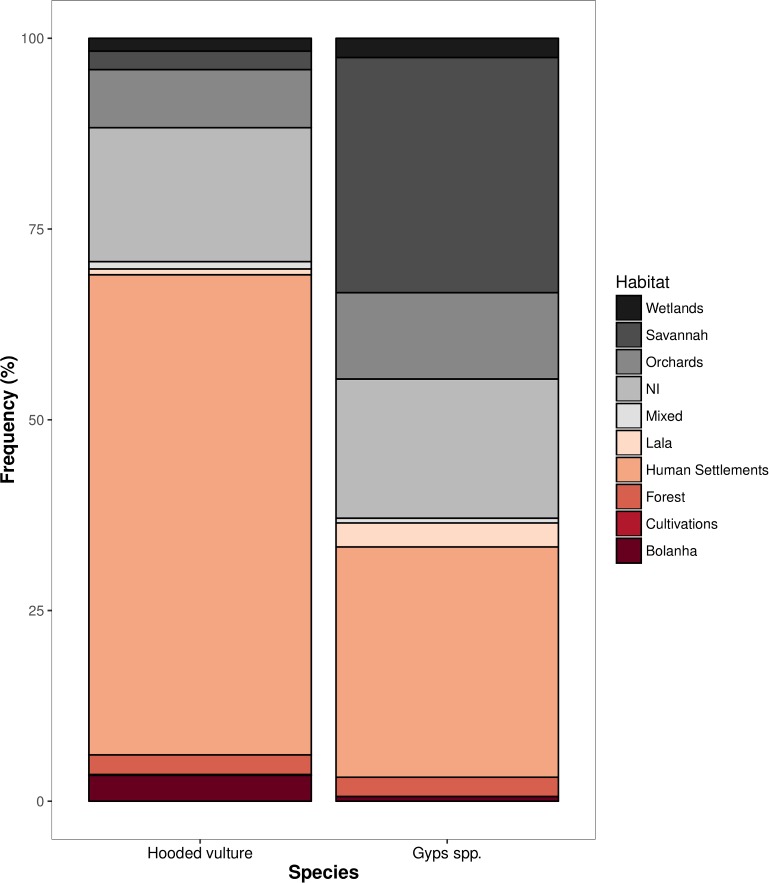
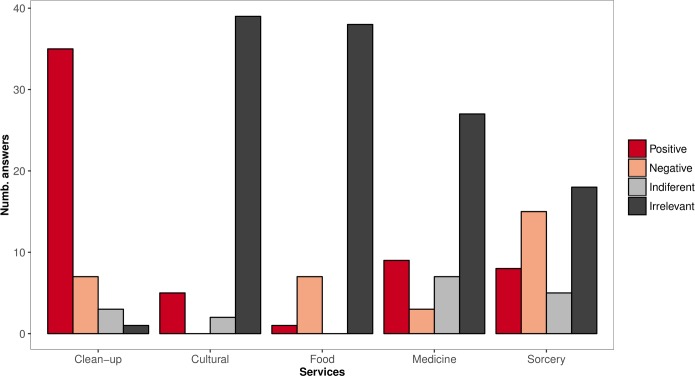
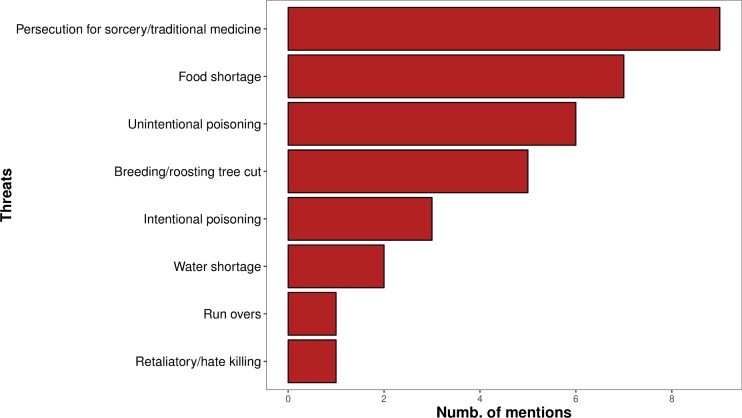
Vultures constitute an important functional group in many ecosystems, providing crucial ecosystem services both in natural and humanized environments. These scavengers are facing massive declines worldwide, but in several African countries virtually nothing is known on populations' status and threats, hampering the development of adequate conservation strategies. In Guinea-Bissau, globally important populations of Hooded Necrosyrtes monachus and African white-backed vultures Gyps africanus were recently reported. Using the country as a study area, we aim to characterize human-vulture interactions in West Africa applying a multidisciplinary approach. We assessed the status and distribution of vulture populations using data from 1711 km of roadside transects, examined predictors of their distribution, and produced a nationwide population estimate for the Hooded Vulture, using an innovative method based on the relationship between the size of human population in settlements and vulture numbers. We conducted 47 stakeholder interviews to assess perceived roles played by vultures, and to investigate potential anthropogenic threats. Hooded vultures were strongly associated with high human population densities, whereas no relation was found between African white-backed and Rüppell's vultures and any of the tested predictors, which included cattle density, precipitation and Normalized Difference Vegetation Index, among others. We estimate a national population of 43347 Hooded vultures, the largest population reported in the species range. Respondents were generally aware of the services provided by vultures, especially waste and carcass removal, including in urban areas. Hunting for witchcraft and traditional medicine was the most frequently recognised threat, while poisoning was ranked as having the highest impact. We hypothesise that poisoning-related mortality may be affecting African white-backed and Rüppell's vultures' distribution and explain their scarcity in apparently highly suitable habitats. Our results suggest a mutualistic rather than a commensalistic relationship between vultures and humans, with important implications for designing and implementing conservation strategies.
Conflict of interest statement
Figures
References
-
- DeVault TL, Rhodes OE Jr., Shivik JA. Scavenging by vertebrates: behavioral, ecological and evolutionary perspectives on an important energy transfer pathway in terrestrial ecosystems. Oikos. 2003;102: 225–234.
-
- Ruxton GD, Houston DC. Obligate vertebrate scavengers must be large soaring fliers. J Theor Biol. 2004;228: 431–436. doi: 10.1016/j.jtbi.2004.02.005 - DOI - PubMed
-
- Buechley ER, Şekercioğlu ÇH. The avian scavenger crisis: looming extinctions, trophic cascades, and loss of critical ecosystem functions. Biol Conserv. 2016;198: 220–228.
-
- Houston DC. The role of griffon vultures Gyps africanus and Gyps ruppellii as scavengers. J Zool. 1974;172: 35–46.
-
- Sekercioğlu CH, Daily GC, Ehrlich PR. Ecosystem consequences of bird declines. Proc Natl Acad Sci USA. 2004;101: 18042–18047. doi: 10.1073/pnas.0408049101 - DOI - PMC - PubMed
Publication types
MeSH terms
LinkOut - more resources
Full Text Sources
Other Literature Sources
