. 2018 Jan 31;13(1):e0191805.
doi: 10.1371/journal.pone.0191805. eCollection 2018.

Simvastatin and metformin inhibit cell growth in hepatitis C virus infected cells via mTOR increasing PTEN and autophagy

Affiliations

Simvastatin and metformin inhibit cell growth in hepatitis C virus infected cells via mTOR increasing PTEN and autophagy

José A Del Campo et al. PLoS One. .

Abstract

Hepatitis C virus (HCV) infection has been related to increased risk of development of hepatocellular carcinoma (HCC) while metformin (M) and statins treatment seemed to protect against HCC development. In this work, we aim to identify the mechanisms by which metformin and simvastatin (S) could protect from liver cancer. Huh7.5 cells were infected with HCV particles and treated with M+S. Human primary hepatocytes were treated with M+S. Treatment with both drugs inhibited Huh7.5 cell growth and HCV infection. In non-infected cells S increased translational controlled tumor protein (TCTP) and phosphatase and tensin homolog (PTEN) proteins while M inhibited mammalian target of rapamycin (mTOR) and TCTP. Simvastatin and metformin co-administered down-regulated mTOR and TCTP, while PTEN was increased. In cells infected by HCV, mTOR, TCTP, p62 and light chain 3B II (LC3BII) were increased and PTEN was decreased. S+M treatment increased PTEN, p62 and LC3BII in Huh7.5 cells. In human primary hepatocytes, metformin treatment inhibited mTOR and PTEN, but up-regulated p62, LC3BII and Caspase 3. In conclusion, simvastatin and metformin inhibited cell growth and HCV infection in vitro. In human hepatocytes, metformin increased cell-death markers. These findings suggest that M+S treatment could be useful in therapeutic prevention of HCV-related hepatocellular carcinoma.


Conflict of interest statement

Competing Interests: The authors have declared that no competing interests exist.

Figures

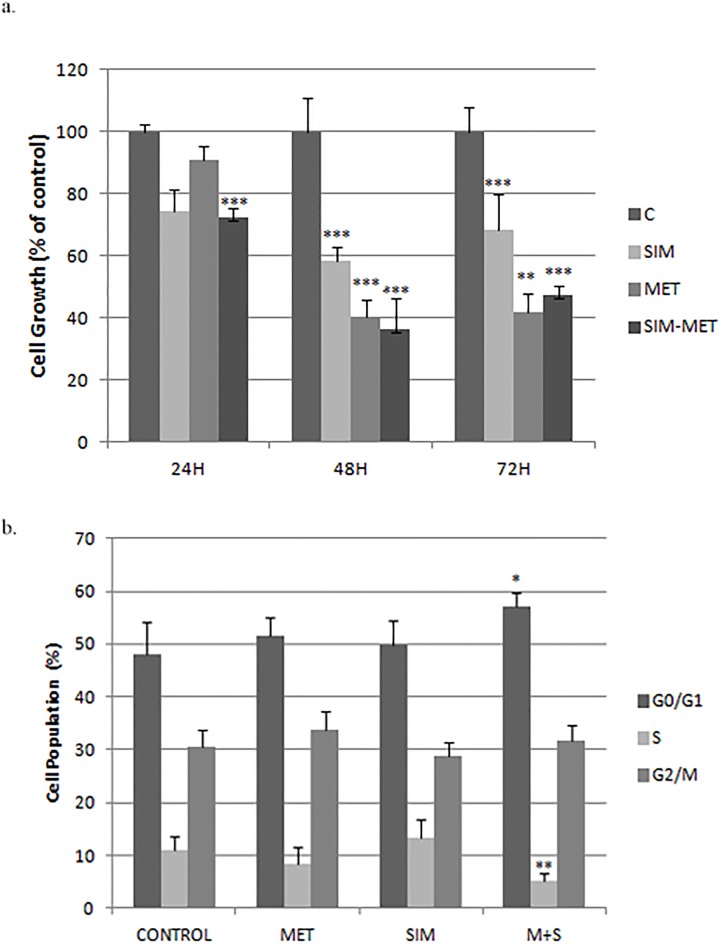
Fig 1
Fig 1. Cell viability of Huh7.5 cells treated with simvastatin and metformin.
A: Percentage of cell kinetic in Huh7.5 treated with metformin (M), simvastatin (S) or combination (S: 2μM, M: 2mM). Cell number was quantified by Neubauer chamber. B: Percentage of Huh7.5 cell treated with these treatments in different phases of cell cycle measured by FACS analysis. * p<0.05, ** p<0.01, ***p<0.001.
Fig 2
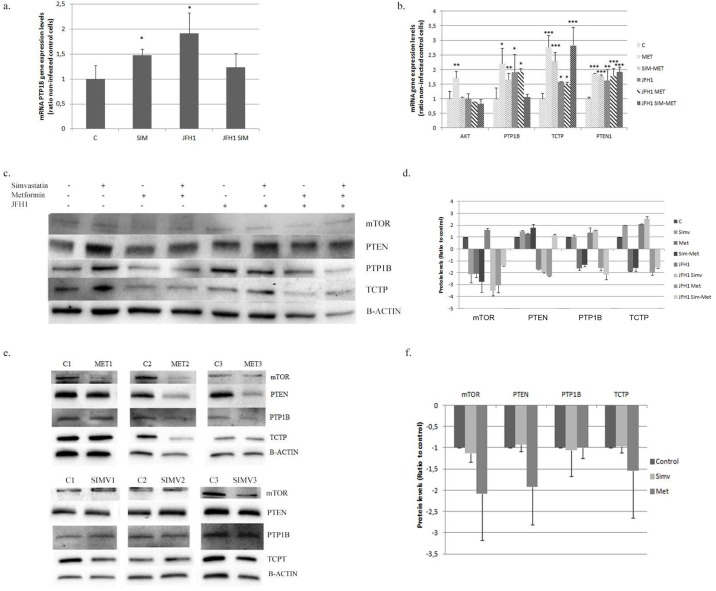
Fig 2. mTOR pathway modification in Huh7.5 cell and in primary hepatocytes.
A: PTP1B gene expression in Huh7.5 cells infected with JFH1 particles (1 particle/cell) and treated 24 hours post-infection with simvastatin (S: 2μM) alone or in combination with metformin (SIM-MET; S:2μM, M: 2mM). B: Gene expression of mTOR pathway in Huh7.5 cells infected with JFH1 particles and treated at 24 hours post-infection with metformin (M: 2mM) alone or in combination with simvastatin. C: Protein expression by western-blot of mTOR pathway in control or JFH1 infected in Huh 7.5 cells treated with simvastatin (SIM; 2μM), metformin (MET; 2mM) or in combination (SIM-MET; S:2μM, M: 2mM) over 72 hours. All gels have been run under the same experimental conditions. D: Protein quantification of Huh7.5 using ChemiDoc MP Imaging System. E: Protein expression of the mTOR pathway in human primary hepatocytes treated with simvastatin (2μM) or metformin (2mM) quantified by western-blot of three different donors. F: Protein quantification of human primary hepatocytes using ChemiDoc MP Imaging System. * p<0.05, ** p<0.01, ***p<0.001.
Fig 3
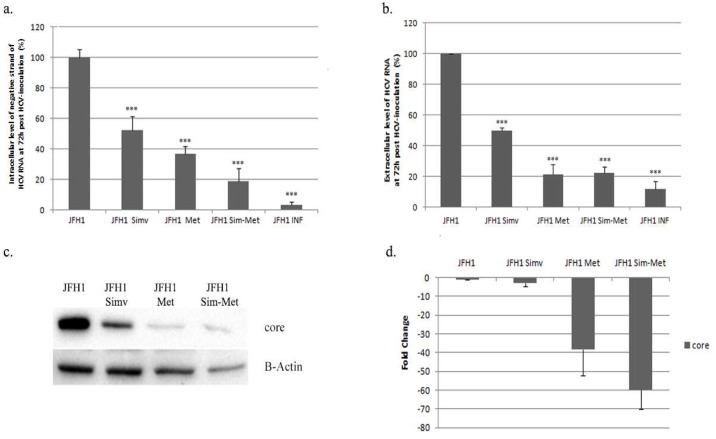
Fig 3. Metformin and simvastatin effects on HCV infection.
a. Intracellular levels of negative strand of HCVRNA (%) in Huh7.5 cells infected with JFH-1and treated with simvastatin (SIM; 2μM), metformin (MET; 2mM) or in combination (SIM-MET; S: 2μM, M: 2mM), relative to complete infection (100% without any treatment). α-Interferon (500 IU/ml) was used as a positive control. b: Extracellular level of HCVRNA (%) measure in supernatant from Huh7.5 culture cells treated with simvastatin and metformin quantified by COBAS® Taqman® HCV test v2.0. c: core protein expression in Huh7.5 cells treated with simvastatin (2μM) or metformin (2mM) quantified by western-blot. d: core protein quantification using ChemiDoc MP Imaging System. * p<0.05, ** p<0.01, ***p<0.001.
Fig 4
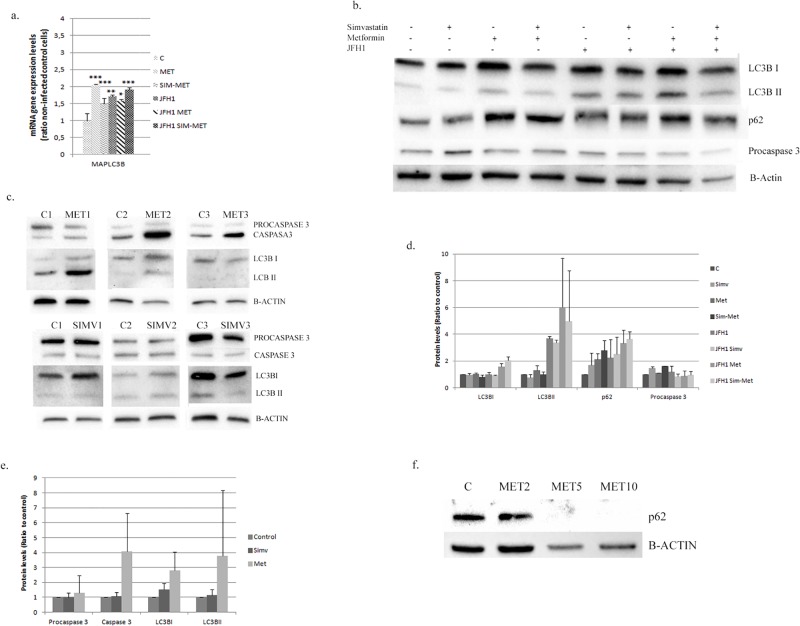
Fig 4. Autophagy modification in Huh7.5 cell and in primary hepatocytes.
A: MAPLC3B gene expression in Huh7.5 cells infected with JFH1 particles (1 particle/cell) and treated 24 hours post-infection with metformin (M: 2mM) alone or in combination with simvastatin (SIM-MET; S:2μM, M: 2mM). B: Western-blot analysis of autophagy markers in control or JFH1 infected in Huh 7.5 cells treated with simvastatin (SIM; 2μM), metformin (MET; 2mM) or in combination (SIM-MET; S:2μM, M: 2mM) over 72 hours. All gels have been run under the same experimental conditions. C: Protein expression of autophagy markers in human primary hepatocytes treated with simvastatin (2μM) or metformin (2mM) quantified by western-blot of three different donors. D: Protein quantification of Huh7.5 using ChemiDoc MP Imaging System. E: Protein quantification of human primary hepatocytes using ChemiDoc MP Imaging System. F: p62 protein expressions in Huh7.5 cells treated with three different concentration of metformin (M2: 2mM, M5: 5mM and M10; 10mM). * p<0.05, ** p<0.01, ***p<0.001.

References

    1. Fattovich G, Stroffolini T, Zagni I, Donato F. Hepatocellular Carcinoma in Cirrhosis: Incidence and Risk Factors. Gastroenterology. 2004. - PubMed
    1. Wang Z, Jin W, Jin H, Wang X. mTOR in Viral Hepatitis and Hepatocellular Carcinoma: Function and Treatment. Biomed Res Int. 2014; 2014:1–9. - PMC - PubMed
    1. Shindoh J, Hashimoto M, Watanabe G. Surgical approach for hepatitis C virus-related hepatocellular carcinoma. World J Hepatol. 2015; 7(1):70–7. doi: 10.4254/wjh.v7.i1.70 - DOI - PMC - PubMed
    1. Popescu C-I, Riva L, Vlaicu O, Farhat R, Rouillé Y, Dubuisson J. Hepatitis C virus life cycle and lipid metabolism. Biology (Basel). 2014; 3(4):892–921. - PMC - PubMed
    1. Xiang Y, Tang J-J, Tao W, Cao X, Song B-L, Zhong J. Identification of Cholesterol 25-Hydroxylase as a Novel Host Restriction Factor and a Part of the Primary Innate Immune Responses against Hepatitis C Virus Infection. Diamond MS, editor. J Virol. 2015; 89(13):6805–16. doi: 10.1128/JVI.00587-15 - DOI - PMC - PubMed

Publication types

MeSH terms