


The proteomic response of the reef coral Pocillopora acuta to experimentally elevated temperatures
- PMID: 29385204
- PMCID: PMC5792016
- DOI: 10.1371/journal.pone.0192001
The proteomic response of the reef coral Pocillopora acuta to experimentally elevated temperatures
Abstract
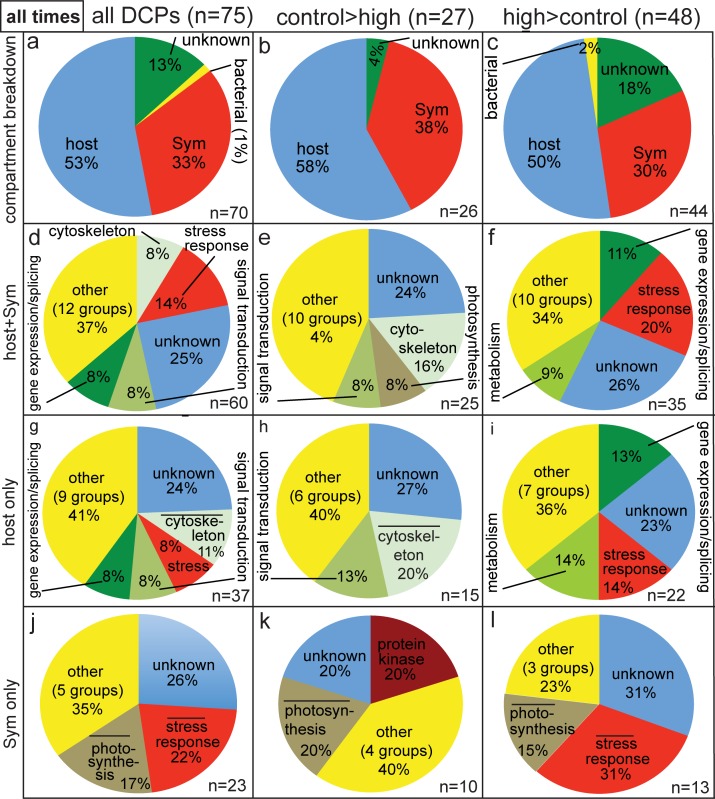
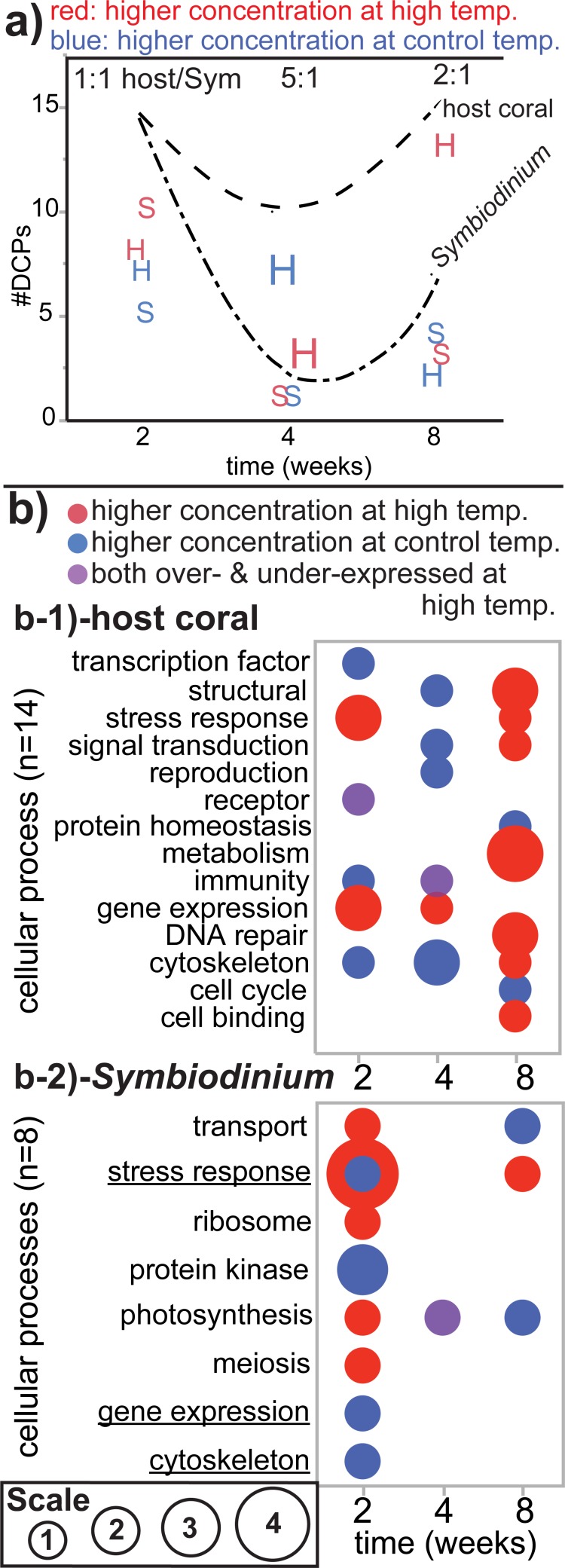
Although most reef-building corals live near the upper threshold of their thermotolerance, some scleractinians are resilient to temperature increases. For instance, Pocillopora acuta specimens from an upwelling habitat in Southern Taiwan survived a nine-month experimental exposure to 30°C, a temperature hypothesized to induce stress. To gain a greater understanding of the molecular pathways underlying such high-temperature acclimation, the protein profiles of experimental controls incubated at 27°C were compared to those of conspecific P. acuta specimens exposed to 30°C for two, four, or eight weeks, and differentially concentrated proteins (DCPs) were removed from the gels and sequenced with mass spectrometry. Sixty unique DCPs were uncovered across both eukaryotic compartments of the P. acuta-dinoflagellate (genus Symbiodinium) mutualism, and Symbiodinium were more responsive to high temperature at the protein-level than the coral hosts in which they resided at the two-week sampling time. Furthermore, proteins involved in the stress response were more likely to be documented at different cellular concentrations across temperature treatments in Symbiodinium, whereas the temperature-sensitive host coral proteome featured numerous proteins involved in cytoskeletal structure, immunity, and metabolism. These proteome-scale data suggest that the coral host and its intracellular dinoflagellates have differing strategies for acclimating to elevated temperatures.
Conflict of interest statement
Figures
References
-
- Hoegh-Guldberg O, Bruno JF. The impact of climate change on the world’s marine ecosystems. Science. 2010;328: 1523–1528. doi: 10.1126/science.1189930 - DOI - PubMed
-
- Hoegh-Guldberg O, Mumby PJ, Hooten AJ, Steneck RS, Greenfield P, Gomez E, et al. Coral reefs under rapid climate change and ocean acidification. Science. 2007;318: 1737–1742. doi: 10.1126/science.1152509 - DOI - PubMed
-
- Mayfield AB, Wang LH, Tang PC, Hsiao YY, Fan TY, Tsai CL, et al. Assessing the impacts of experimentally elevated temperature on the biological composition and molecular chaperone gene expression of a reef coral. PLoS ONE. 2011;e26529 doi: 10.1371/journal.pone.0026529 - DOI - PMC - PubMed
-
- Brown BE. Coral bleaching: causes and consequences. Coral Reefs. 1997;16: s129–s138.
-
- Putnam HM, Edmunds PJ. The physiological response of reef corals to diel fluctuations in seawater temperature. J Exp Mar Biol Ecol. 2011;396: 216–223.
Publication types
MeSH terms
LinkOut - more resources
Full Text Sources
Other Literature Sources
