


PTEN Inhibition in Human Disease Therapy
- PMID: 29385737
- PMCID: PMC6017825
- DOI: 10.3390/molecules23020285
PTEN Inhibition in Human Disease Therapy
Abstract
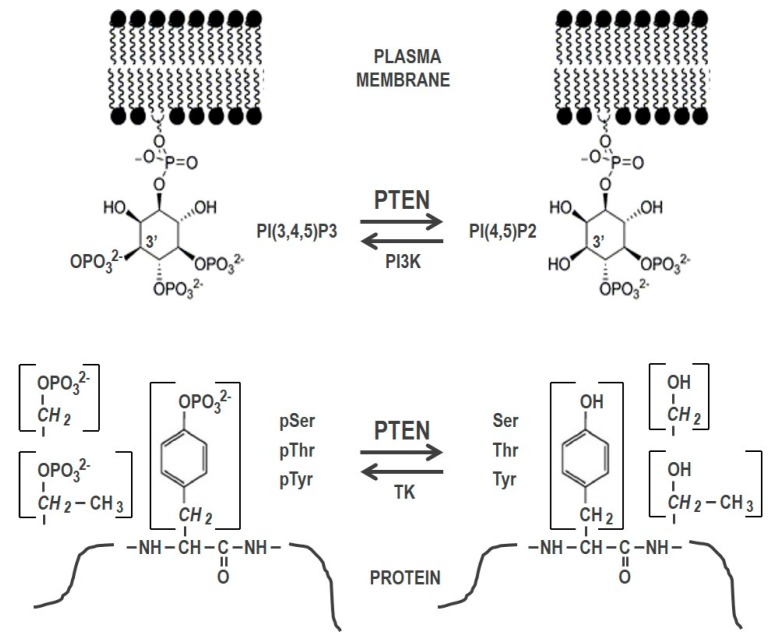
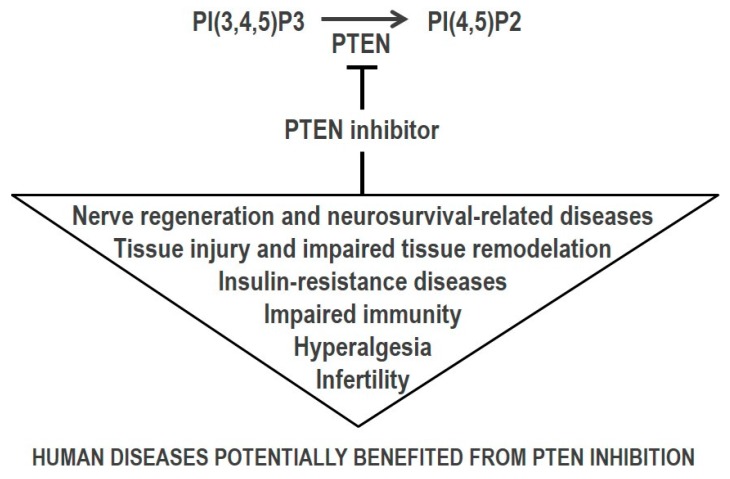
The tumor suppressor PTEN is a major homeostatic regulator, by virtue of its lipid phosphatase activity against phosphatidylinositol 3,4,5-trisphosphate [PI(3,4,5)P3], which downregulates the PI3K/AKT/mTOR prosurvival signaling, as well as by its protein phosphatase activity towards specific protein targets. PTEN catalytic activity is crucial to control cell growth under physiologic and pathologic situations, and it impacts not only in preventing tumor cell survival and proliferation, but also in restraining several cellular regeneration processes, such as those associated with nerve injury recovery, cardiac ischemia, or wound healing. In these conditions, inhibition of PTEN catalysis is being explored as a potentially beneficial therapeutic intervention. Here, an overview of human diseases and conditions in which PTEN inhibition could be beneficial is presented, together with an update on the current status of specific small molecule inhibitors of PTEN enzymatic activity, their use in experimental models, and their limitations as research or therapeutic drugs.
Keywords: cancer; diabetes; infertility; neuroregeneration; pain relief; response to infection; small molecule PTEN inhibitor; stem-cells; tissue injury; wound healing.
Conflict of interest statement
The author declares no conflict of interest.
Figures
References
-
- Lee J.O., Yang H., Georgescu M.M., Di Cristofano A., Maehama T., Shi Y., Dixon J.E., Pandolfi P., Pavletich N.P. Crystal structure of the PTEN tumor suppressor: Implications for its phosphoinositide phosphatase activity and membrane association. Cell. 1999;99:323–334. doi: 10.1016/S0092-8674(00)81663-3. - DOI - PubMed
Publication types
MeSH terms
Substances
LinkOut - more resources
Full Text Sources
Other Literature Sources
Medical
Research Materials
Miscellaneous
