


Electrodermal Activity Is Sensitive to Cognitive Stress under Water
- PMID: 29387015
- PMCID: PMC5776121
- DOI: 10.3389/fphys.2017.01128
Electrodermal Activity Is Sensitive to Cognitive Stress under Water
Abstract
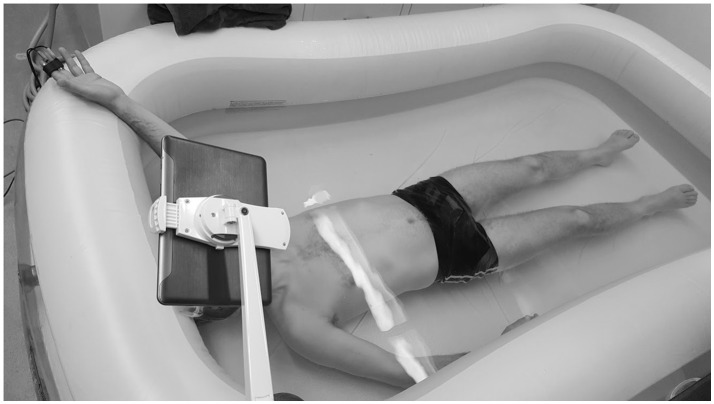
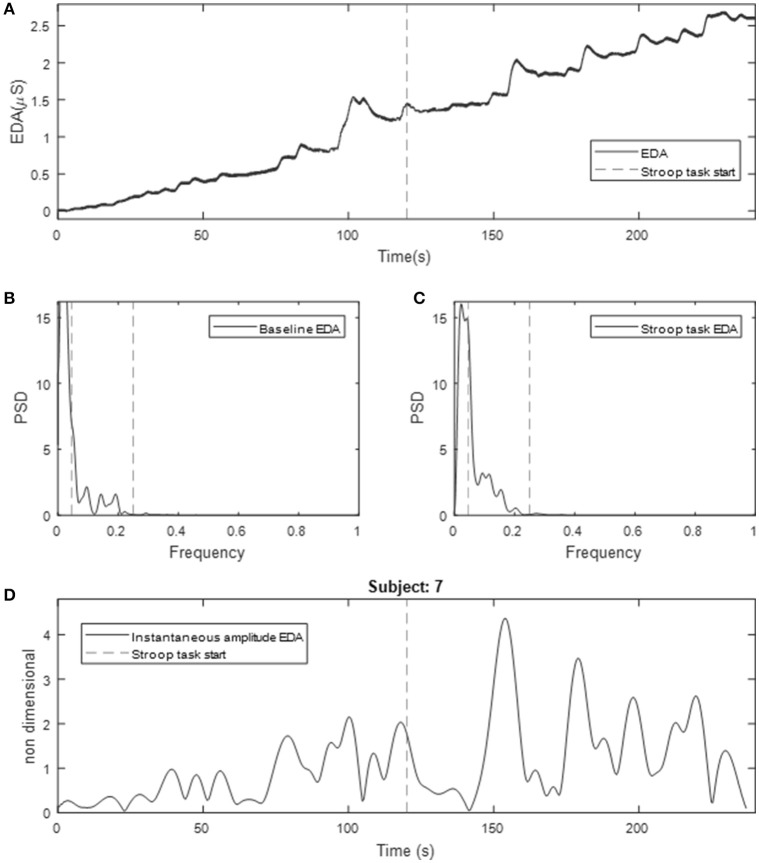
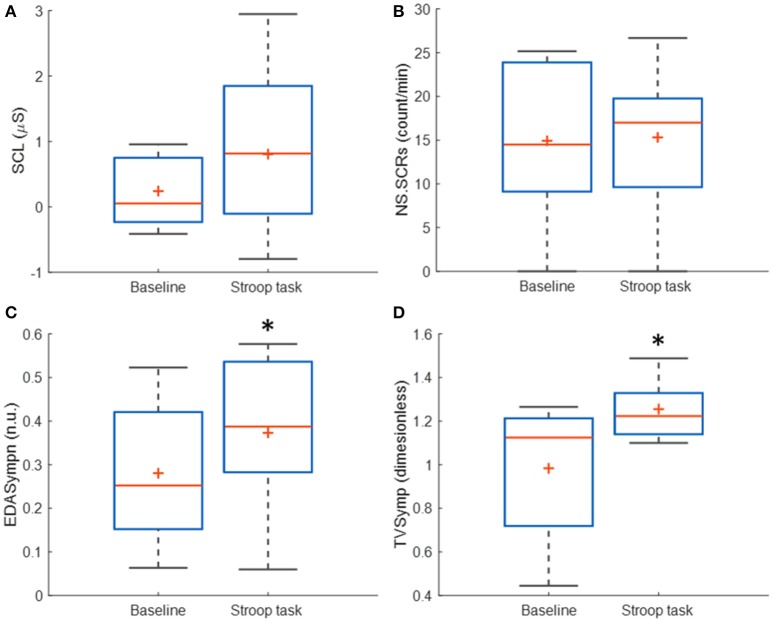
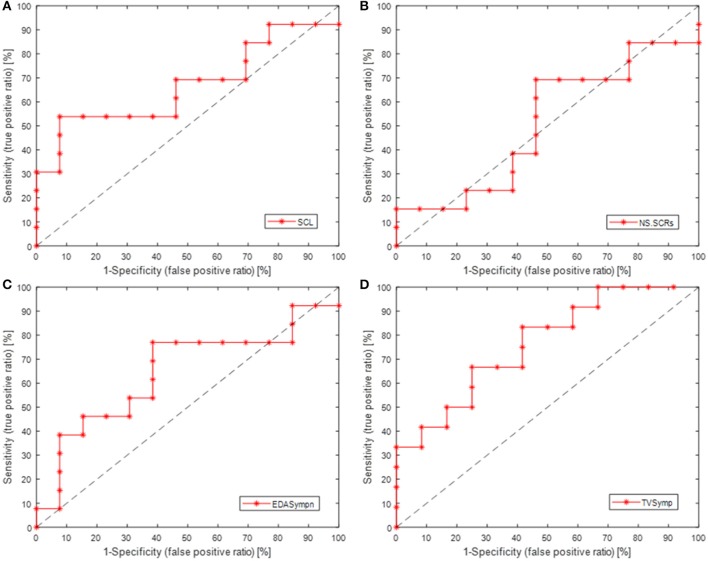
When divers are at depth in water, the high pressure and low temperature alone can cause severe stress, challenging the human physiological control systems. The addition of cognitive stress, for example during a military mission, exacerbates the challenge. In these conditions, humans are more susceptible to autonomic imbalance. Reliable tools for the assessment of the autonomic nervous system (ANS) could be used as indicators of the relative degree of stress a diver is experiencing, which could reveal heightened risk during a mission. Electrodermal activity (EDA), a measure of the changes in conductance at the skin surface due to sweat production, is considered a promising alternative for the non-invasive assessment of sympathetic control of the ANS. EDA is sensitive to stress of many kinds. Therefore, as a first step, we tested the sensitivity of EDA, in the time and frequency domains, specifically to cognitive stress during water immersion of the subject (albeit with their measurement finger dry for safety). The data from 14 volunteer subjects were used from the experiment. After a 4-min adjustment and baseline period after being immersed in water, subjects underwent the Stroop task, which is known to induce cognitive stress. The time-domain indices of EDA, skin conductance level (SCL) and non-specific skin conductance responses (NS.SCRs), did not change during cognitive stress, compared to baseline measurements. Frequency-domain indices of EDA, EDASymp (based on power spectral analysis) and TVSymp (based on time-frequency analysis), did significantly change during cognitive stress. This leads to the conclusion that EDA, assessed by spectral analysis, is sensitive to cognitive stress in water-immersed subjects, and can potentially be used to detect cognitive stress in divers.
Keywords: autonomic nervous system; electrodermal activity; power spectral density; stroop test; sympathetic function; water immersion.
Figures
References
-
- Bosco G., Di Tano G., Zanon V., Fanò G. (2007). Breath-hold diving: a point of view. Sport Sci. Health 2:47 10.1007/s11332-007-0038-y - DOI
-
- Boucsein W. (2016). Electrodermal Activity. Springer. Available online at: http://link.springer.com/10.1007/978-1-4614-1126-0 (Accessed November 1, 2016). - DOI
LinkOut - more resources
Full Text Sources
Other Literature Sources
Research Materials
Miscellaneous
