


Interventions to reduce medication errors in neonatal care: a systematic review
- PMID: 29387337
- PMCID: PMC5772524
- DOI: 10.1177/2042098617748868
Interventions to reduce medication errors in neonatal care: a systematic review
Abstract
Background: Medication errors represent a significant but often preventable cause of morbidity and mortality in neonates. The objective of this systematic review was to determine the effectiveness of interventions to reduce neonatal medication errors.
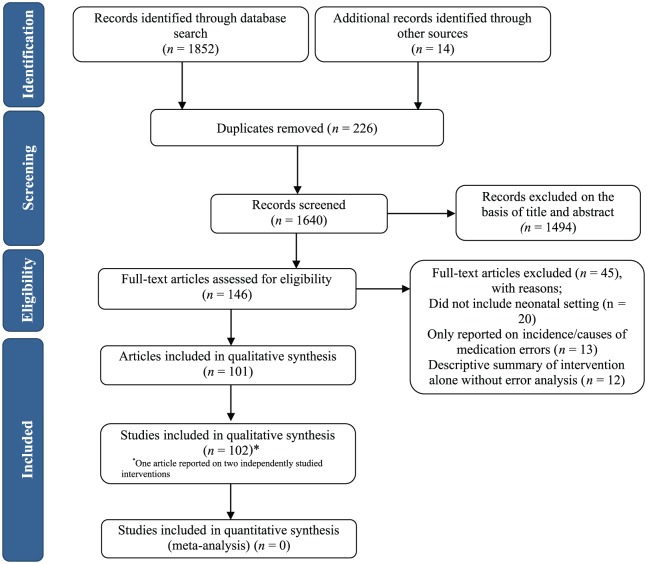
Methods: A systematic review was undertaken of all comparative and noncomparative studies published in any language, identified from searches of PubMed and EMBASE and reference-list checking. Eligible studies were those investigating the impact of any medication safety interventions aimed at reducing medication errors in neonates in the hospital setting.
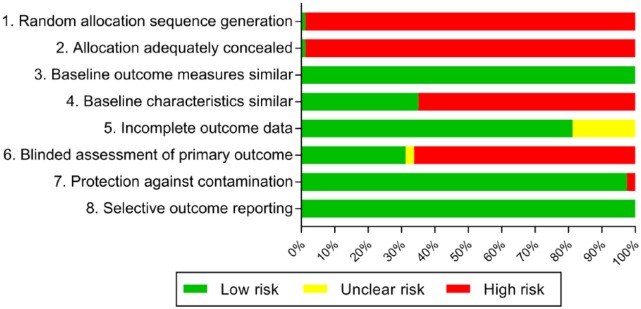
Results: A total of 102 studies were identified that met the inclusion criteria, including 86 comparative and 16 noncomparative studies. Medication safety interventions were classified into six themes: technology (n = 38; e.g. electronic prescribing), organizational (n = 16; e.g. guidelines, policies, and procedures), personnel (n = 13; e.g. staff education), pharmacy (n = 9; e.g. clinical pharmacy service), hazard and risk analysis (n = 8; e.g. error detection tools), and multifactorial (n = 18; e.g. any combination of previous interventions). Significant variability was evident across all included studies, with differences in intervention strategies, trial methods, types of medication errors evaluated, and how medication errors were identified and evaluated. Most studies demonstrated an appreciable risk of bias. The vast majority of studies (>90%) demonstrated a reduction in medication errors. A similar median reduction of 50-70% in medication errors was evident across studies included within each of the identified themes, but findings varied considerably from a 16% increase in medication errors to a 100% reduction in medication errors.
Conclusion: While neonatal medication errors can be reduced through multiple interventions aimed at improving the medication use process, no single intervention appeared clearly superior. Further research is required to evaluate the relative cost-effectiveness of the various medication safety interventions to facilitate decisions regarding uptake and implementation into clinical practice.
Keywords: intervention; medication errors; neonatal intensive care unit; newborn infant; systematic review.
Conflict of interest statement
Conflict of interest statement: The authors declare that there is no conflict of interest.
Figures
References
-
- Roughead EE, Semple SJ, Rosenfeld E. The extent of medication errors and adverse drug reactions throughout the patient journey in acute care in Australia. Int J Evid Based Healthc 2016; 14: 113–122. - PubMed
-
- Kunac DL, Reith DM. Identification of priorities for medication safety in neonatal intensive care. Drug Saf 2005; 28: 251–261. - PubMed
-
- Chedoe I, Molendijk HA, Dittrich ST, et al. Incidence and nature of medication errors in neonatal intensive care with strategies to improve safety. Drug Saf 2007; 30: 503–513. - PubMed
Publication types
LinkOut - more resources
Full Text Sources
Other Literature Sources
Miscellaneous
