


Efficacy of intravenous plus intrathecal/intracerebral ventricle injection of polymyxin B for post-neurosurgical intracranial infections due to MDR/XDR Acinectobacter baumannii: a retrospective cohort study
- PMID: 29387342
- PMCID: PMC5775564
- DOI: 10.1186/s13756-018-0305-5
Efficacy of intravenous plus intrathecal/intracerebral ventricle injection of polymyxin B for post-neurosurgical intracranial infections due to MDR/XDR Acinectobacter baumannii: a retrospective cohort study
Erratum in
-
Correction to: Efficacy of intravenous plus intrathecal/intracerebral ventricle injection of polymyxin B for post-neurosurgical intracranial infections due to MDR/XDR Acinectobacter baumannii: a retrospective cohort study.Antimicrob Resist Infect Control. 2019 Jan 11;8:11. doi: 10.1186/s13756-019-0462-1. eCollection 2019. Antimicrob Resist Infect Control. 2019. PMID: 30651977 Free PMC article.
Abstract
Background: Post-neurosurgical intracranial infections caused by multidrug-resistant or extensively drug-resistant Acinetobacter baumannii are difficult to treat and associated with high mortality. In this study, we analyzed the therapeutic efficacy of intravenous combined with intrathecal/intracerebral ventricle injection of polymyxin B for this type of intracranial infection.
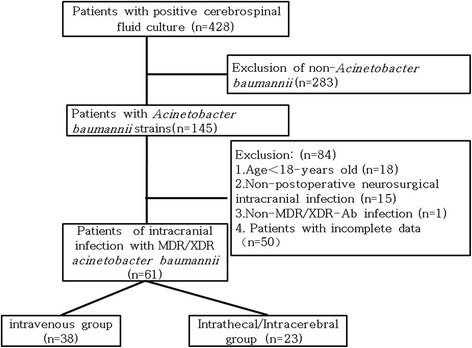
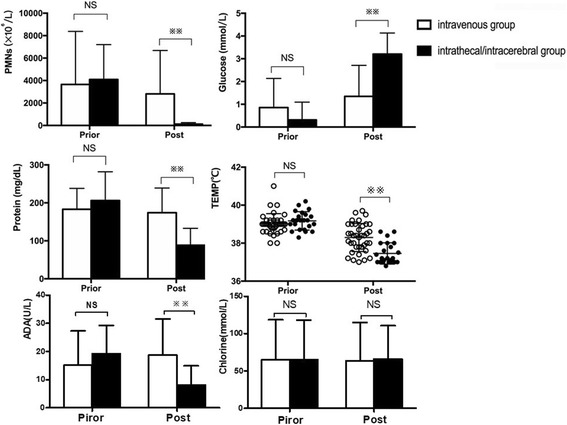
Methods: This retrospective study was conducted from January 2013 to September 2017 at the Second Affiliated Hospital, Zhejiang University School of Medicine (Hangzhou,China) and included 61 cases for which cerebrospinal fluid (CSF) cultures were positive for multidrug-resistant or extensively drug-resistant A. baumannii after a neurosurgical operation. Patients treated with intravenous and intrathecal/intracerebral ventricle injection of polymyxin B were assigned to the intrathecal/intracerebral group, and patients treated with other antibiotics without intrathecal/intracerebral injection were assigned to the intravenous group. Data for general information, treatment history, and the results of routine tests and biochemistry indicators in CSF, clinical efficiency, microbiological clearance rate, and the 28-day mortality were collected and analyzed.
Results: The rate of multidrug-resistant or extensively drug-resistant A. baumannii infection among patients who experienced an intracranial infection after a neurosurgical operation was 33.64% in our hospital. The isolated A. baumannii were resistant to various antibiotics, and most seriously to carbapenems (100.00% resistance rate to imipenem and meropenem), cephalosporins (resistance rates of 98.38% to cefazolin, 100.00% to ceftazidime, 100.00% to cefatriaxone, and 98.39% to cefepime). However, the isolated A. baumannii were completely sensitive to polymyxin B (sensitivity rate of 100.00%), followed by tigecycline (60.66%) and amikacin (49.18%). No significant differences in basic clinical data were observed between the two groups. Compared with the intravenous group, the intrathecal/intracerebral group had a significantly lower 28-day mortality (55.26% vs. 8.70%, P = 0.01) and higher rates of clinical efficacy and microbiological clearance (95.65% vs. 23.68%, P < 0.001; 91.30% vs. 18.42%, P < 0.001, respectively).
Conclusions: Intravenous plus intrathecal/intracerebral ventricle injection of polymyxin B is an effective regimen for treating intracranial infections caused by multidrug-resistant or extensively drug-resistant A. baumannii.
Keywords: Acinetobacter Baumannii; Intracerebral ventricle injection; Intrathecal injection; Multidrug resistance; Polymyxin B.
Conflict of interest statement
This study was approved by the Ethics Committee of the 2nd Affiliated Hospital, School of Medicine, Zhejiang University (NO. 2017–048). The requirement of patient consent to participate is not applicable due to the retrospective nature of the study.Not applicable.The authors declare that they have no competing interests.Springer Nature remains neutral with regard to jurisdictional claims in published maps and institutional affiliations.
Figures
References
-
- Jiang L, Guo L, Li R, Wang S. Targeted surveillance and infection-related risk factors of nosocomial infection in patients after neurosurgical operation. Pak J Pharm Sci. 2017;30(3(Special)):1053–1056. - PubMed
-
- Kasiakou SK, Rafailidis PI, Liaropoulos K, Falagas ME. Cure of post-traumatic recurrent multiresistant gram-negative rod meningitis with intraventricular colistin. J Inf Secur. 2005;50(4):348–352. - PubMed
Publication types
MeSH terms
Substances
LinkOut - more resources
Full Text Sources
Other Literature Sources
